Crossing in Time: DL Orton

Today in my When I Get it Together (WIGIT) semi-regular series on meeting other writers, please welcome DL Orton whose sci-fi DL_Ortondebut novel CROSSING IN TIME (first in a series) was recently released and is free on Amazon May 25, 2015 (which I hope is today unless my talents using WordPress are total crap). This fast paced novel envisions a world on the brink of extinction where two star-crossed lovers may hold the key to survival.  However, they must go back in time. A very risky business.  From my reading of her book, DL has researched quantum physics, climate change, and – dare I say it? – Masters and Johnson’s studies on sex.  

JTT: Hi Deb, thanks for agreeing to be featured on WIGIT.  Let’s assume you’ve come from either the future or past (which is probably the truth). Which is it and why?

DLO: My pleasure, Jan!  I’m from the future, of course. Come to the dark side; we have time machines. Unfortunately, if I told you why, I’d have to shoot you. And yes, a woman DOES eventually get elected President, gays DO have a constitutional right to marry, and Florida IS going under.  If you want to know how Game of Thrones ends, sign up for my newsletter. (PS:  If you’d like to win a special prize, guess the news headline for May 4th, 2050, and include your email address written backwards e.g. moc.notrold@old in the comments.  I’ll send you a telepathic message if you win. Or perhaps I’ll arrive in your bathroom with the news!)

JTT:  Wow, well I’ll have to sign up.  In your book, Crossing in Time, you address two issues which psychologists believe are more strongly related that most people would think:  parallel universes and the gender gap. Your response?

DLO: A shower curtain, an ant, and a bowling ball.

JTT:  What?

Einstein

Bowling ball with Einstein’s image – incredible!

DLO: Start with the shower curtain: a two-dimensional object in a 3-dimensional world. Imagine that you, gentle reader, are an ant, walking, talking, and having sex (do ants do that??) on a thin, flexible membrane (or a “brane” in physics-speak). Layered beneath you are a million other shower curtains, all of them with their own allotment of ants (some of which get paid 78 cents on the dollar due to slight differences in their copulatory organs). In a very real sense, those other ant universes are close to you in space (and time), but still seemingly undetectable — until someone drops a red-hot bowling ball on those piled up plastic sheets and makes the real-world equivalent of a black hole.  Mind the gap.
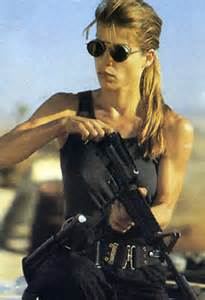
SarahConnorJTT:  Okay you’re officially too smart for me. I saw strong similarities between your female protagonist, Isabel, and Sarah Connor of the Terminator Series.  Why is it that female protagonists in sci-fi series such as the Terminator, Alien and  Avatar are much more formidable than the protagonists of erotica such as Fifty Shades of Grey?  Can the sci-fi and erotica genres unite to gain an audience? 

DLO: Well, if the reviews I’ve been getting are any indication, then no. 😉 

Although my book is not erotica, I expect some women will be turned off by the sex (because my protagonist is the antithesis of the ditzy woman in 50 Shades, and Isabel’s lover is no demigod with a helicopter, handcuffs, and expensive taste in high heels. Sorry.)

JTT:  No reason to be sorry.  I think a lot of women fantasize about being an Isabel.  I hate to ask this question because it is so hackneyed in writer interviews, but as a reader I really am interested to know, what motivated you to write this series?  

DLO: When it comes to fiction, I find Frankenstein’s monster very appealing. I’m drawn to an author who tosses together eclectic body parts and then sews them into something cool and unexpected.  Books with character-driven sci-fi, lots of action, good (real!) sex, dark humor, strong female leads, a bit of a mystery, and an edgy love story are great reads, but there aren’t many out there. So I wrote one. And once I got started, the monster took on a life of his own.

JTT: That’s an interesting answer!  My book – the Monster!  Just one last question: What do you wished I’d asked you and why?

DLO: “What did you do with the $500,000 advance you got for the book?” But I’ll settle for: “Any advice for unpublished writers?”

I once googled “how to get rid of a dead body” as part of my book research. The browser ads I started getting after that were downright scary, and I began to wonder if the NSA was going to coming knocking on my door. (I can’t imagine what would have happened if I googled “how much fertilizer does it take to blow up a building.”) I have since learned about “private browsing,” and I highly recommend it.

My second best tip is: Keep writing, but also keep reading! Lots of the unpublished writers I meet have stopped reading because they don’t feel they have the time for it, and I think that’s a mistake. Reading is an excellent way to keep your writing tools sharp, and hey, it’s damn good way to come up with unsavory phrases to google!

And my final tip: Murder the hero, maim the children, rip the clothes off the intrepid heroine, bestow fame and riches on the villain, and set the whole damn city on fire, but whatever you do, don’t draw cartoons of bearded dead guys, and don’t shoot the dog!

JTT:  Great advice!  Best of luck with the book.
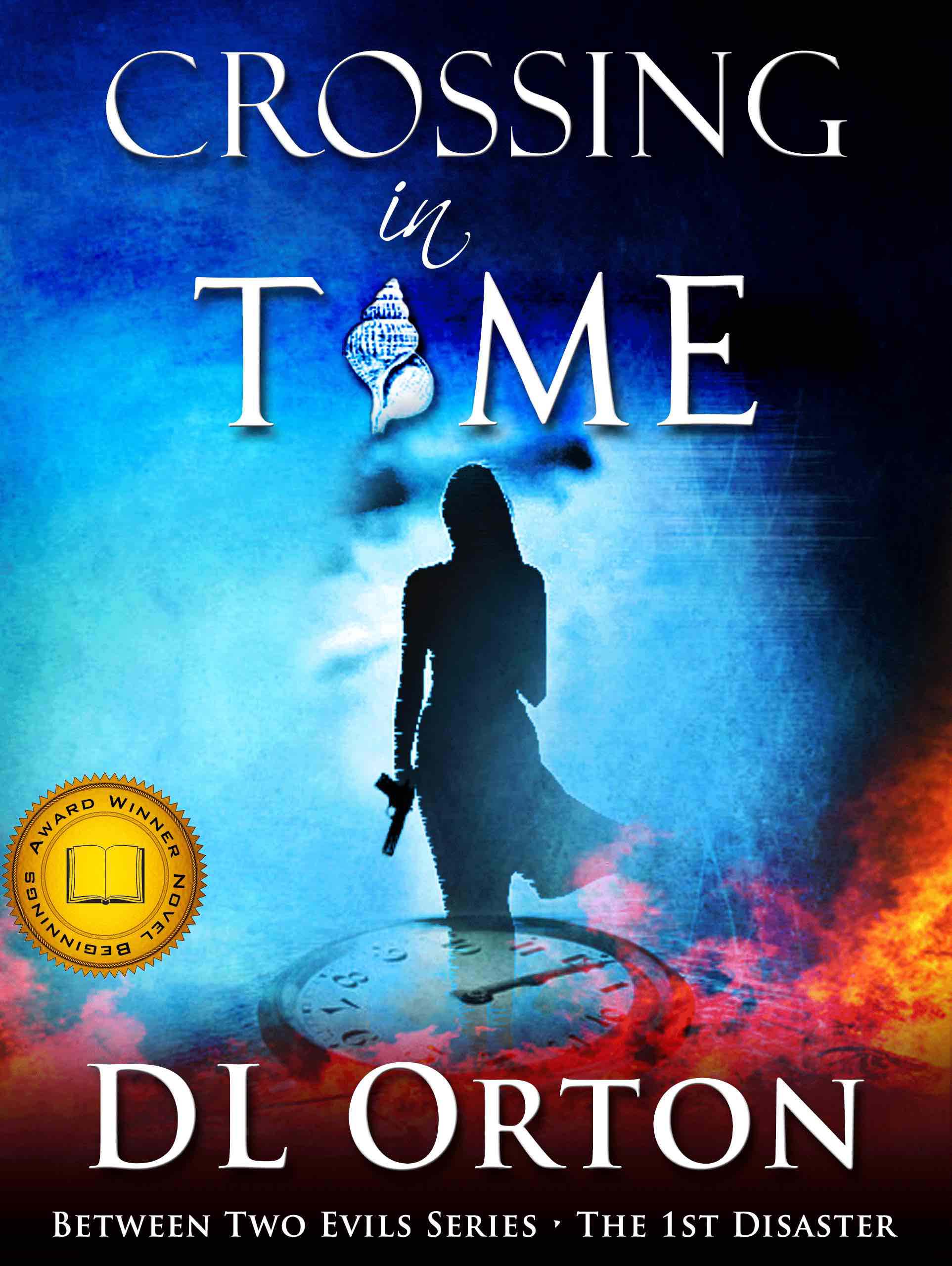

Between Two Evils Series: The First Disaster

Between Two Evils Series: The First Disaster

DL ORTON lives in the foothills of the Rockies where she and her husband are raising three boys, a golden retriever, two Siberian cats, and an extremely long-lived Triops. Her future plans include completing the books in the BETWEEN TWO EVILS SERIES followed by an extended vacation on a remote tropical island (with a Starbucks). When she’s not writing, playing tennis, or helping with algebra, she’s building a time machine so that someone can go back and do the laundry. 

How to contact DLO:

Tell Me WHY

I have a hard time answering the question “why do you write.” whyThis, I’ve been assured, is a disaster. Being able to articulate your WHY is a key element to “building your platform,” “branding yourself” or “finding a niche.”  People who succeed in the WHY will sell books and those who don’t, won’t.

The WHY, being so important, must be answered before we set pen to paper or slop enchiladas over our keyboards in the middle of the night. However, being that I’m a half-ass backwards kind of person, I started writing long before I knew about the WHY.  I just sat down and words came out.

Philomena

The God moment

However lately I’ve had a revelation.

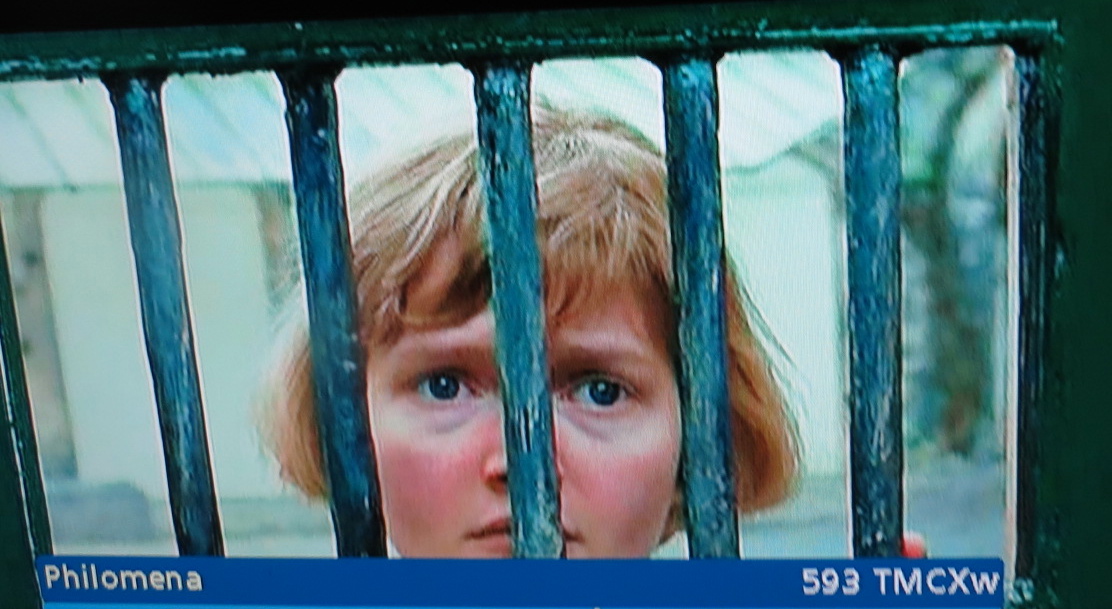
Revelations are strange things, aren’t they?  You see the face of Jesus in beer foam and suddenly boom/ bang you know your WHY. I wish I could say this revelation came to me while meditating on the top of the mountain or deep in the forest but it didn’t.  It came to while sitting on my butt, eating peanuts and watching Philomena, which, for those of you who haven’t seen it, is a full box of Kleenex movie about an Irish girl forced to give up her baby by evil nuns. When she goes in search of him many years later those same nuns lie about not knowing his whereabouts and so she turns to a journalist for help.  The journalist takes on the assignment not out of the goodness of his heart.  He intends to turn her story into a “human interest story,” one which will tug at the hearts of readers and reestablish his drowning career.  His WHY is money and fame.

Several times during their search Philomena balks at the idea of her story being publicized. Does she really want to expose things long unseen or forgotten?  Painful things, the revelation of which may alienate family, friends or even God?

Philomena1Would you?  That is often the dilemma facing writers. In telling a story will we incur the censor of family and community, maybe even God?

I’m sure once Philomena’s story did get published (and turned into a movie) it irked the Church to which she’d remained faithful, despite their treatment of her (where is Jesus – lost in the beer foam?). But it also brought to light an abomination and maybe even helped other poor Irish women to find their stolen sons.

So my WHY is a slippery little devil.  Sometimes I write for fun and sometimes it’s a slide down the Iron Maiden.  But if I write with the intent of not stepping on anyone’s toes (even my own), it doesn’t feel genuine.

Here are more articulate writers on the topic of why they write.

  • “Those of us who write do it because there are stories inside us burning to get out. Writing is essential to our well-being.” Judy Blume
  • “My aim is to put down on paper what I see and what I feel in the best and simplest way.” Ernest Hemingway
  •  “Writing is a dog’s life, but the only life worth living.” Flaubert
  • “I write entirely to find out what I’m thinking, what I’m looking at, what I see and what it means.” Joan Didion
  • “If I don’t write to empty my mind, I go mad.” Lord Byron
  • “Writing is the only thing that, when I do it, I don’t feel I should be doing something else.” Gloria Steinem
  • “To me, the greatest pleasure of writing is not what it’s about, but the inner music that words make.” Truman Capote 

Of these esteemed writers I think Lord Byron’s WHY makes the most sense to me.  How about you?

Play Me Please

kidsI was once the grandmother of a girl as black as I am white. She was also quite beautiful – a Serena Williams lookalike and about as tall and curvy.  Wherever we went – to restaurants, to parks, to the mall – we got stares that made her uncomfortable.

“They’re staring because you’re so beautiful,” I tried to assure her but she didn’t believe me.  I didn’t believe me.  It didn’t help that she was accustomed to getting food and clothes from soup kitchens, food banks, and other giveaways and thus had no idea how to act in restaurants or clothing stores.  For example, she wanted to go to a Chinese restaurant and once there she ordered fried chicken.  She’d gotten the idea somewhere that if you went to sit down restaurants you could order whatever you wanted and when she realized that was not the case, her embarrassment turned to shame which turned to agitation. It didn’t help that she was with foster parents who basically ignored the fact that the four teens in their charge were dodging school, smoking pot, staying up all night and quite possibility prostituting themselves.  I tried not to make assumptions as I had no proof and they were not abusing the children. They were getting fed, clothed, etc., which hadn’t been their situation when they entered “the system.”  When dealing with these kids the first thing you’re taught is not to judge the lifestyles of other people by your standards.

At my first meeting with the “social” he warned: “She’ll play you.” To which I wanted to say: I don’t care.  I’d rather be played by a fourteen year old whose father was in jail and whose mother’s whereabouts were unknown than by the traitors in the Congress claiming to be patriots or by the dancing jackals of corporate America cutting their own taxes while freezing out the poor. But instead I kept my mouth shut.  I’d been so excited to meet my first “child” that I’d driven thirty miles sans wallet or cell phone sweaty and flushed after a tennis match.

KittyGirlMy black grandchild answered the door in an oversized sweatshirt with a half dozen kittens up her sleeve and her hair knotted on the top of her head in a scarf. Instead of fourteen, she looked eleven.  I was immediately enchanted. Then we sat at a table in the fosters’ dining room for a half hour as her social lectured her.  After he left I was exhausted.  She said she was too and so we made plans to get to know each other the next week.

A week later, I could have sworn a hooker from downtown Oakland answered the foster’s door.  The darling girl I’d met the week before had on a long curly wig, a low-cut skintight mini-dress, full make-up, and five inch gladiator heels.  HookerHeelsI thought for sure I had the wrong house but before I could beat a hasty retreat, she recognized me and off we went in search of Cheetos. The stares that time were brutal.  We decided if we ran into anyone she knew, she would tell them I was her grandmother.

It takes a long time to get to know a child who’s been in the system for awhile.  To them, you are just another stranger in a long line of strangers who make decisions about their lives which sometime put them in judgetenuous and frightening places, one of them being Dependency Court.  I don’t know many times I explained to her that she was not in trouble and that the judge was on her side, the undeniable fact is, it’s a court with bailiffs and lawyers and tons of paperwork. Despite the smiles and toys, it is intimidating.

HT_baltimore2_ml_150429_4x3_992

Photographed by Bishop M. Cromartie

Because of confidentially rules I cannot go into the particulars of my black granddaughter’s case but, suffice it to say, I was a failure.  Mine was not the heartwarming, inspirational story told on posters and in the brochures.  I wish I could say I was the only one but sadly there are more failures than successes.  However, regarding all the debate over whether or not racism is still alive and kicking, if you’re white and you want to know what it’s like to be black in America, became the grandparent of a black child.

Cold-Bloodedness

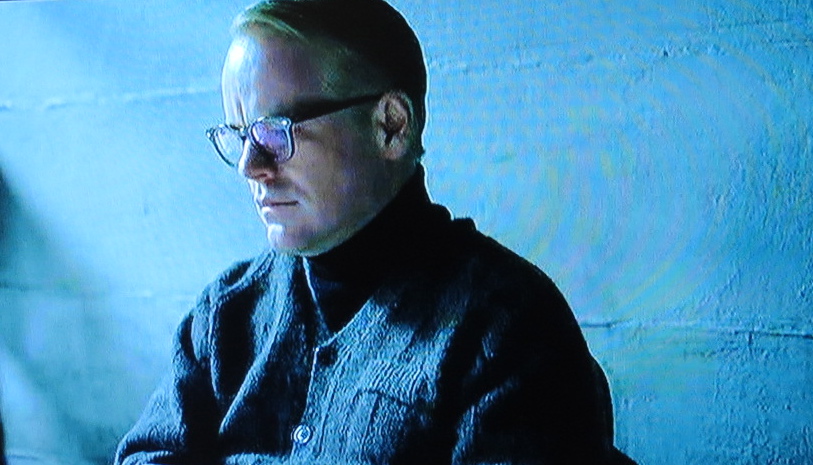
By pure coincidence, in the last couple of months I’ve seen two movies based on Truman Capote’s life at the time he wrote the book IN COLD BLOOD: Truman starring Philip Seymour Hoffman and Infamous starring Toby Jones. Both excellent movies. Hoffman had the more difficult role because he had five or six inches on Capote and didn’t really look that much like him. However, he did an amazing job of capturing the angst of a writer trapped by his ambition.

Capote

The late, great Philip Seymour Hoffman as Capote agonizing over what he knows he must do to get the story.

Writing about an actual crime must always bring angst. Will you get the details accurately? How will the victims be affected by what you write? No doubt there are cold-blooded writers and journalists out there who put their own ambitions above the feelings of those affected by what they publish, but, both these movies suggest Truman Capote was not one of them. However, he was keenly aware that in order to finish his book (which he called a“nonfiction novel”) the killer he’d come to know would have to die. He also knew that his book would have more authenticity if he could pry the details of the Cutter family’s seemingly random slaughter out of a death row convict. Not an easy job.  It would take Capote four years to cajole and dance his way into the man’s heart and soul until finally gaining his trust. His passion to create a masterpiece overrode any moral objections to duping someone into believing that you care about them when all you really care about is improving your story.  Of course, there’s no way of knowing how Capote actually felt but as the appeals process dragged out the execution day, he was forced to face the ghoulishness of the situation and his own “cold-bloodedness.”

Truman

I know writers who believe that this sort of ambition, this willingness to sacrifice all – including one’s self-respect – is necessary to write great fiction. I must admit when I create a character based on a real person, I shudder and stammer and fall all over myself with dread. I don’t have it in me to befriend someone just so I could expose their story to the world, even for that coveted Best Seller status. What do you think? Are there limits beyond which you will refuse to go?  Or, in the pursuit of art are there no limits?

Confronting the BOE

I waited six months to hear back from the Board of Equalization. Six month.  When it finally arrived in a thick packet, along with their willingness to hear my case (yeah), was a copy of the State Franchise Tax Board’s rebuttal to my appeal (ick). It was eleven pages of dense posturing that made no sense even to my lawyer which I was required to write a rebuttal to. Suffice it to say, a year and a half later I finally had my day in court.

The following scene from Willful Avoidance takes place outside the courtroom before the hearings were set to begin and is written from the perspective of the clerk for the Board of Equalization who, in real life, I got to know rather well during all those rebuttals.


The battle was about to begin: the Invincible Tax Men versus the Appellants. Each side would have their moment in the ring, unless an Appellant cried “uncle” after arm-bending, threats and promises for leniency were made in last-minute deals. Fully versed on all new laws and decisions, the Tax Men had the home court advantage. The Appellants, especially the small-scale divisions with no direct plan (just an overwhelming belief in the humanity of their story) had little chance. But it all rested ultimately in the hands of the judges, the mighty BOE, now sharpening their pencils (metaphorically) as they prepared to play Solomon. On this day they would need to appear kindly but judicial, full of wisdom but not easily conned. All opinions rendered were, of course, of public record and therefore available for scrutiny by the voting public.
The hall outside the boardroom held all the merriment of a morgue. Four or five groups stood in nervous circles negotiating with FTB lawyers. They rattled their sabers quietly, in hushed tones as though at any moment one of the illustrious members of the BOE came through the boardroom door.
The appellants for the two cases Roberta knew were doomed to fail already sat in the back of the boardroom confidently. Their summaries were astonishingly brief, they had no exhibits to speak of, no legal representation, just some sort of rambling notion that they were in the right or that their current economic condition would get them out of an FTB debt. One appellant had even sent his cousin to plead his case because he couldn’t get off work. That would be a costly mistake. At nine thirty she walked over to the two groups still remaining in the hall. One was the Ravel Stone & Gravel gang with the Very Important lawyer.  The other, a woman and two men, one of whom Roberta knew quite well. Mark Slattery, an attorney better suited for Vegas than Sacramento.
It was time to go into the boardroom, she explained to both groups. “Even if your case isn’t scheduled until eleven, the board requires all litigants to be in attendance for opening remarks. After the board begins hearing cases, you can move your negotiations out to the hall again. But,” she cautioned, as Ravel Stone & Gravel sulked away, “keep in mind that the BOE rarely needs the allotted thirty-five minutes to decide a case. After they hear one case, they continue right on to the next one without taking a break. If your case is called in court and you do not respond, you will lose your chance to appeal.”
“What would we do without you, Robbie?” Slattery chuckled, putting an unwanted hand of her shoulder.
“Cut the bull.” He flirted with her as young men often do with women they consider mother figures, only Slattery wasn’t that young, and Roberta wasn’t that old.
“You must be Maya Bethany,” she said, reaching over to shake the hand of the woman standing across from Slattery. She was a gentle-looking woman with wavy auburn hair pulled back into a ponytail, soft grey eyes, and the high cheekbones of someone of Slavic descent. Other than a hint of lipstick, she wore no makeup and she’d dressed conservatively in slacks and a crisp, white blouse. Bravo, Roberta thought. It was the perfect look—neither flashy nor too casual. Over the past year she felt she’d gotten to know Maya Bethany, having read her appeals to the board. And now, here she was. Almost exactly as Roberta had imagined.


The Demise of Dickey, Part 2

Hunk

Hollywood Studmuffin Trevor Lamour

Okay, because you asked for it (you crazy people), here’s the remainder of the Demise of Dickey, my attempt at writing romance. This is as far as I got before realizing writing a romance  isn’t easy and definitely should not be attempted by someone with strudel in the noodle. (Part One is here.)

To bring you up-to-date, Hollywood stud-muffin Trevor Lamour has arrived on scene to find his girlfriend Dinah, the CEO of Toadwillow Studios, in quite a state.  Between sobs she tells him her beloved dog has died and is lying in their newly remodeled kitchen when who should arrive on scene?  Donald DePew, the kitchen’s designer….


Demise of Dickey, Part 2

“I don’t think you understand, Donald. That’s not a piece of art – it’s Dickey!”

“Dickey?”

“Yes, Dinah’s Dickey. He’s dead!”

Donald3

Not on the Brazilian tile!

“He can’t be! Not on the Brazilian tile! He’ll stain the grout!” He flew over to the corpse, his cheeks ablaze, and began kicking it. “Up Dickey doggie, up! Trevor, do something!”

Trevor still stood in the foyer, his eyes glazed over. “You know. We once had a dog. His name was Sammy. I remember when he died we buried him in the backyard. Gosh it was nifty. We were all there – Mom, Dad and sis. Buddy, that was my older brother’s name, why he dug the hole all by himself.”

Gosh it was nifty? Mom, Dad and sis? I thought you were an orphanfamilydog raised by the Sisters of Infinite Charity who turned out to be child abusing sexual sociopaths?”

“Oh, that was Dinah’s idea. She wants to brand me as a bad boy with a tragic past – sort of like Robert Mitchum. The truth is….”

“Don’t say another word! Some mutt has just died on, and perhaps ruined for-ever, the hand stained mustard seed grout and now you’re telling me that Trevor Lamour is really Jack Sprat from Oshgosh…”

“No, Spokane, actually.”

“Whatever! And we can’t bury the damn dog in the backyard. In case you haven’t noticed, the house is perched on a cliff!”

“Oh.”

DePeux couldn’t contain his disappointment. For months he’d dreamt of having a fling with Trevor Lamour and now to learn the man used words like “nifty.”  It was too much disappointment to bear. Damn, that Dinah is a genius at marketing, he thought. No wonder the bitch has managed to claw her way up to the top of the game. And in the shark pit that’s Hollywood no less.

Suddenly they heard a loud crash from the bedroom followed by an eerie silence.

“Was that a gun?” Donald squealed, “Dinah doesn’t own one, does she?”

Trevor’s face was blank. “Oh course she does. It’s L.A.!” They turned and ran down the length of the hall. Dinah sat on her bed scowling at a  phone held about a foot from her face, on the marble floor lay remnants of a lamp she’d smashed to smithereens. Trevor knew the look on her face well. She was about to lay waste to everything within five miles, like some sort of alien spaceship sent to destroy all life forms on earth.

Dinah2“What do you mean?!!! Didn’t you explain to the Disney people I’d lost my darling Dickey and couldn’t be expected to attend their stupid meeting?? What kind of an idiot are you?” She threw the phone across the room, then turned toward the men now cowering near the door. Her eyes were like those of a rattlesnake about to strike. “DePew, what a jolly time you’ve chosen to visit! Well, I suppose for the amount we’ve paid you, you can help Trevor take care of Dickey.”

“But…but…how?” Both men mumbled.

google“How the hell should I know.  Here’s a suggestion: Google dead dog removal services!”

The End…


Next week, for those of you who’ve expressed interest in the proceedings of the Board of Equalization (part of the Kick Ass Taxwoman story) I’ll be posting an excerpt from the book which will reveal all.  See you then!

Images courtesy of Bing.com


The Demise of Dickey


The temp

Chained to the desk… dreaming of becoming Danielle Steele!

Many years ago when I was trapped by fear-of-starvation in a nine-to-five job, I read an article about how filthy rich Danielle Steele was and said to myself “Hey!  I could write those romance novels!  I mean, how hard could it be?  Just follow the same script again and again – boy meets girl, boy loses girl, boy gets girl back again – right?”

So on one particularly quiet day (of which there were many) I sat down at my computer, wrote the following in an email and sent it off to my friend J.


DinahThe day her dog Dickey died, Dinah was inconsolable.  She wept like an ice cube on speed, grabbing Trevor’s sturdy shoulders and flinging her warm, wet face into his perfumed chest. After an hour of steady downpour, she began to calm.  Trevor led her gently into the bedroom and set her down on the Austrian goose down comforter that sat atop her Madonna inspired ultra king-size bed.  In the distance the sun set over the Pacific as lights began twinkling to life on the Hollywood Strip lying at their manicured tootsies.

“Now Dinah, remember that Dickey was an old dog. . .”

“Oh Dickey, Dickey,” she sobbed. “there will never be another dog like Dickey.”  She was still in her satin negligee, scented sleep mask on top her head, fluffy slippers on her size nine feet.  When she hadn’t arrived at the studio by three o’clock, her secretary called down to the set.  Luckily Trevor had just wrapped up shooting for the day.

By now his shirt was wringing wet thus the cool evening breeze gave him a chill.  He got up to close the window, stripping off his shirt as he went.

“Oh Trevor, I can’t believe you’re thinking about sex at a time like this!”

“I’m not thinking about sex; I’m dripping wet!” he protested, although, he thought, it’s not such a bad idea.  He could make her forget about Dickey by taking her into his arms and making passionate love to her.  That damned dog was never good for their love life, jumping on his mistress just when Trevor was about to perform at his best.

He closed the window and slowly moved towards her. “Let’s make you comfortable, my love.”

“Oh Dickey, Dickey.  Trevor, will you take care of Dickey? I just couldn’t do it.”

“What do you mean ‘take care of Dickey’?  I thought you said he was dead.”

“He is dead. . . but he’s in the kitchen.”

“The kitchen?”

dog“His little body is lying on the floor; his little legs sticking straight up in the air…”  With that she started sobbing again.

“The floor!  Oh no, what will DePew say?  Why couldn’t you take  Dickey to the vet’s to die? Why let him croak on the Brazilian tiles?”

It was then that the doorbell rang.  At least, he thought it was the doorbell, but perhaps it was her cell phone.  Trevor never excelled at making snap decisions thus he stood wavering back and forth – door or purse, door or purse – until Dinah snarled “Will you please get the damned door?  Can’t you see the condition I’m in?”

He reluctantly started down the hall toward the front door and . . . the kitchen. . . all the while thinking the dog, the dead dog was in the kitchen.

“Who is it?” he yelled through the rustic barn door.

“It’s DePew.  Donald DePew.”

Trevor opened the door a crack and peered out.  Sure enough, it was Donald DePew, the interior designer they had hired from their remodel.  Their famous remodel by the famous DePew.

“Donald, old man!” he said, throwing open the door, “I’m so happy to see you!”  He hugged De Pew with a ferocity that shocked the normally implacable Designer DeJeur.

Hunk

Trevor Lamour, Hollywood honey

“Why Trev, you’re such a brute!”  De Pew squealed with delight. “To what do I owe such an unexpectedly delish welcome?”  He knew that Trevor Lamour, film stud-muffin extraordinaire would come out eventually and now it seemed, he finally had.

Donald’s manicured nails digging into his bare back brought Trevor quickly back to his senses.  “Donald, I have this slight problem in the kitchen which is why Dinah is in hysterics.”  Dinah’s sobs could be heard all the way down the hall.

“You can’t have a problem with the kitchen.  The kitchen is perfection.  Spielberg doesn’t have such a kitchen. Nor does Streisand!”  DePeuw peered around the corner.  He stood for a moment pursing his lips and flicking his fingers against his jaw as though evaluating a piece of art. “No, no, no.  It’s all wrong for the space.  Maybe in the living room but definitely not the kitchen,  It is rather nice, though.  Who’s the artist?”


Okay, troops.  Danielle Steele has nothing to worry about from JT Twissel, otherwise known as Jan. My friend J wrote in response:

“Don’t delete this indubitably deliriously, delightful dictation.  Will Dickey be delivered paws downward? Will Dickey’s death make sex a delicate decision?  Will Trevor decide to delay his declaration of love for Donald DePew?  Will Dinah denounce, dismantle and decimate Trevor when finally he declaims? Or will Dinah duplicate Trevor’s behavior and declare her love for Donald?

Tune in. . . and now this . . .

Kind Spirit: Jennifer Hotes

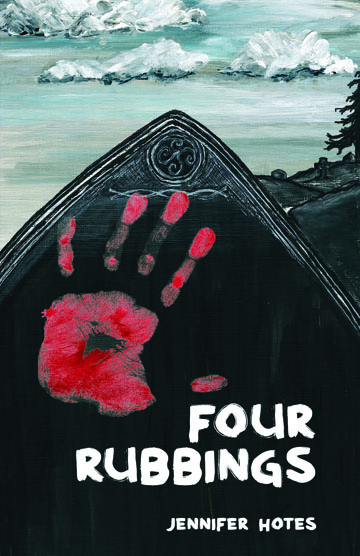
selfieI’ve met many writers in the virtual world where we now increasingly live. They all want you to read their blogs, comment, retweet their tweets and like them on Facebook but not all of them return the favor.  So it’s a true honor to post an excerpt from Jennifer Hotes’ debut novel Four Rubbings.  She is a champion supporter of other writers, a hospice volunteer, and still very much in touch with the magical, tormented world of  teenagers. She’s also a very talented artist.   From Four Rubbings:


“As I kneel down next to my mother’s grave, I notice the withered flowers that slump over the sides of the vase. The sunflowers we brought for her birthday have exploded with rotting gray seeds. I dig my nails into my palms to keep from tossing the dead bouquet behind a bush. The leaves crawl with gnats and tiny worms that feast on the fetid offering.

“You guys are glad I forgot fresh flowers, aren’t you?” I say, content to leave the rotten bouquet in place. I stretch across the grave and goosebumps erupt down my naked arms and legs. I suck in the air that hangs thick around my face, a mix of rotting leaves and smoky sweet mulch that tickles my nose and makes me sneeze. After blessing myself, I cross my legs at the ankles. I close my eyes and picture the porcelain white vault below that encases the last of my mother’s earthly remains. I imagine the cedar roots that have Adobe Photoshop PDFwrapped around her coffin by now, blotting out the delicate gold leaf details entirely. I think about my mom the gardener, tucked inside the roots of a tree, and smile. Desperate to feel my mother’s spirit, I paint a vivid mental picture of her, plucked from fuzzy memories and fading photographs. In this particular time capsule, I’m seven and she snuggles next to me in bed. Lush copper hair drapes over her shoulders. It was before the days when she hid her chemo-ravaged head with scarves. Her eyes glint with mischief as she looks down to ask which book I want first. My tiny hands reach for The Runaway Bunny. She wraps her arms around me and opens the worn board book. The thick spine creaks as she turns to the first page and I nestle deeper into her. Resting her chin on the top of my head, she begins to read a book we both know by heart. Her voice vibrates down my back, and her warm breath washes over me like a blessing as she whispers:

“Once there was a little bunny who wanted to run away. So he said to runawaybunnyhis mother, ‘I am running away.’ ‘If you run away,’ said his mother, ‘I will run after you. For you are my little bunny.’”

Today brought the news of my mother’s cancer and her dire prognosis. So tonight, my favorite baby book brings me a special comfort. She won’t die. Mothers don’t die. She will be here to watch my whole life, because I need her. That’s what mothers do. As she closes the book, I lean into her and breathe in baby powder, sunshine, and coffee. She kisses the top of my head and tucks a curl behind my ear. “Josie, before you were born, our hearts were stitched together in heaven. I’ll always be this close.” She lays her hand across my bony rib cage. Lying on her grave, I bite the inside of my cheek to keep from crying and taste blood. I hold a hand over my ribs and ache to feel a trace of the string that ties our hearts together, but all I feel is cheap fringe and fake beads.

Read more about Jennifer Hotes.
Website: http://www.jenniferlhotes.com/
Facebook: https://www.facebook.com/JenniferLHotes
Twitter: https://twitter.com/JenniferLHotes
Blog: http://www.jenniferlhotes.com/sticks-and-stones-blog/

giveaway swag packAs a part of her blog tour Jennifer is raffling off free copies of her book plus several other other goodies, including a free peek at the next book in her Stone Witch series.  Click here to enter the drawing. 

Please lock me away; but not with a mini-bar

Frsier
Stricken with writer’s block, an aspiring scribe downs the last alcohol from the mini-bar while his muse yawns.

One of my guilty pleasures is the television sitcom Frasier. When it first aired in the 1990s, I didn’t have time to watch television. I was working full time and taking care of children. I had no spare time.  If I did, I watched reruns of silly British comedies, such as Are you Being Served and As Time Goes By.  In those days I needed as much silly as I could get and no one does silly better than the Brits!

BeingServed
One of the great silly British shows – Are You Being Saved?

But lately I’ve found a channel that plays re-runs of Frasier in the morning when I’m having breakfast, reading the newspaper and getting caught up on email.  It always starts my day off with a giggle or two. The other day they played an episode called “Author, Author” that hit close to home.

Many movies and television shows in which a writer is a main character make one, or all, of the following assumptions:

Nicholson
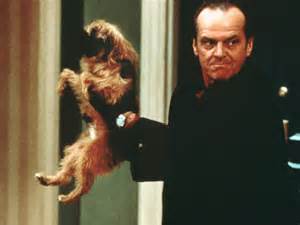
Writers always get freaked out by dogs…

1) It’s easy to get published and after you hit it big, you will become an asshole. Examples: She Devil, As Good as It Gets.

2) If your first novel is a huge success but the publisher says your second is shit, steal a brilliant plot from an unknown writer and pass it off as yours.  Of course, you’ll be obliged to kill the real author before publication but that’s okay because everyone knows, writers make great murderers.  Example: Death Trap

RumDiaries
A typical writer selfie

3) You hit it big but you’re an out-of-control, drunken misogynist. Life will only get worse and worse for you until the maid finds your naked, bloated body face down in your own vomit in some seedy hotel room. Frankly, there are too many examples of this type of movie to list.

Famous writers only appeal to Hollywood if they’re primarily famous for something other than writing, like Truman Capote or Ernest Hemingway. Even when they’ve tried to make movies about writers like Jane Austen, they’ve had to add scintillating “possibilities.” Perhaps she had a secret romance. Perhaps, perhaps. There are a couple of movies that try to depict a famous writer warts and all. One is Saving Mr. Banks which is about the author of Mary Poppins. Apparently in real life she was no Mary Poppins.

In the episode of Frasier I watched the other day, the brothers Crane decide to test out another myth about writing: 

 4) A case of writer’s block can be cured by locking yourself away, preferably far from civilization.

Frasier2
Writer’s blog leads to fratricide!

In their case, a hotel room with a mini-bar. If I were locked in a hotel room for a weekend under the mandate to produce a couple of chapters, that minibar would be emptied the first day and the paddy wagon on its way to get me.

Secrets of a Kick Ass Tax Woman

This is a continuation of a series of posts on Innocent Spouse Relief, a provision enacted to relief people from the the burden of an unfair tax debt.  If you should find yourself needing to file an appeal with the tax board and you feel like you can satisfy all of their requirements, then:

  • Complete a form (8857) that lists your assets, your income, and debts.
  • Beg three of your long time neighbors to write letters attesting to your meager and miserable lifestyle during the year in question.  (Good luck to you on that one.  Most people are very squeamish about getting involved with the tax man) 
  • Provide proof – as much as you can – that your spouse hid information about joint finances from you.  I had twenty-six letters from my divorce attorney. I called them “The Exhibits A-Z.”  

Finally bundle up the whole shebang and send it to The Franchise Tax Board.  They will assign an attorney to review your appeal and get back to you.  In under a year, if you’re lucky.    

Do not be surprised if you get the following response:

"It is clear that appellant has failed to 
meet her burden of overcoming rebuttable
 correctness of respondent’s determination."

This is taxman speak for “your appeal has been rejected.”  Remember, they’ve assigned an attorney to defend their position.  He’s not going to say “whoops, we made a mistake.”

Do not despair, as I did, it need not be the end.

Next – The court of last resort...

ValleyView

No, the court of last resort is not a heavenly intervention!