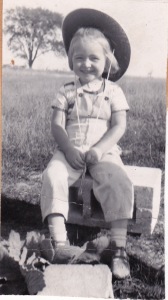
Below are snippets from Flipka that describe the character of Meredith Hyman, aka Merry. I’ve also included excerpts from the journal of Major Sebastian Olivore whose story is central to understanding not just Meredith Hyman but the other girls who disappeared from the girls reformatory.
I slipped on my sweats and wandered across the hall to the communal bathroom. Five girls stood at a row of washbasins applying what makeup they had—sample-sized tubes of lipstick and eye shadow that were probably donated by some philanthropic women’s group. The room reeked of sweet, fruity perfume the kind teenage girls seemed to love.
“Hey girls!” I said. “Top of the morning to you! I’m Fi Butters, your new resident counselor. I got in late last night, unfortunately after light’s out and dinner.”
“Dinner stank,” one of the girls said as she assessed my reflection in the mirror. “You don’t look like a counselor.”
“I’m afraid to ask what I do look like. What’s your name?” I asked the girl as she returned to applying black eyeliner. She already looked like a scarecrow: bony and prematurely bent over as if she spent most of her life slinking along the halls trying not to be noticed. With her long dark hair and pale skin, the heavy eyeliner made her look like a ghoulish version of Cleopatra.
“Thursday,” she replied.
“Nice name—is that the day you were born on?”
“No. I was born on Wednesday, if my whore mother can be believed.”
“Ooooookay. How about you?” I asked the younger-looking waif clinging to her side. “What’s your name?”
“Friday,” she replied with a nervous giggle.
Spotting a trend (which would be impossible to miss unless you were brain-dead), I turned to an unusually pretty blonde standing apart from the group, “I suppose your name is Tuesday?”
Cleopatra stepped in between us, “No. Tuesday isn’t here—she’s getting dressed. That’s Monday.”
The pretty blonde rolled her eyes.
“Okay, okay,” I said, drawing a one in the air, “The Days of the Week 1, Butters 0.” The joke fell flatter than a pancake. I was about to make another stab at communication when a school bell announced the call to breakfast and off they trotted like stampeding fillies.
“My name is Merry, not Monday,” the blonde beauty informed me as she sauntered away a bit more gracefully than the others, “and I don’t play Nancy Louise’s stupid games.”
Aha, Thursday was Nancy Louise and Monday was Merry. No telling who Friday really was. This is going to be fun. Lots of fun.
Mrs. Peterson followed up her deception, by “allowing” us to interview the guard on duty when Merry disappeared, to review the visitor’s log for that week, and finally to sort Meredith Hyman’s possessions, including letters from her many beaux. Creamo examined the girl’s various trinkets gingerly—the love beads, the earrings with dangling peace symbols, the postcards from friends, the cheap sci-fi paperbacks, and the numerous pastel lip glosses—as though each was a treasure. Watching him I realized he’d probably watched Merry grow up and developed a familial affection. Or perhaps, I postulated further, he had a daughter of his own, rebellious and whimsical, who’d captivated him and then, through a marital breakup (he wore no wedding ring) had disappeared.
I thought of telling her what I’d found after waking the sleeping beauties with an off-key rendition of “Wake Up Little Susie” and sending them (accompanied by the guard) to the mess hall for extra mops and pails. What I’d found shoved between the mattress and box spring of Meredith Hyman’s bed as I poked through their things. But I didn’t.
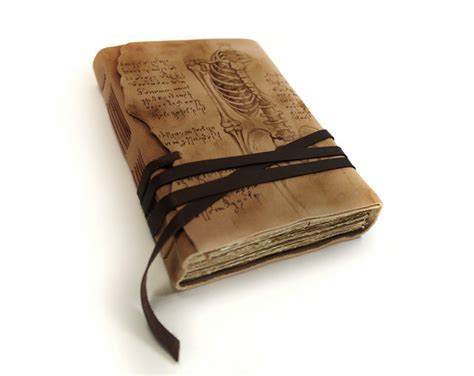
The handwriting was elegant, polished, and near perfect, done probably with a quill and precious black ink in a leather-bound diary, grown ochre with age. It purported to be the journal of a young cavalryman, a Major Sebastian Olivore, 11th Cavalry, B Troop; the paper was yellowed and brittle, the content and style fitting for a reasonably well-educated gent of the nineteenth century. There were only three cogent entries, the remaining pages filled with hieroglyphic drawings and random words. Pages appeared to be missing, but the journal was so old, it was hard to tell. Still, it was easy to understand how young Sebastian’s plight had captivated my little lovelies:
The Journal of Major Sebastian Olivore, 11th Cavalry, B Troop
April 26, 1865. I am in your hands, oh Lord, where the land is hard and water scarce. I try not to dwell on the beauty I left behind, the tall spring grasses and abundant bounties of home, to embark upon this mission to protect the Overland Stagecoach from Indian savages. I struggle to embrace this dry desert as part of thy mysterious wonder; however, Lord, it is hard to recognize thy goodness in such a cruel setting, a sign without doubt of the weakness of my faith. Thank you for the blessing of this journal, delivered to me this morn by none other than the crew of the stagecoach, who, with their clientele, are at present enjoying a much-needed repast. What brave men are the men of the stagecoach, struggling on their own across the wide and endless expanse of dried lakebeds and venomous insects where many souls have perished. I must suspend my ruminations to pen a letter to my father, the giver of this journal. It distresses me much to know that father believes our endeavors here in the wilderness are noble, but I will leave him to his comforts. SO
May 6, 1865. Oh Lord, in this land where water is squeezed from rock, flowers of a sort have begun to bloom on the tips of various cacti—a curious plant which we have not in North Carolina. The Spanish claim with much certainty that some of these plants provide milk to those lost in the desert. First you must get beyond unimaginable spines. ‘Tis just another of the unfathomable mysteries and oddities of the lands west of the Rocky Mountains.
The Spanish are on hand to direct construction of barracks for the volunteer militia who serve gallantly with us. At present our fort consists merely of two buildings of rock construction, used also as a way house for the stagecoach, a flotilla of canvas tents, and a corral for the horses. Our men are aided in their hard labor by a group of dark-skinned men traveling with the Spanish whom the troops first misidentified as slaves. This led to a few incidents successfully mediated by Colonel Palmer. My lantern is low on oil this eve. I must surrender to the dark. The music of the Spanish guitars has ceased and so the campfire must also be dying.
July 14, 1865. Thy ways are indecipherable, oh Lord. Ten men have we buried, committing their souls to the brighter world above, their bodies to the earth. We would have buried more had it not been for the brave action of one of the savages we came here to battle, and yet the penalty remains a whipping for demonstrations of kindness towards our enemy. We hear of the merciless scalpings and innocent families slaughtered along the banks of the Snake River but in this land of nothing, of plants which root not in the ground but in wind and yield not, not beauty, not nutrition, we see all of your children struggling equally to survive—the Spanish, the Indian, the White Man—none with the strength to inflict a slaughter on the other. Many of the men are anxious to leave this place and return to battle the Yankees, an enemy well fed and armed sufficiently for a noble battle. But the Colonel insists the savage will arise and so we must stay.
I still suffer some of the effects of the influenza which held me in delirium these past weeks. My recovery is aided in no small part by the ointment provided by the savages. The smell is most foul but one application and peaceful sleep is upon me, thus my appetite grows. This morn I had recouped sufficiently to lead a small band of troops into a pleasant valley north of here where a few hearty souls raise cattle and potatoes for supplies. The men were most appreciative for a respite from their diet of beans, rice, and rabbit—enjoying a side of beef roasted over an open pit and potato bread with great relish. They were also greatly cheered by news of a saloon opening for business in one of the many small mining settlements springing up on the sides of hills and mountains. Colonel Palmer will not be pleased. The miners have brought with them many vices—saloons and women of ill-repute; their insatiable lust for gold leads to an increase in stagecoach robberies, however, the men require some pleasures. SO
The last entry was written not as prose, but rambling poetry:
Written in the Shortening of Days …
Hail Osceola,
I have black toe
I have heard a whisper over the desert and know it calls my name.
By the ocean below the caves,
Where hidden under ice eternal,
The great mystery prevails.
Call me by the name I do not yet deserve,
That I might claim it on the other shore,
Lead me.
Feed my soul.
Else, devour me and I be nevermore.
The passing of the moon have I languished in the stockade,
fed once a day and left to sweat away my “mutinies.”
Finally through the tender mercies of Small Owl
Am I reunited with pen and paper.
Should this record of Lonely Eagle survive
kindly return it to the banks of the Echoing waters,
In the crystal caves of Osceola,
Father come to us
Mother come to us
Brother come to us
Bring us back our bows
So shall we be led the way.
Past this entry were pages full of gibberish. A young officer, locked away for some reason, slowly going mad or perhaps he had gone mad and then been locked up. Or, perhaps it was a well-crafted forgery, and I’d been duped and hog-tied again.
At lunch it was obvious the girls knew I had their treasure. Knew that I’d found it (along with a pack of cigarettes and a lighter)and read it while they were retrieving cleaning supplies, and then locked it in the trunk of the Nova. They sat across a long particle board table in the dining barracks, casting stones with their eyes as Winnie Peterson explained to them with undisguised relief, “Miss Butters will be leaving us tomorrow. Her elderly aunt is sick and she has to return home to take care of her.”
 Saying nothing in particular