Here is a post from five years ago. Hard to believe we may be in an even worse place now. I didn’t think it was possible, did you?
I have noticed that many of the bloggers whose writing I’ve come to enjoy over the past seven years are paralyzed by the social turmoil all around them and are trying to focus on Anything … Else … But (AEB). Fires in the streets, virus in the air, the seas rising (the Native Americans were right: the devil has blue eyes). The crap won’t want to stop piling on, will it? The Armageddon was supposed to be the quick and final punishment of mankind. Not years on life support hoping for some miracle drug.

But since there’s nothing I can do, I will focus on Anything … Else … But. My current AEB are the illustrations in a Bible that literally crumbles when handled. Who were the artists? What did the original artwork look like before the book got into the hands of my less than pious mother?
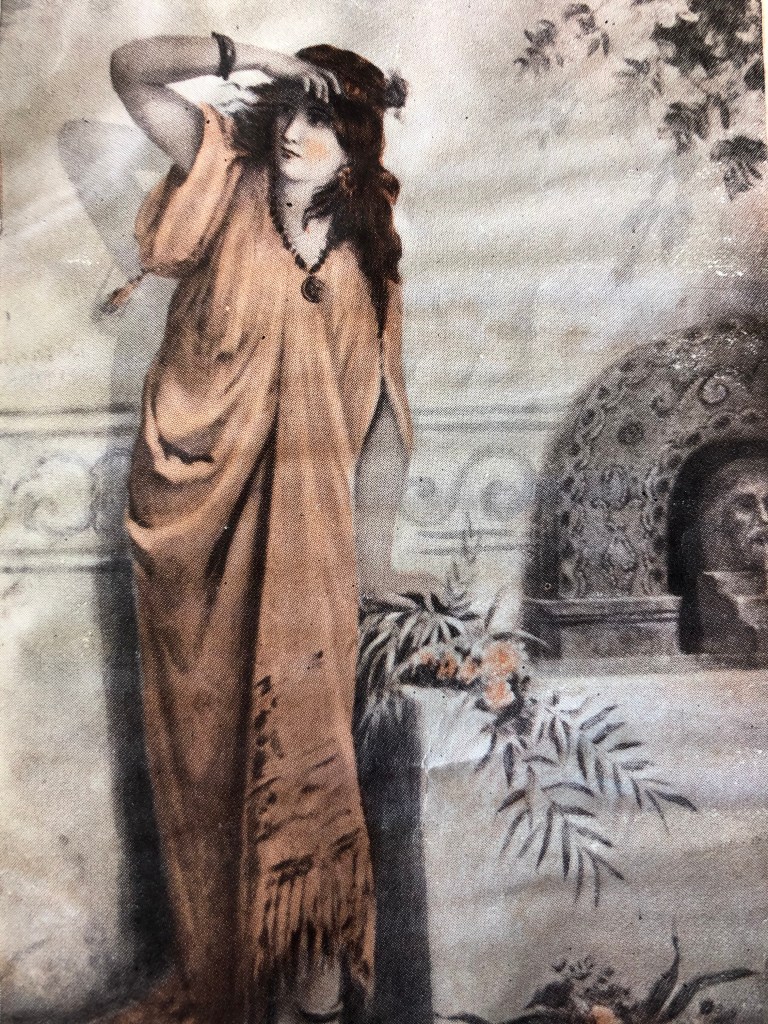
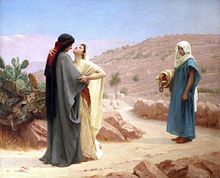
Some of the artists, perhaps feeling it blasphemous, did not sign their work. The illustration above is simply captioned “Rebecca.” I would guess the artist was a Pre-Raphaelite but I can’t find any matches.
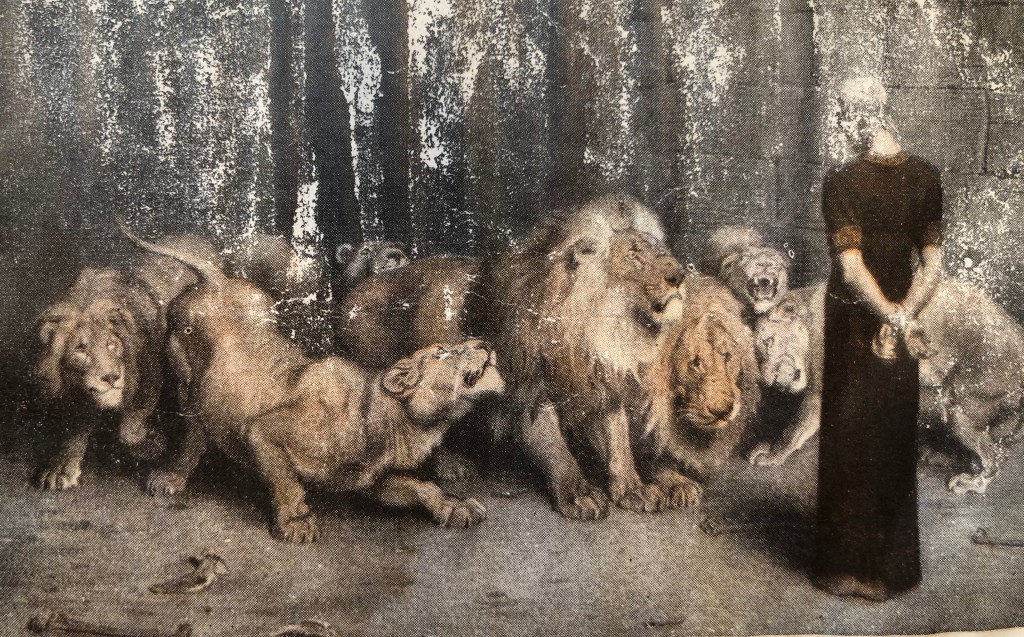
I am not an expert on the Bible by any stretch but I identified this scene right away, did you? The artist was identified as Briton Riviere who was well-known in the 1850s for his animal studies. Again, I could not find copies of the original.
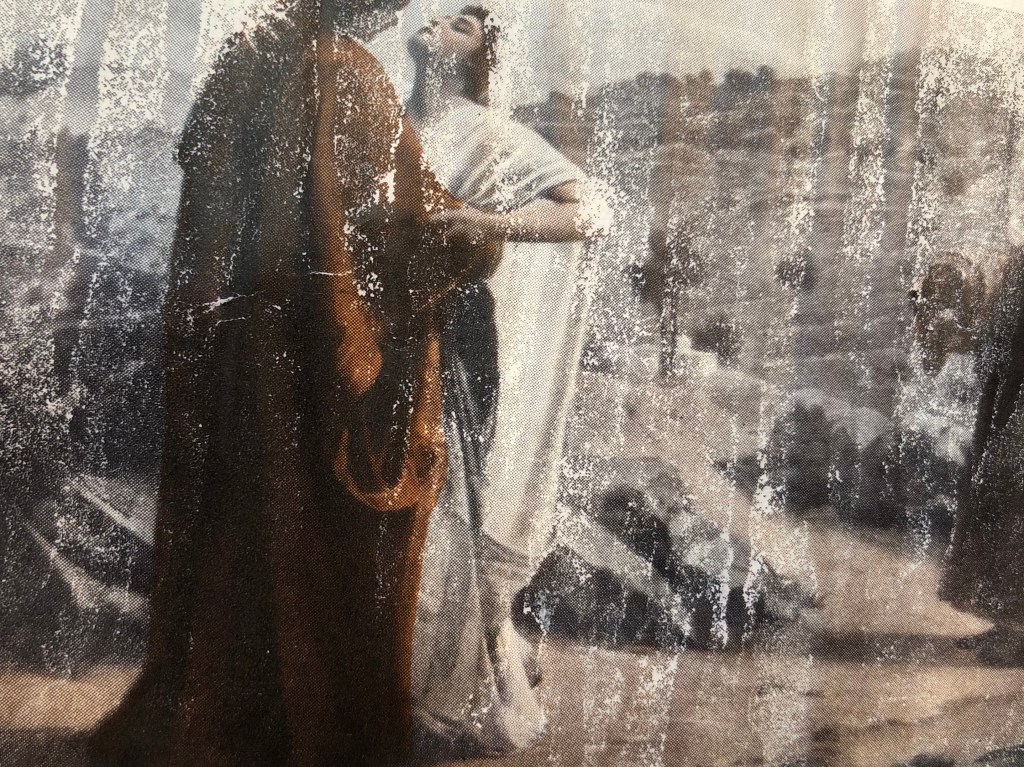
According to a quote on the back, this illustration portrays Naomi imploring her mother-in-law “whither thou goest; I shall go.” Looks to me like she’s attempting to seduce Ruth. However, because the artist, identified as “Calderon,” was also well known in the 1850s (and the onetime Keeper of the Royal Academy) I was able to find a copy of the original. That’s Boas she’s rubbing up against while Ruth waits off to the side.
The only other illustration in the Old Testament not damaged beyond repair is this one.
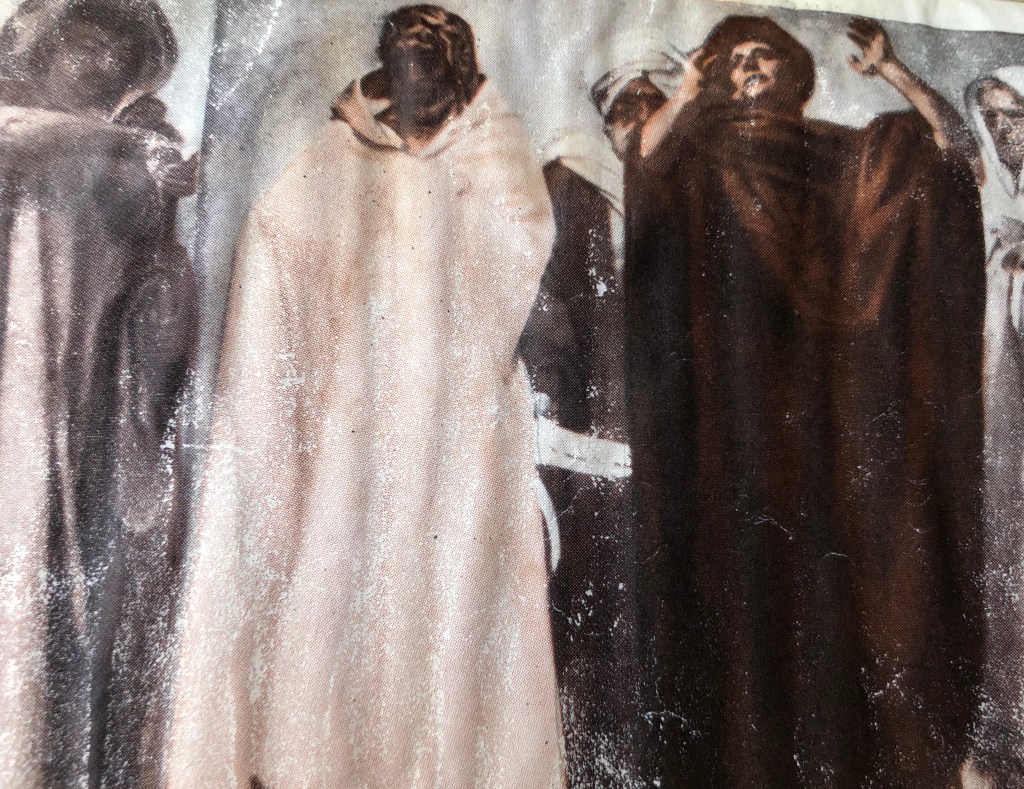
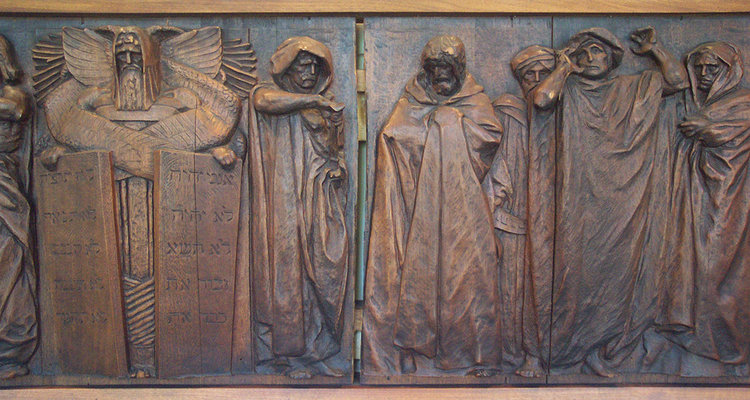
The inscription on the back reads The Frieze of Prophets by J.S. Sargent. I googled and sure enough John Singer Sargent did create a frieze by that name, however this must have been an early study as the completed piece looks like a bit different.
The New Testament was more inspirational to artists of that time:
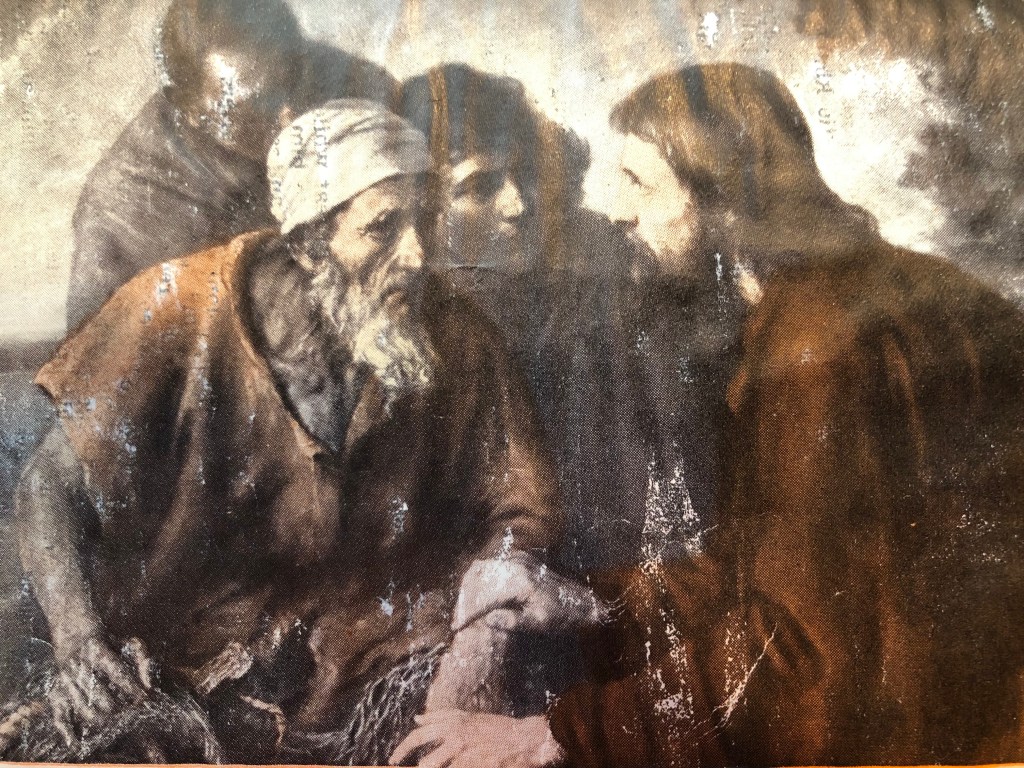
I particularly like this one: “Christ and the Fisherman” by E. Zimmerman, a German artist. You can see the rough hands of the fisherman and feel the bond between the men.
And this one:
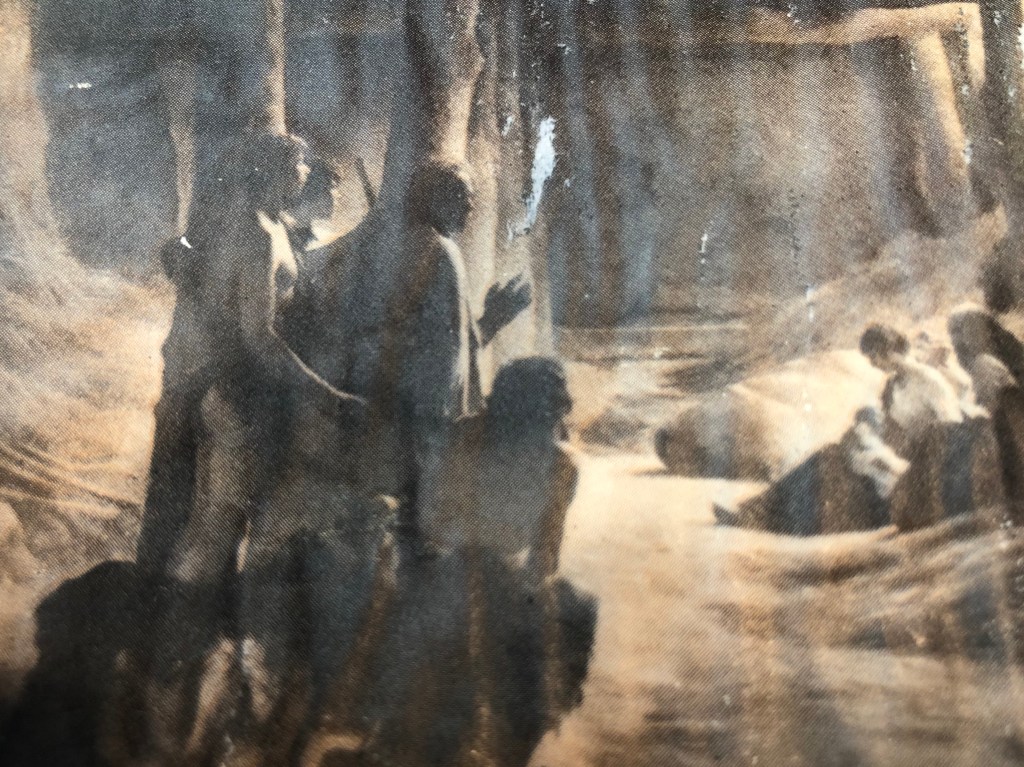
“The Arrival of the Shepherds” by Henri Li’rolle. The original probably had more color but I like the rawness that age and abuse have given the image.
I was able to find the original for this scene:
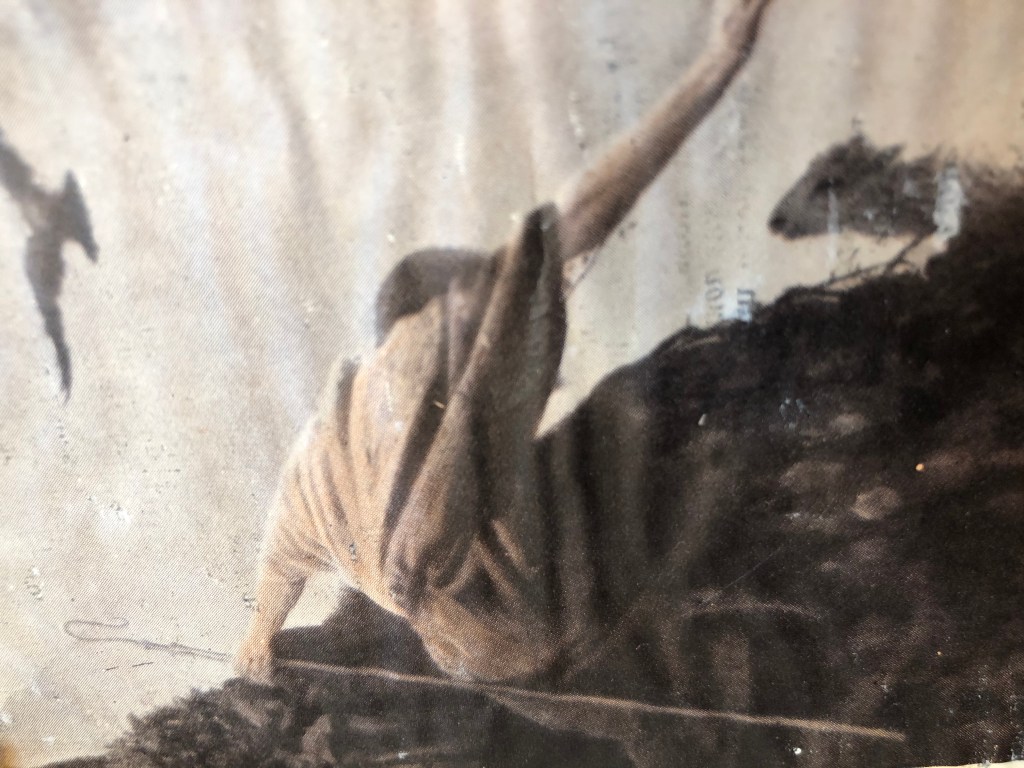
“The Lost Sheep” by Alf. U. Soard.
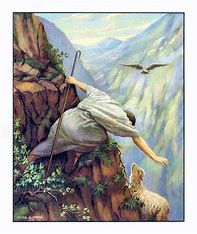
The illustration in Mother’s bible was probably a study for the completed work. I have to say, the study is more powerful.
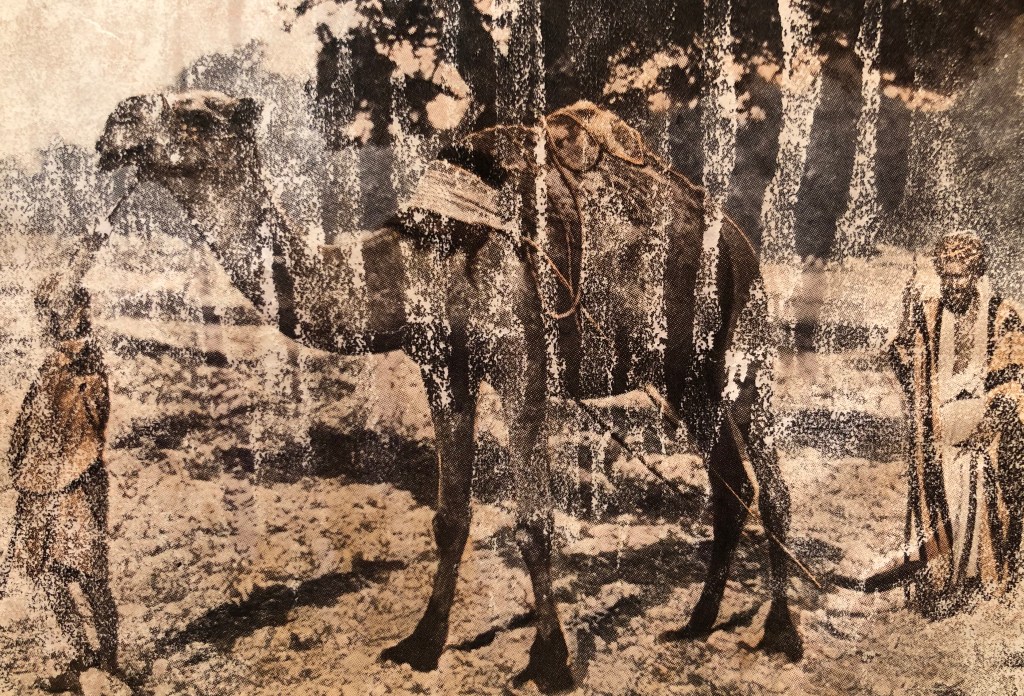
I will close with this image “Laborers in the Plain of Esdraelon.” Looks like an ominous place for the final battle between good and evil, doesn’t it? Half in this world and half in another.
 Saying nothing in particular