Any guesses as to who was known in the late 1800s and early 1900s as “The Charles Dickens of the Nursery”? Probably not, unless like Yvonne of the Priorhouse blog, you’re a fan of old and dusty books.
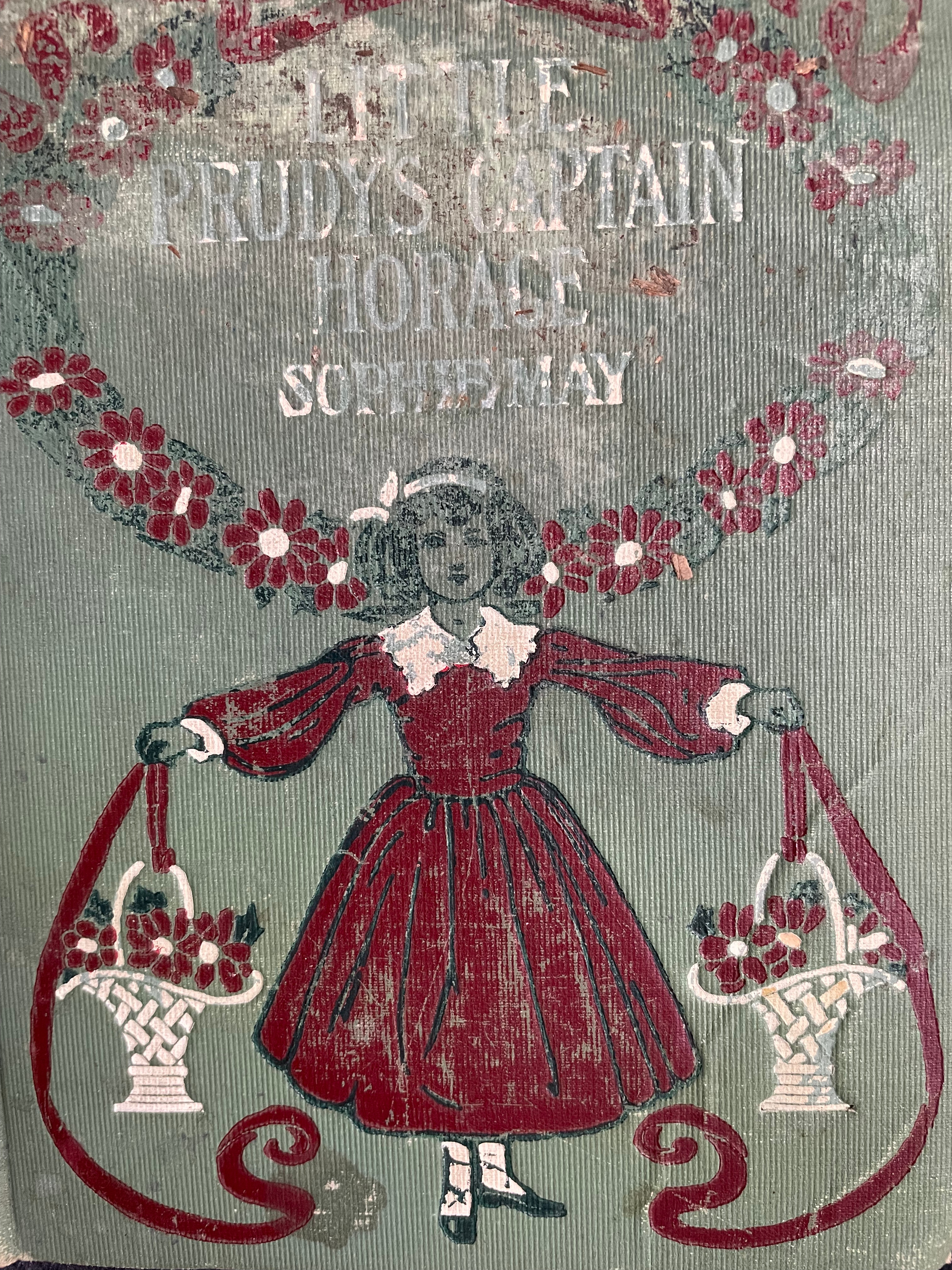
Little Prudy’s Captain Horace, circa 1863. Before you get the wrong idea, Captain Horace is boy who dreams of being a captain. Not some sort of middle age pervert stalking Little Prudy.
It was Sophie May, the pen name of Rebecca Sophia Clarke who spent her entire life in Norridgewick Maine (or perhaps Norridgewock. River Gal, perhaps you know?) Like Dickens, her stories started out being published in magazines such as The Congregationalist and Little Pilgrim where they were considered more realistic than the moralistic children’s tales of the day. Her most popular series was The Little Prudy Series.
M.A. Donohue & Company published high quality children’s books until the 1960s! Now they are more famous for their building on Printer’s Row in Chicago.
I have, in my collection of damaged and dusty, water and coffee stained, and undoubtedly worthless books … two Miss Prudy books. They belonged to Helen Nelson, my maternal grandmother.
Aside from Miss Prudy, described by her creator below:
Miss May also wrote about Dotty Dimple (who seemed to be quite the adventuress), Flaxie Frizzle and the Quinnebasset Sisters.
However, I was a little shocked to find this notation in the back of the book.
Did my grandmother fail to return a library book? Heavens, what would Flaxie Frizzle have thought?
Also belonging to my grandmother were a couple of books by Edgar A. Guest (1881-1959). Anyone care to guess what he was known as?
Aside from:
“The last man in the world is Edgar Guest”
Internal monologue of Robert Neville in I Am Legend, by Richard Matheson.
Okay. I did it. Finally launched the ebook version of Happy Hour and Other Sorrows. I attempted to also launch the paperback but Amazon claimed the ISBN was assigned to another book which was BS but try arguing with Amazon on a Sunday night after a bit of wine (for courage) might have been involved.
Yes, those of you on the side of color were absolutely right. The mostly black and white doesn’t work. So I’ll be changing the cover as soon as our weather turns cool and rainy again. Today temps are set to hit the eighties (80s) and so as soon as I finish this post, I’ll be outside in the garden! But there’s no need to rush. This book contains no sex, no real violence, no zombies and very little bad language. It’ll never go anywhere! I’m just happy to be done with it after soooo many years and iterations.
In other news. I’m really excited to announce an upcoming interview with Bojana Stojcic regarding a book of flash fiction she wrote entitled Knives All Blade. Here’s a teaser:
She’s a fascinating writer/poetess who seems to have a handle on the flash fiction genre. I keep asking her more questions about the subject because, as long time followers know, I’ve got a real thing for short stories in all their various forms.
But not today – it’s glorious outside for at least one more day!
Many years ago I read One Hundred Years of Solitude by Gabriel Garcia Marquez, a long book with a seemingly endless cast of characters. Generations are born, procreate and die and everything they’ve created is eventually devoured by fast-growing vines, mosses and fungi. Sounds depressing, doesn’t it? It would have been if Marquez had focused only on the world we can see and the realities we can comprehend but he didn’t. He combined the mundane with the mythical which is one of the many definitions of magical realism.
I was curious to see what Netflix would do with Marquez’ masterpiece, primarily because magical realism is one of the least understood of the literary genres. So far, it’s fairly dark and heavy on the realism. But it’s put me in mind of a book published by my friend Duke in 2019.
Duke’s book is far shorter but just as memorable as One Hundred Years of Solitude and the ebook is only $2.99.
Below are some reviews:
In Malverde Days Dylan Thomas exits Milkwood through a vortex and crash lands in the tropical, surreal town of Malverde on the opposite side of the planet. Here too, like their Welsh counterparts, the locals are restless, haunted by dreams that they would nail down if only they possessed a nail gun. In this surreal montage of life in a town cursed by violence death is never far. The pretty young woman in the ice cream shop is shot through the head while making a strawberry sundae. “Citizens of Malverde, do not worry”‘ announces the newspaper the next day. “They are only killing themselves.” Then there is Alice “the only woman who ever tried to kill me with a can opener, so I mourn her in my own way.” This is Duke Miller at his most incomparably irreverent self. His view of humanity is as bleak as the future, but we may as well go out laughing, or at least smiling, and Malverde Days delivers these moments in hallucinogenic spades.
Reviewed in the United States on July 26, 2019
Malverde Days will stop you in your tracks. “Wait! You need to re-read that part.” It’s heavy and yet translucent, letting in the light, illuminating those shadowy corners you feared as a child. And yet proposes that there are closets, dirt roads, alleys that end with your hand to your own throat. Duke’s words must be savored. Take it easy. Take it slow. But take it.
Reviewed in the United States on July 29, 2019
Duke pulls no punches in this rich dense poetry. One piece made me cry. Another made me laugh out loud, something that words on a page rarely are able to do. Always his writing is worth returning to see how the words wash through your mind this time.
Reviewed in the United States on June 20, 2019
Malverde Days is part prose, part poetry and follows a group of disparate souls as they live, love, work and die beside each other in a sometimes magical, sometimes deadly town which feels south of the border although the exact location seems unimportant. I read many of the chapters on the author’s blog as they were randomly posted. But when I saw the cover I just had to buy the paperback. It’s a good thing I did because in the final product Miller has pulled together a group of blog posts (or cuttings as he calls them) into a plot stream that flows well. He also added a few pieces not posted on the blog that help readers get to know the characters and their motivations. It’s not a long book but you will want to read it again and again just to delight in Mr. Miller’s musical use of words and gentle depictions of even the most retched of souls.
Reviewed in the United States on July 22, 2019
I have both Malverde Days and Neil Gaimin’s bestseller American Gods on my Kindle, and was switching between them. Just realized I haven’t even opened American Gods in a week, because Malverde is so much more interesting, engaging, and enjoyable.
Legend has it that my mother’s water broke while she was shooting the bull with her two younger brothers in my grandmother’s kitchen. Charley, the elder of the two boys, frantically called The Enforcer (aka Grandma), who was the head nurse at the hospital in the next town over and she ordered him to drive Mother to the hospital PDQ. But Charley couldn’t do it. Perhaps it was the sight of all that embryonic fluid on his mother’s kitchen floor or perhaps Charley had begun to celebrate the weekend a little early. And so fourteen year old Bobby took charge and drove my mother to the hospital.
Uncle Bob age fifteen. That’s Charley’s wife next to him – my Crazy Auntie Dottie.
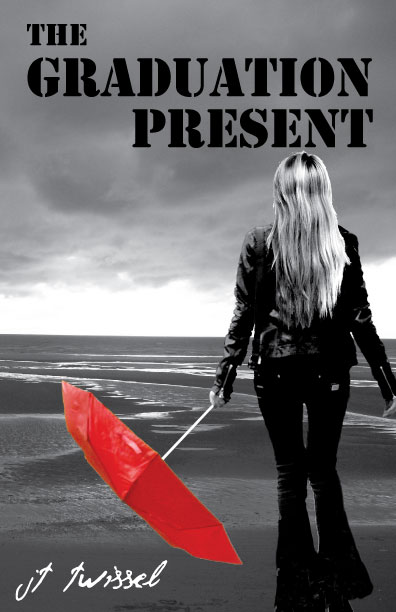
I guess you could say, without my Uncle Bob’s calm in the time of crisis, I would have been born on the kitchen floor. And how did I thank him? I wrote a book about the time I spent with him in Germany in 1970.
My mother had a predilection for stretching the truth. Thus I landed in Europe believing my long lost uncle was some sort of a spy.
Uncle Bob in his late thirties discussing top secret spy stuff over a beer with his friend Bruce, also a top secret spy.
He quickly disabused me of that notion. Below is an excerpt from The Graduation Present.
“Gilberto, did you get a look at the knockers on Lou’s new secretary?” Uncle Bob asked the driver as we drove along.
“Molly, you mean Molly, right?”
“Yeah, I guess that’s her name. You know, the big ones are fun to cuddle but there is something to be said for frisky little titties. The French have a saying that the perfect size tit fits into a champagne glass. What do you think of that Gilberto? You like the little bitty titties?”
“Ah, Uncle Bob. I’m in the backseat,” I reminded him.
“So? You got a thing against tits?”
“I can’t believe I actually thought you were a spy.”
“Spies don’t like tits?”
By the time the book came out (it only took me four decades), my uncle had retired to Florida with his church-going, Texas-loving second wife. She took great umbrage at my portrayal of her husband and threw the book away before anyone in her family could read such rubbish. I doubt she read much beyond the frisky little titties scene which is a shame because the book is really about a silly, clueless girl in a complicated world.
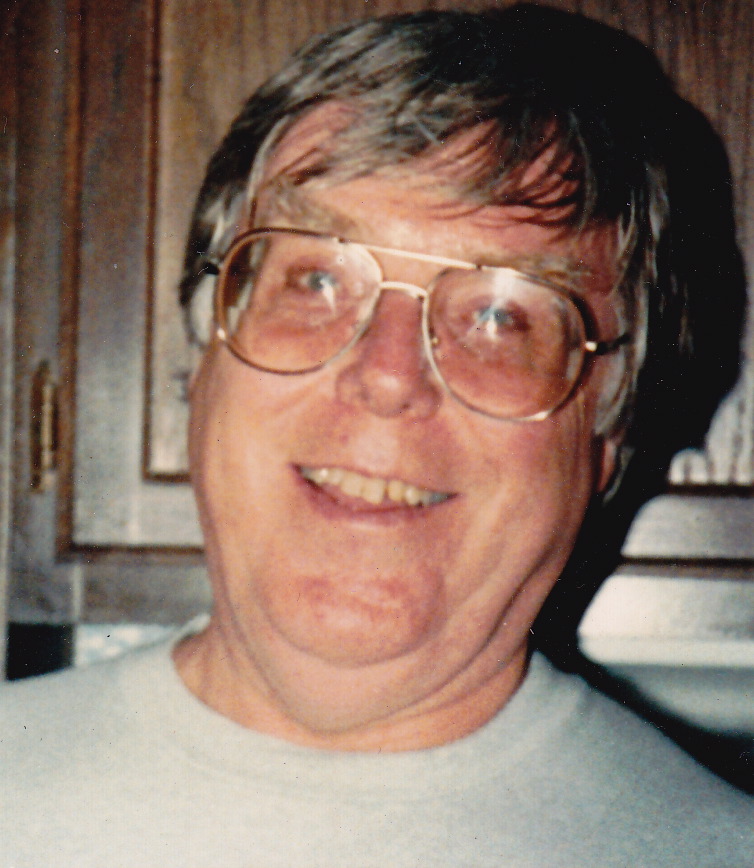
Robert Ross Jameson, April 1, 1936 – December 4, 2024.
Hope there’s lots of peanut butter up there in heaven! And, thanks for the lift.



 Saying nothing in particular