Any guesses as to who was known in the late 1800s and early 1900s as “The Charles Dickens of the Nursery”? Probably not, unless like Yvonne of the Priorhouse blog, you’re a fan of old and dusty books.
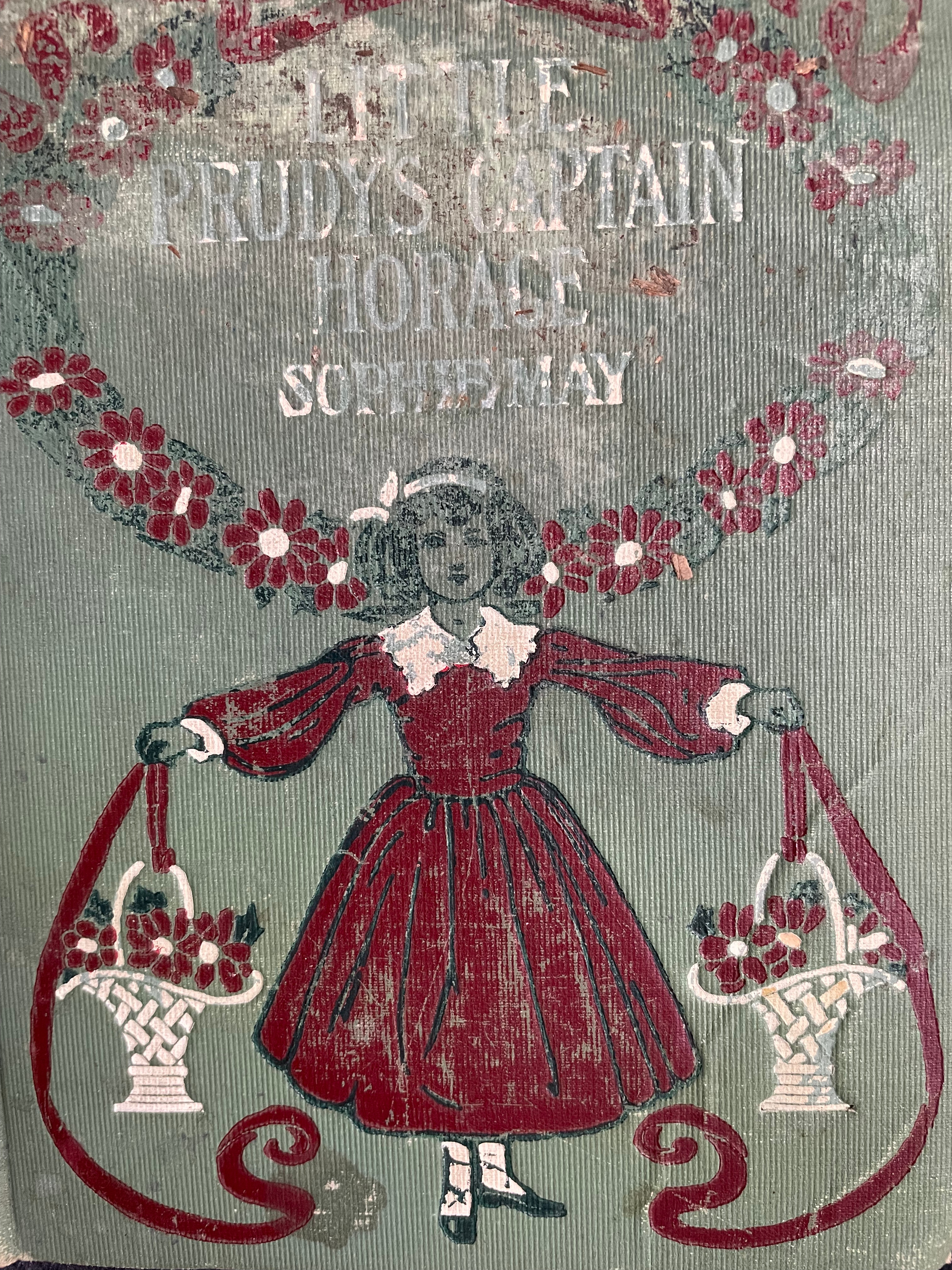
It was Sophie May, the pen name of Rebecca Sophia Clarke who spent her entire life in Norridgewick Maine (or perhaps Norridgewock. River Gal, perhaps you know?) Like Dickens, her stories started out being published in magazines such as The Congregationalist and Little Pilgrim where they were considered more realistic than the moralistic children’s tales of the day. Her most popular series was The Little Prudy Series.

I have, in my collection of damaged and dusty, water and coffee stained, and undoubtedly worthless books … two Miss Prudy books. They belonged to Helen Nelson, my maternal grandmother.
Aside from Miss Prudy, described by her creator below:

Miss May also wrote about Dotty Dimple (who seemed to be quite the adventuress), Flaxie Frizzle and the Quinnebasset Sisters.

However, I was a little shocked to find this notation in the back of the book.

Did my grandmother fail to return a library book? Heavens, what would Flaxie Frizzle have thought?
Also belonging to my grandmother were a couple of books by Edgar A. Guest (1881-1959). Anyone care to guess what he was known as?
Aside from:
“The last man in the world is Edgar Guest”
Internal monologue of Robert Neville in I Am Legend, by Richard Matheson.
 Saying nothing in particular