Words of Wisdom from Bruce Lee

I’ve been experimenting with a book I wrote years ago but was never really happy with. It was loosely based on experiences I had in Europe back when I was a naive know-it-all. Or, at least, that’s the image I had of my younger self. Here’s the thing, I wrote the book from the viewpoint of a nineteen year old when in actuality I was a forty year old, recently divorced woman with two children, deeply doubting many of the choices I ‘d made when young. I think you can probably guess which of the choices I was doubting.

The temp
Look at that computer! Yes, forty was a while back!

So, I rewrote the book from a third party point of view. I’m not sure if it improved the novel but I felt better about it. Thanks to Bruce Lee. I don’t think I’ll ever have his level of self-confidence, but writing a book from a first person perspective when you don’t particularly like that person, is not such a good idea.

This is not to say that all stories written from a first person perspective do their narrators a great disservice. I think the lesson learned for me, is to treat your narrator like all your other characters. No better; no worse. Has any random bit of wisdom ever changed your perspective. Bruce Lee – who knew!

Chocolates in the Snow

I just received an email about a writer’s conference to be held in Kauai in November.  Generally I stay clear of writer’s conferences because they include meets and greets with agents more interested the anguished memoirs of bi-racial transgender youths than anything from a boring old white women.  Some of them reject you nicely but most have a look that reads: “what a complete waste of time it is to even look at you.”  I get enough rejection for free; I don’t need to pay for it.

But Kauai beckons.  I’ve only been there once and the purpose of my visit was definitely not fun and games, but I felt at home, at peace there.  And so I told my husband that for my looming and hideously repulsive birthday I wanted go to the conference and I didn’t mind going alone.  He’s not an island person.  He claims island fever drove both his brother and nephew to drink. 

“Oh no. You’ll attract someone.” Poor fellow is on the waiting list for much needed cataracts. 

I had to explain to him that not even Danielle Steele would try use a literary conference as a setting for one of her romances. Imagine this entirely believable synopsis:

Trevor couldn’t believe his eyes when he saw the beautiful and sexy Dinah Dimlight of Dimlight Productions sitting in the audience listening to his reading from Forty Years of Hell, My Life Fighting Ebola.  When she said she could sell the concept to Disney with a few slight changes, he fell instantly in love. But she had more than a few slight changes in mind and so, enraged, Trevor turned to Sophie Goosebury, a fellow writer, for solace which she happily provided on the beach that night, under a thousand stars and listening to the barking sands.  But Goosebury had an ulterior motive – she wanted Trevor to promote her manuscript Kitties Armed With Assault Weapons to Dimlight as a possible cartoon series.

After I explained to Joel that two writers could never make a relationship work because the weight of propping up ailing egos would destroy at least one of them,  he said to me: “But you’re so confident.”

Holy Crap.
holy, holy crap
piss into the wind
unholy crapola

My husband is making the same assumption as many people:  I know what I want to do and I’m doing it. But being a writer in the age of a billion blogs, when you can’t go to a party without running into someone who is also a writer or wants to be a writer is like standing in line waiting to be chosen for a basketball team.  If you’re the last chosen, you’ll be sitting on the bench. But you keep on improving your skills.  You support the team and try not to be negative.  You have confidence that you’re doing what you want to do but uncertain you will ever have a chance to play on the court.

I’ve had old friends say  “I don’t have any special gifts or talents like you.”   They act as though I’m writing and blogging because I think I’m special. I am not special. I was the last kid chosen for basketball.  I was the girl whose guidance counselor suggested might make a good housewife.  I was the child whose father threw a birthday box of chocolates into the snow because she was getting chubby.   I am nothing special. 

I can still see those chocolates in the snow.

Except for the Dead Guy and Minus a Few Cousins

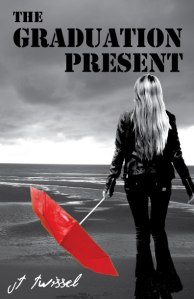
I’ve been re-editing a book I wrote and published via Booktrope a few years before they went out of business, The Graduation Present. Of the plot, Colm Herron wrote:

A hapless hopeless romantic American girl called Riley O’Tannen heads for Europe to get a taste of the old world and instead encounters her drunken uncle who keeps a mistress, her randy aunt who keeps a gigolo and a dead CIA man whose boss is a raving homosexual.

Which is what happened decades ago except for the dead guy and minus a few cousins.  Such is the dilemma when your write a “semi-autobiographical” piece.
I did travel to Germany unprepared for the realities of life in an occupied country.  I did have to pry my uncle from the bar every night and listen to my aunt sing the praises of her lover’s magical tongue “oh what it could do …”  My uncle’s boss was rumored to be a CIA operative, and he was a dead ringer in looks and manner for Truman Capote.  But, as to the rest, well, I could say time has warped my memory but the truth is, a bit of imagination was applied.  Perhaps too much.

When you write a book with at least one character recognizable to family and friends, be prepared.  
“You made me out to be quite the putz,” my uncle complained shortly after the book was published. Ironically if he’d read through to the end and not just the first couple of chapters he would have realized that Riley O’Tannen was the putz and not him. Still it gave me pause.  I know writers who will not base a character on someone they know until that person was dead and gone. Even then, it’s difficult.  

“And how about that evil burgermeister. I don’t remember him,” my uncle continued.

“I made him up.”

“Then that other story about me pimping you out for dinner…”

“The truth.  You said ‘look at all those lonely officers. They’d love to take a pretty girl to dinner. Why should I have to feed you all the time?'”

Number one travel book when I first went to Europe.

“I don’t remember.” Sadly he didn’t mention the people who were missing from the story, my young cousins neither of whom survived unscathed from that time. When you tell a semi-autobiographical story those are the choices you face.  Who to spare and who to expose.  Uncle Bob, who now preaches the gospel of Trump in a Walmart parking lot down in Tampa, has repented and been saved. He’s never without an eight ounce glass of gin and makes gross jokes about women’s body parts, but in the church of the almighty Trump all you need to do is speak in tongues and all is forgiven.  Plus, he was born with a teflon hide.

Happy Hour at the Officer’s Club, Worms Germany 1970

And the dead man?  He’s here with me now. He sits with eyes tunneling into the night sky as we ride through Switzerland time and time again and see no stars, just a cold and apathetic landscape. Toward the end, he’d been relegated to a seat at the table reserved for those with frozen boots who couldn’t move on. They are the best people for a writer to know.

I relieved him of his misery.  I killed him.  I let him die in a place where he’d known happy times and not in a Veteran’s hospital. And that’s what writers do. But should we?
What a Miserable, Mother-Swiving Profession

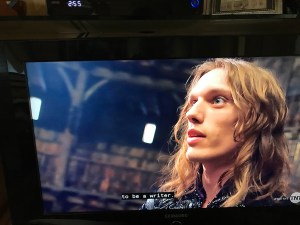
“What a miserable, mother-swiving profession it is…”

“. . . to be a writer.” Christopher Marlowe

I’d rather be pussy grabbed by Trump than re-publish a book of mine ever again. Flipka, my first book, has had four editors over the stretch of four years.  As a result, I’ve been hornswoggled into a flummoxed higgledy-piggledy, lolly-gagging pusillanimous puke.  It’s not the editors’ fault.  They just didn’t agree with each other which always puts the writer on a ride down the Iron Maiden.

Coincidentally I’ve also been watching the miniseries “Will” which focuses on the so-called “lost years” of William Shakespeare, in this case, the years during which he made a name for himself in London.  Since not much is known about those years, the writers took a few liberties based on events of the day. The first season focused on the dangers he would have faced in London because he was Catholic in a society dominated by blood-thirsty Protestants. This is not something I remember coming up when studying Shakespeare in college but perhaps it did and age has dulled my mind.  I do remember endless discussions about his sexuality which brings me to that other great playwright of the time: Christopher Marlowe.

In this series, Marlowe is the “writer,” agonizing over the meaning of life and the futility of it all, whereas Shakespeare just wants to make a buck to support his family.  He’s the story teller.  I know people who consider it a personal effrontery to be called a story teller. They are “writers.” Their work does not rely on a plot or characters but journeys to the soul of the reader through the divinity of their prose.  Well, that’s cool. But few people can actually do that and I’m not one of them.

Anyway, if I wanted to spend my days intellectualizing over a process no one really understands, I would have made my father a very happy man and gone on to graduate school.  So, my question for you all is, are you a story-teller or a miserable mother-swiving writer?

By the way, I’ve been reposting a lot of “cuttings” from Duke Miller’s soon to be re-released (hopefully) Living and Dying with Dogs, Turbo Edition.  In his over twenty years traveling the world working with refugees he’s seen things most of us only run into in sweaty nightmares of the Apocalypse. It’s a remarkable report from the wreckage of Planet Earth: the Human Edition.  Quite timely.

Tell Me WHY

I have a hard time answering the question “why do you write.” whyThis, I’ve been assured, is a disaster. Being able to articulate your WHY is a key element to “building your platform,” “branding yourself” or “finding a niche.”  People who succeed in the WHY will sell books and those who don’t, won’t.

The WHY, being so important, must be answered before we set pen to paper or slop enchiladas over our keyboards in the middle of the night. However, being that I’m a half-ass backwards kind of person, I started writing long before I knew about the WHY.  I just sat down and words came out.

Philomena

The God moment

However lately I’ve had a revelation.

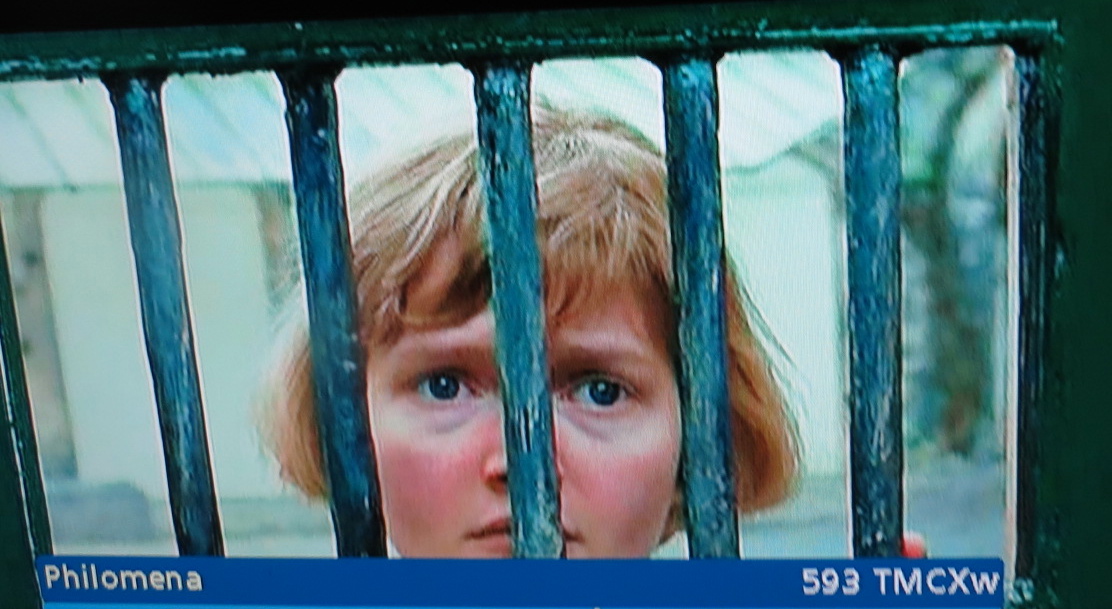
Revelations are strange things, aren’t they?  You see the face of Jesus in beer foam and suddenly boom/ bang you know your WHY. I wish I could say this revelation came to me while meditating on the top of the mountain or deep in the forest but it didn’t.  It came to while sitting on my butt, eating peanuts and watching Philomena, which, for those of you who haven’t seen it, is a full box of Kleenex movie about an Irish girl forced to give up her baby by evil nuns. When she goes in search of him many years later those same nuns lie about not knowing his whereabouts and so she turns to a journalist for help.  The journalist takes on the assignment not out of the goodness of his heart.  He intends to turn her story into a “human interest story,” one which will tug at the hearts of readers and reestablish his drowning career.  His WHY is money and fame.

Several times during their search Philomena balks at the idea of her story being publicized. Does she really want to expose things long unseen or forgotten?  Painful things, the revelation of which may alienate family, friends or even God?

Philomena1Would you?  That is often the dilemma facing writers. In telling a story will we incur the censor of family and community, maybe even God?

I’m sure once Philomena’s story did get published (and turned into a movie) it irked the Church to which she’d remained faithful, despite their treatment of her (where is Jesus – lost in the beer foam?). But it also brought to light an abomination and maybe even helped other poor Irish women to find their stolen sons.

So my WHY is a slippery little devil.  Sometimes I write for fun and sometimes it’s a slide down the Iron Maiden.  But if I write with the intent of not stepping on anyone’s toes (even my own), it doesn’t feel genuine.

Here are more articulate writers on the topic of why they write.

  • “Those of us who write do it because there are stories inside us burning to get out. Writing is essential to our well-being.” Judy Blume
  • “My aim is to put down on paper what I see and what I feel in the best and simplest way.” Ernest Hemingway
  •  “Writing is a dog’s life, but the only life worth living.” Flaubert
  • “I write entirely to find out what I’m thinking, what I’m looking at, what I see and what it means.” Joan Didion
  • “If I don’t write to empty my mind, I go mad.” Lord Byron
  • “Writing is the only thing that, when I do it, I don’t feel I should be doing something else.” Gloria Steinem
  • “To me, the greatest pleasure of writing is not what it’s about, but the inner music that words make.” Truman Capote 

Of these esteemed writers I think Lord Byron’s WHY makes the most sense to me.  How about you?

Let’s go fly a kite!

The other day I watched Saving Mr. Banks, a fictionalized account of the filming of Mary Poppins, which I have to admit was not my favorite Disney film.  Apparently, PL Travers, the author of the book, had an even stronger reaction.  She gave ole Uncle Waltie such gas that at first she wasn’t even invited to the premiere.  The reasons she gave for her disapproval were: the nanny wasn’t strict enough and Disney insisted on adding animation.  After her experience, she refused to allow him to film any of her other books. (Watch the trailer from Saving Mr. Banks.)

banks

The movie Saving Mr. Banks implies that Travers’ hatred of the movie went far deeper than a dislike of dancing penguins.  Apparently the filming brought back memories of her delightfully fanciful

Penguins
The “loathsome” penguins.

but totally irresponsible father and the stern aunt who arrived after his premature death to pull the grieving family together.  In the Mary Poppins’ books, the nanny is able to save the whole family whereas in real life, help arrived too late. So you could say PL Travers used fiction to save a father she’d tragically lost and for that reason, seeing him and her beloved aunt portrayed as Disney caricatures must have mortified her. I can understand this feeling well. The other day someone commented that the Captain Wug character in FLIPKA was a “crazed geezer.” 

From Bing images
From Bing images

Since that character was based on a decorated war hero, I freaked.  What have I done, I thought.  Turning the beloved people in my life into caricatures? The person who made the comment was surprised by my reaction.  Many memorable characters in fiction began their lives in the impressions of children, he pointed out, and thus are often capable of the improbable, the fanciful, and the heroic. They are also subject to caricature.  Every book we publish is like a kite we launch into the sky.  Everyone who sees the kite will see it differently and about this fact we can do nothing except be happy the kite is flying. 

By the way, PK Travers was not the first nor will she probably be the last author to hate the film version of their baby:

Farewell
I don’t know about Papa, but this book cover implies a little hanky-panky might be going on.

About the movie adaptation of The Shining, Stephen King complained the hotel was not sufficiently “evil” and Jack Nicholson acted “too psychotic.” Having read the book and seen the movie,  King’s comments made me think he doesn’t know what he wrote!  I could say the same thing about Ernest Hemingway’s response to the first adaptation of A Farewell to Arms.  He felt it was “too romantic.”  Okay.  Here’s what I think. The heroine was based on his first wife and by the time the movie came out he was probably on his third.  Sounds like the rascal was just trying to save a marriage!

The list goes on to include so many authors that I decided if anything I write is ever made into a movie or play, I’ll try to keep this in mind – it’s only a kite I launched which once airborne belongs to the world.


Click here to read about other authors who hated the movie adaptations of their books.