
When I first read John Updike I was just starting on this grand adventure called life and therefore not prepared to appreciate the “mundane” which Updike strove to give “its beautiful due” (The Paris Review interview, #43, 1968). But his short story (The Gesturing) had been highly recommended so I gave it a shot. Here’s the plot in a nutshell: A man and wife are considering getting a divorce after many years and affairs. It’s not that either is miserably unhappy but they are simply looking for the “least boring” way to lead their lives. When the man finally does move out he calls his wife to say “I feel I’ve given birth to a black hole.” Nevertheless they forge ahead with a divorce. Afterwards, they get together for sex from time to time and to gossip about their current lovers.

Not surprisingly The Gesturing was first published in Playboy Magazine in 1980. Apparently, most publishers were still squeamish about the concept of guilt-free sex.
But Updike’s message is not about sex. It’s about communication. There are gestures that are brave bluffs; there are wasteful and empty gestures, gestures without an audience, gestures that are helpless displays, and even unending gestures that would endure, cut into glass. Among the many definitions for the word “gesture” are: marking the rise or fall of the melody (music), expressing ourselves after utterances fail, and a perfunctory or symbolic action generally of little importance. Any or all could apply.
I was reminded of my parent’s marriage. They never argued. There were never shouts or tears. They had affairs with other people. Not great love affairs that drove them apart but just “phases” (as my father would say). In the post War prosperity that was suburbia, like Updike, they were just trying to lead the “least boring life.”
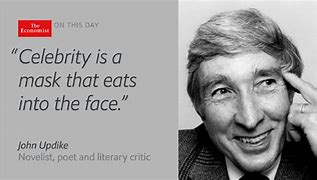
According to the book Generations by Strauss and Howe (a book my husband loves to quote), both my father and Updike were products of the so called Silent Generation, people who grew up during the greatest period of sustained economic growth that America has known and were “quietly grateful” to have escaped the horrors of the Depression and WWII. They preferred working within the system and were “incompetent of turning down an invitation to a party at which they are guaranteed to have a bad time.” (John Updike’s Couples, Christine Smallwood in Bookforum), Once I realized who he was writing for, I was able to read Updike with a bit more understanding. I can’t say he’s my favorite but he did make me think. And he did have a way with words. Here are a couple of my favorite phrases:
“she was giddy amid the spinning mirrors of her betrayals.”
“encountering problematic wife substitutes at laundromats.”
“his smile was a gesture without an audience.”
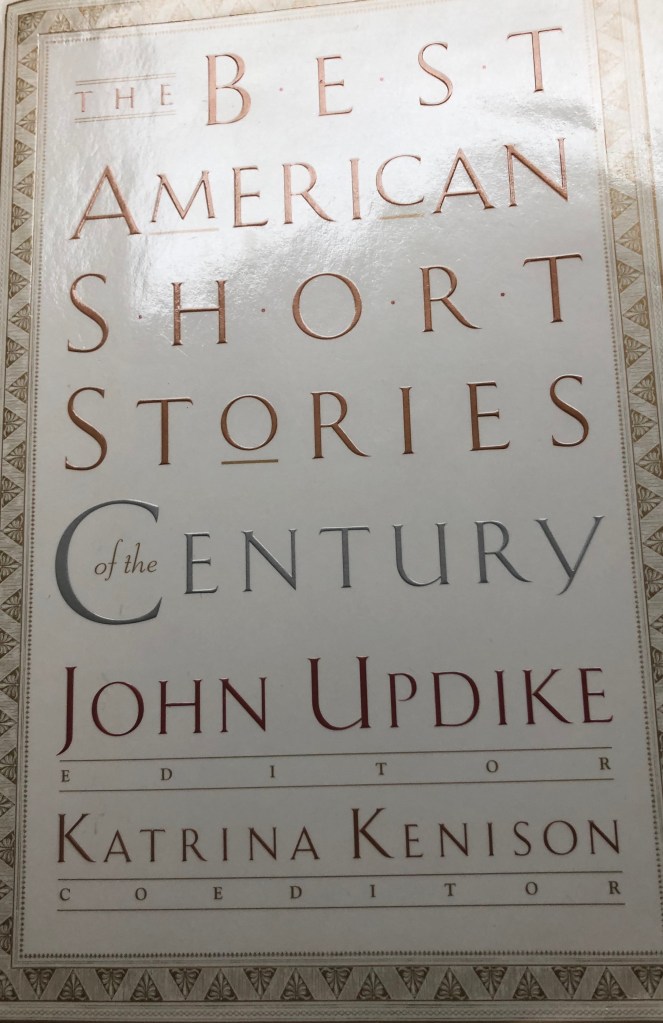
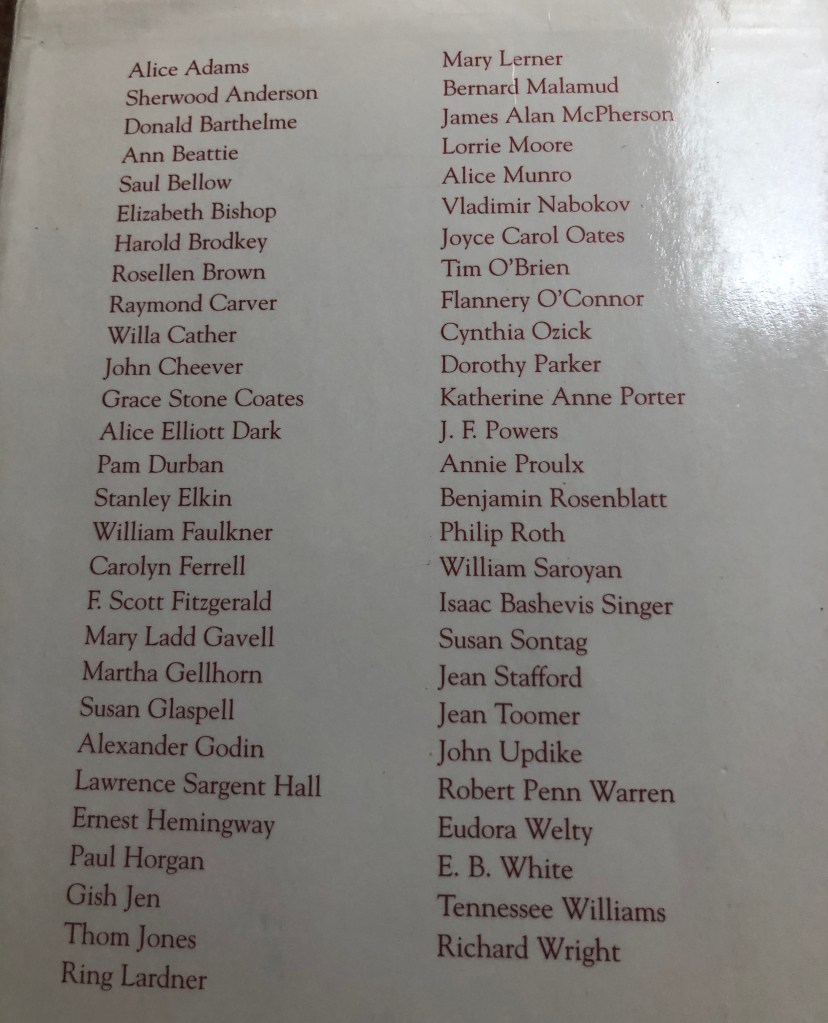
I may reread his novels just for the pleasure of his words. However, I do have another 80 short stories to go through first. Next up, Eudora Welty’s The Hitchhikers. Do you think it will be the light-hearted read which I badly need?
















 Saying nothing in particular