Alta California

Having seen most of the state of California, I must admit I feel sorry for anyone who’s never been here. Most people are partial to the southern part of the state where the weather is generally warmer and beaches, long and sandy and crowded with Bay Watch beauties of both sexes, but I prefer the cooler weather. Those tanned and muscled surfers and volley ball players no longer ring my ring-a-ding-ding (I can’t remember if they ever did … that’s how bad it’s getting, folks!)

To many Southern Californians, Santa Barbara is the beginning of the transition from SoCal lifestyle to NorCal lifestyle. I like to tell my daughter that’s because some people in Santa Barbara have actually visited a library.
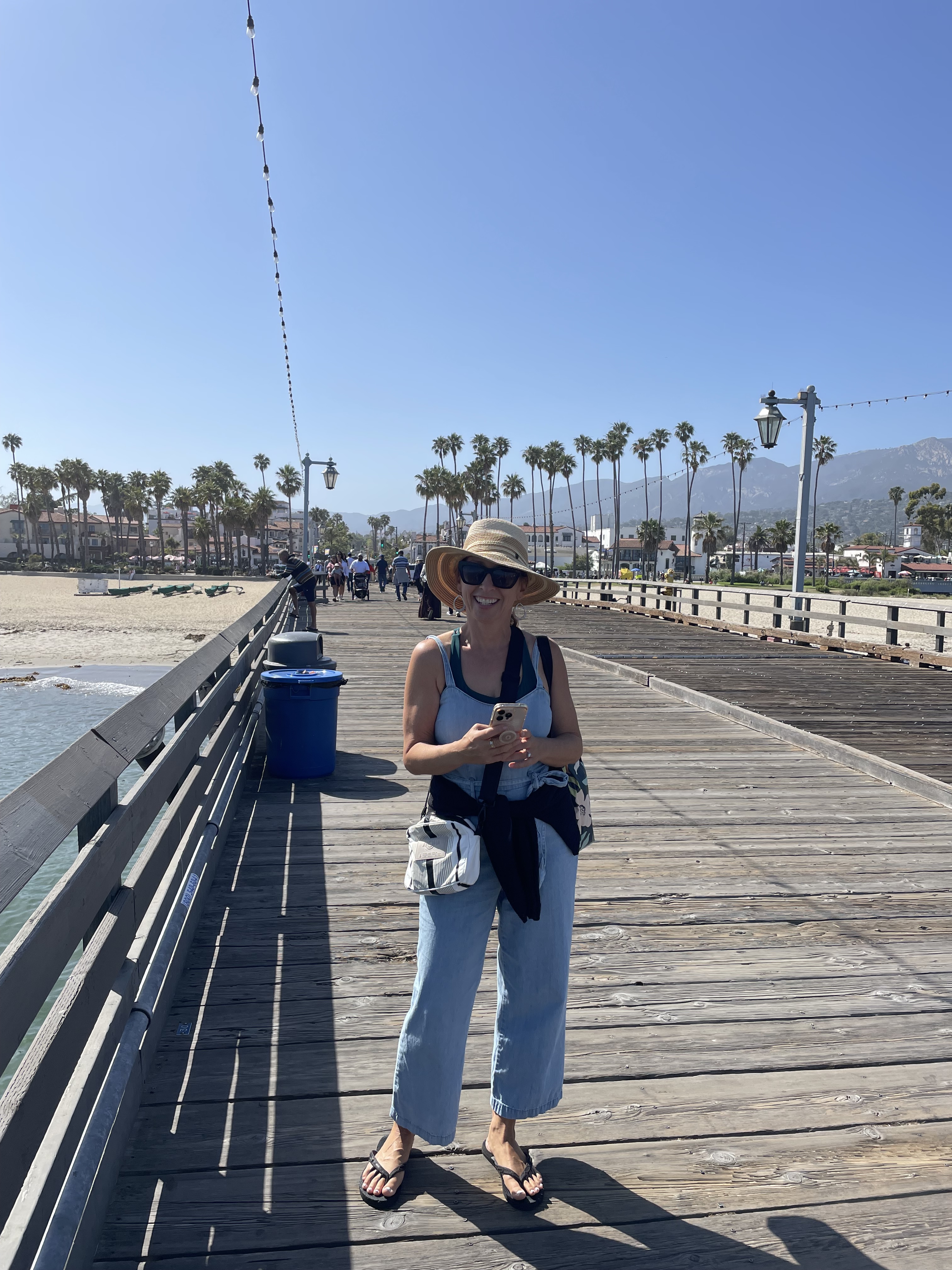
Boo on Santa Barbara’s pier. She doesn’t think I’m funny.

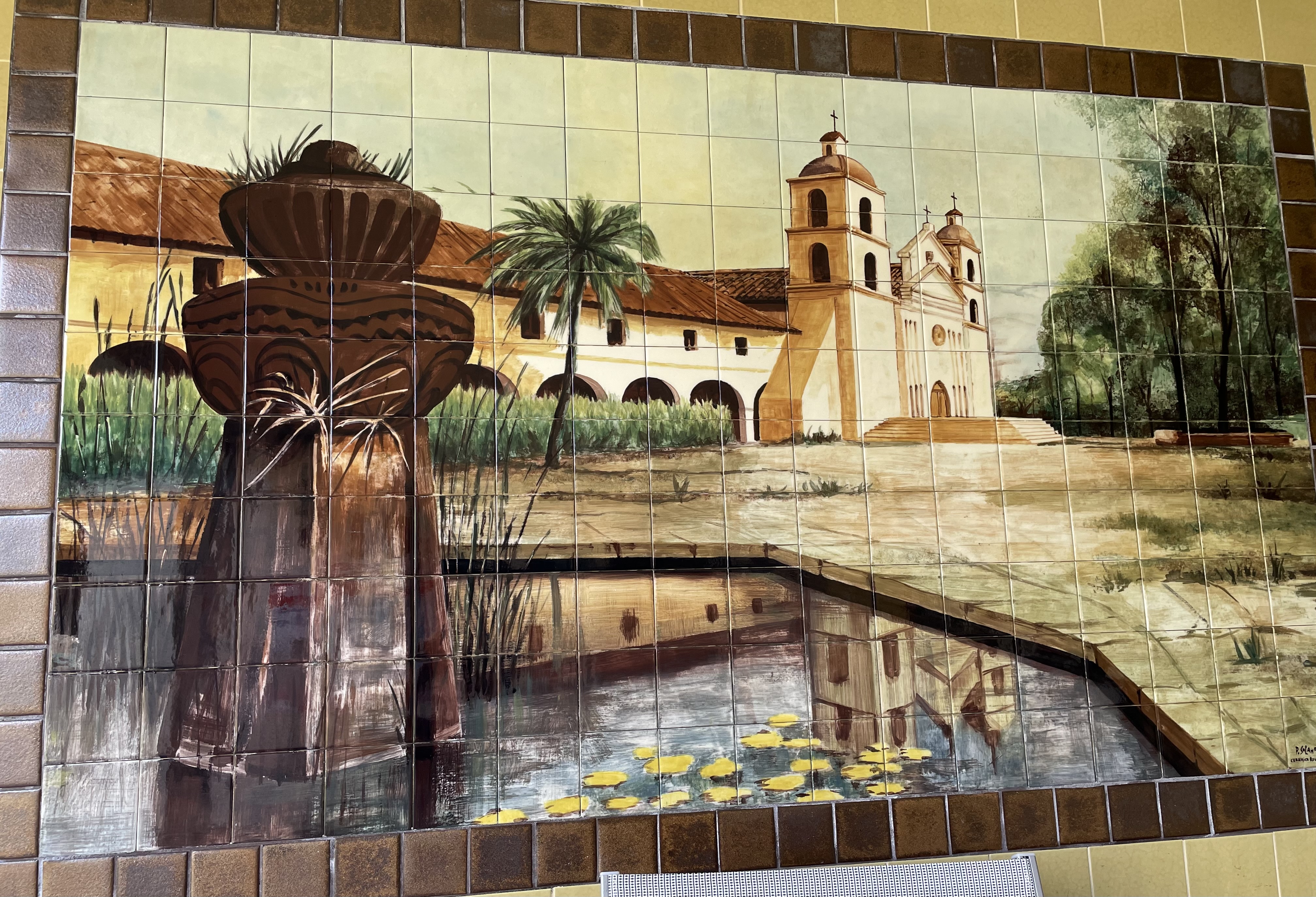
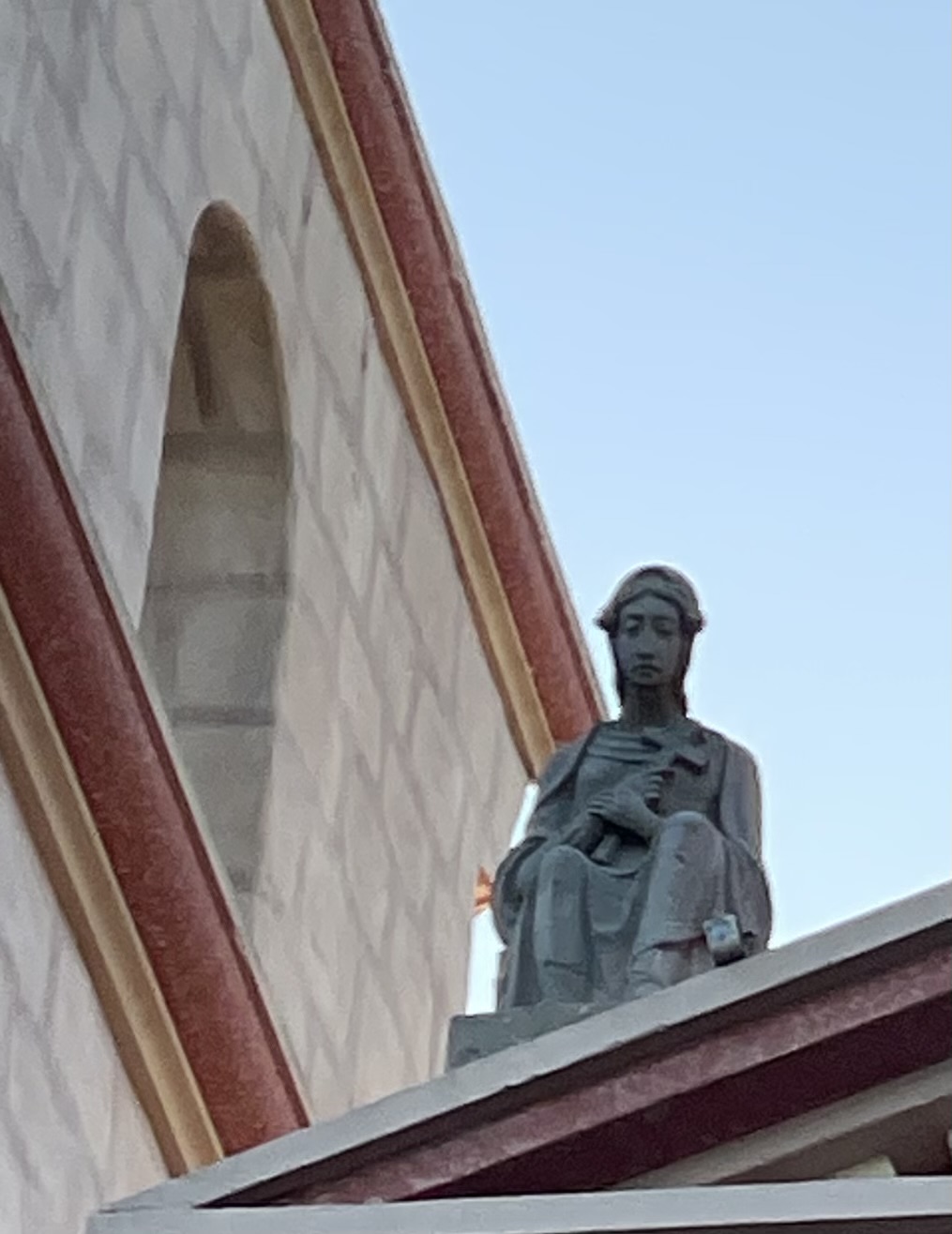
SB is famous for its Spanish style architecture. There are tons of mosaics.
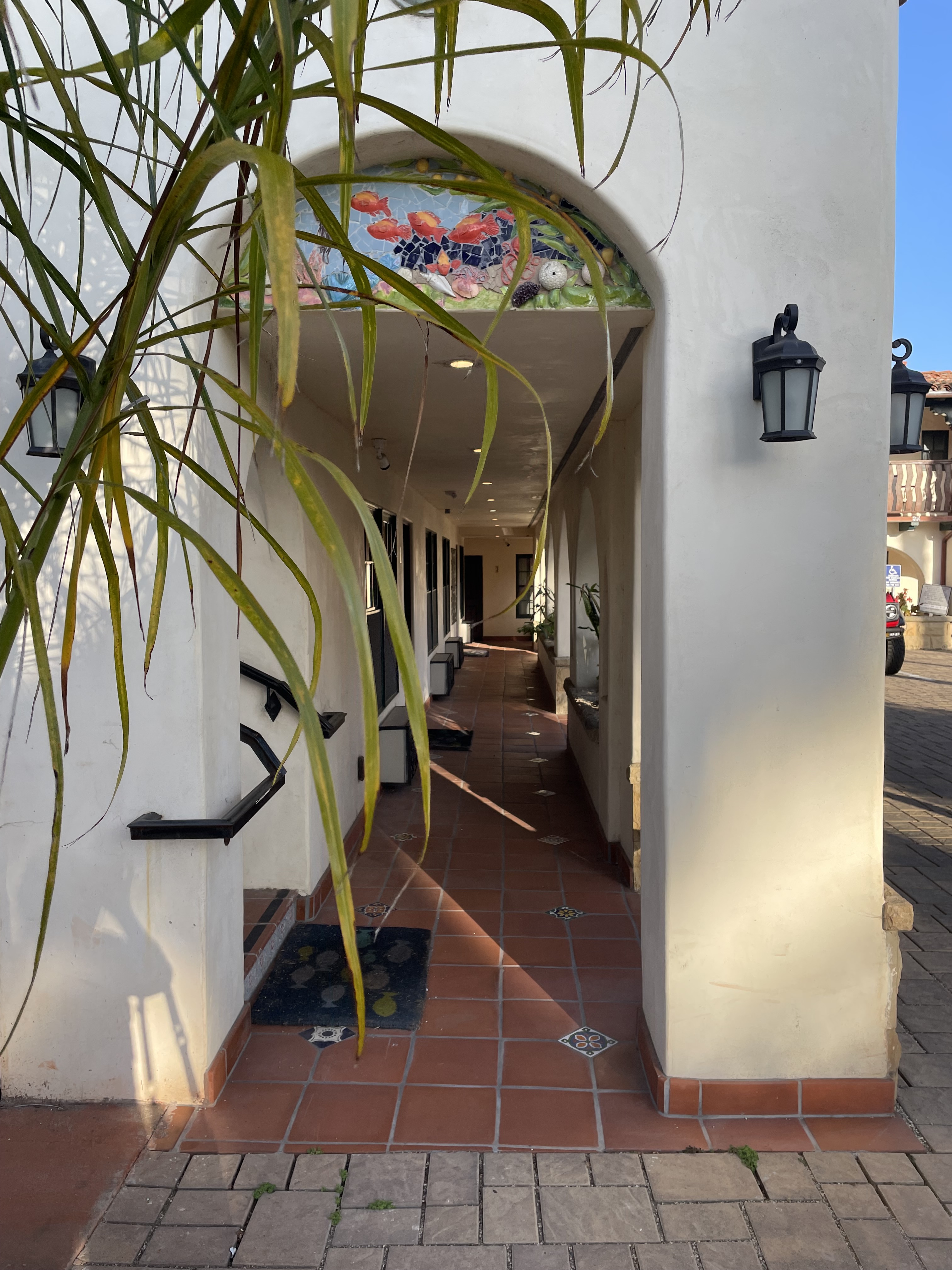
One of the entrances to the Tide Pool. I believe these are former condos that are now short term rentals but there was no lobby so who knows. I was chasing an eight year old and my phone was dying.
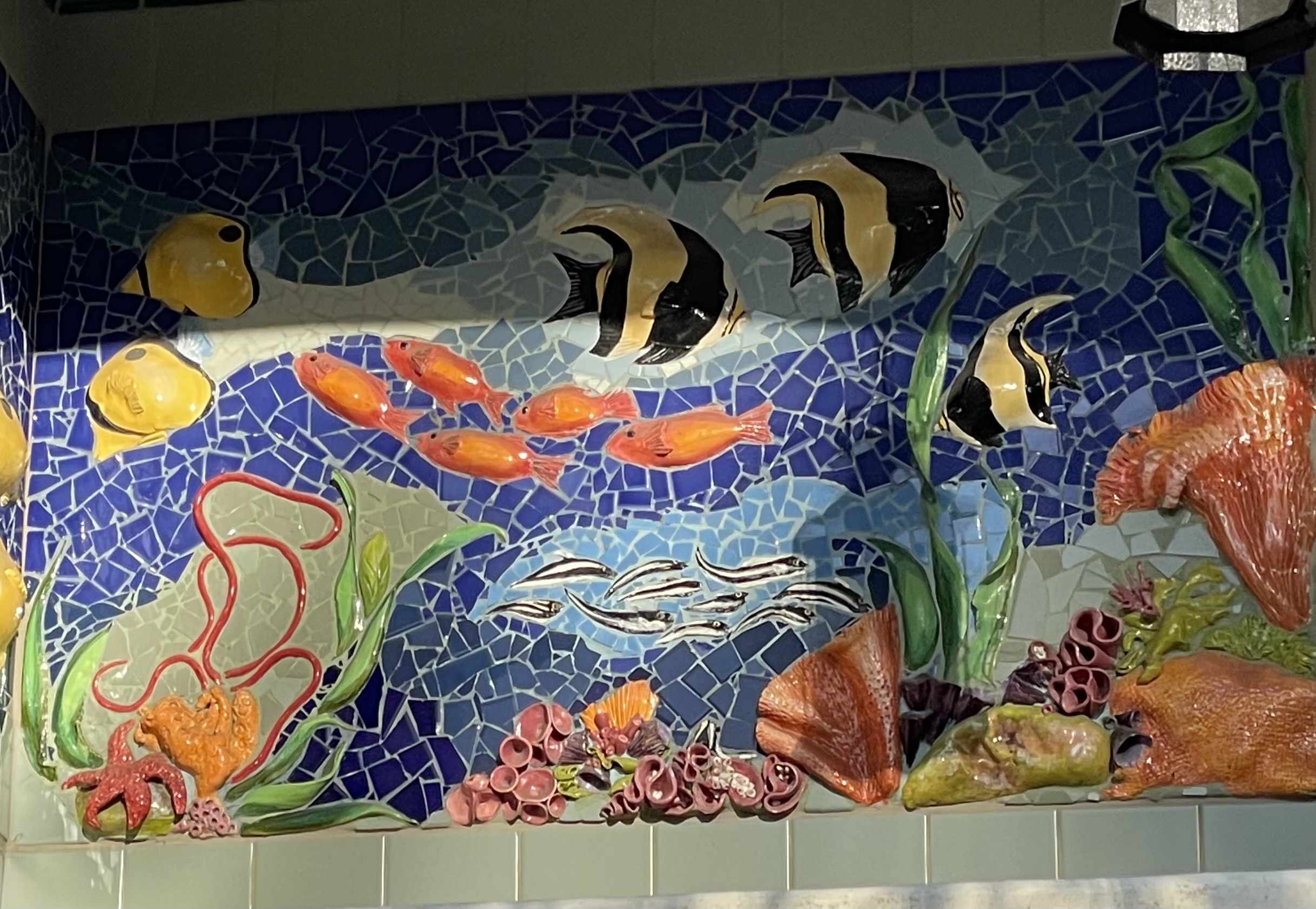
On the side of the Tide Pool.

Below are tile mosaics on the wall surrounding the “whirlpool” at our motel. I guess a whirlpool is a partially enclosed hot tub. Who knows? It was an old motel.
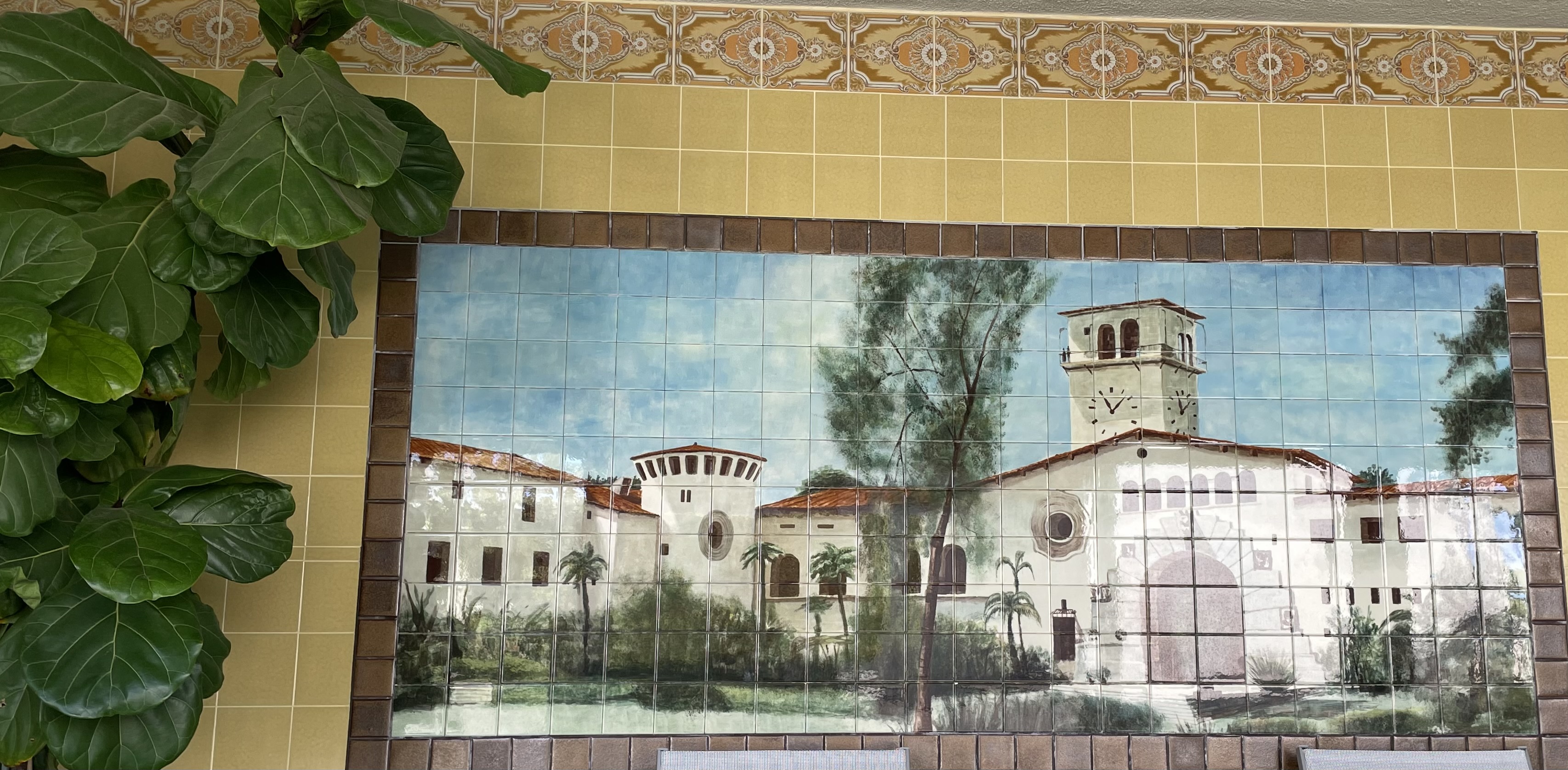
The Santa Barbara Courthouse. (which I believe is now party/wedding venue)
The “Queen of the Missions”

The eight year old had found some lizards to chase so I didn’t get any photos of the whirlpool itself.

Tomorrow … more about the Queen of the Missions and the town they call “Slow.” Any guesses on Slow’s actual name?
Life was easier in a training bra

I was in the middle of debating my doubtful parents over the necessity for a training bra (I didn’t need one but I desperately wanted one) when the movie A Hard Days Night finally reached one of the two movie theaters in my hometown of Reno Nevada. The Granada sat on the edge of the Truckee River about two blocks down from the Mapes Hotel which I’ve written about before. Back then, an easy two mile walk from my house on the end of Washington Street.

The Granada, Reno Nevada

The Granada always had a double feature on Saturdays and, once you bought your ticket, you could stay all day. And we did. I don’t remember who I first saw the movie with. Probably my neighbor, Lee Lee (who actually needed a bra and planned to marry George Harrison) but I do remember the second feature. It was Romeo and Juliet starring Rudolph Nureyev and Dame Margot Fontaine. As a budding ballerina I loved watching Nureyev fly across the stage again and again but I can’t say the same for rest of the audience. They took advantage of the break between showings of A Hard Days Night to smoke in the bathrooms.

Yesterday I noticed that A Hard Day’s Night had been added to the roster of “Classics” on HBO Max. Ouch. Did I dare stream a favorite from my training bra days whilst strapped in my 34 D “over the shoulder boulder holders”? Would the movie maintain its magic after … don’t say it … fifty plus years? Did I dare find out?

Of course, you know I did. I guess I needed a diversion from the precipice of Civil War on which we Californians now stand. Would I do it again? Noooooo. This is a movie whose primary purpose was to cement Beatle stereotypes: Paul as cute and charming, John as rebellious and snarky, George as cool and mysterious, and Ringo as goofy and lovable. I now know too much about those four human beings (doesn’t everyone?) because, watching the movie in my over the shoulder boulder holders, John seems insecure and painfully self-conscious while Paul seems cocky and smug. George was already so thin and fragile looking that my heart wept for him. The only one who after all these years still seemed the same was Ringo, below in arguably the best scene in the movie.

At the end of the clip, Ringo watches the four young “deserters” hanging out on the edge of the river perhaps thinking back to the time when he was young and carefree. Before he got trapped by overwhelming fame. Have you ever watched a film you loved as a kid and been disappointed? Or worse, saddened? Do you think DT will rest after he destroys LA? Or is this just the beginning?

The People’s Poet

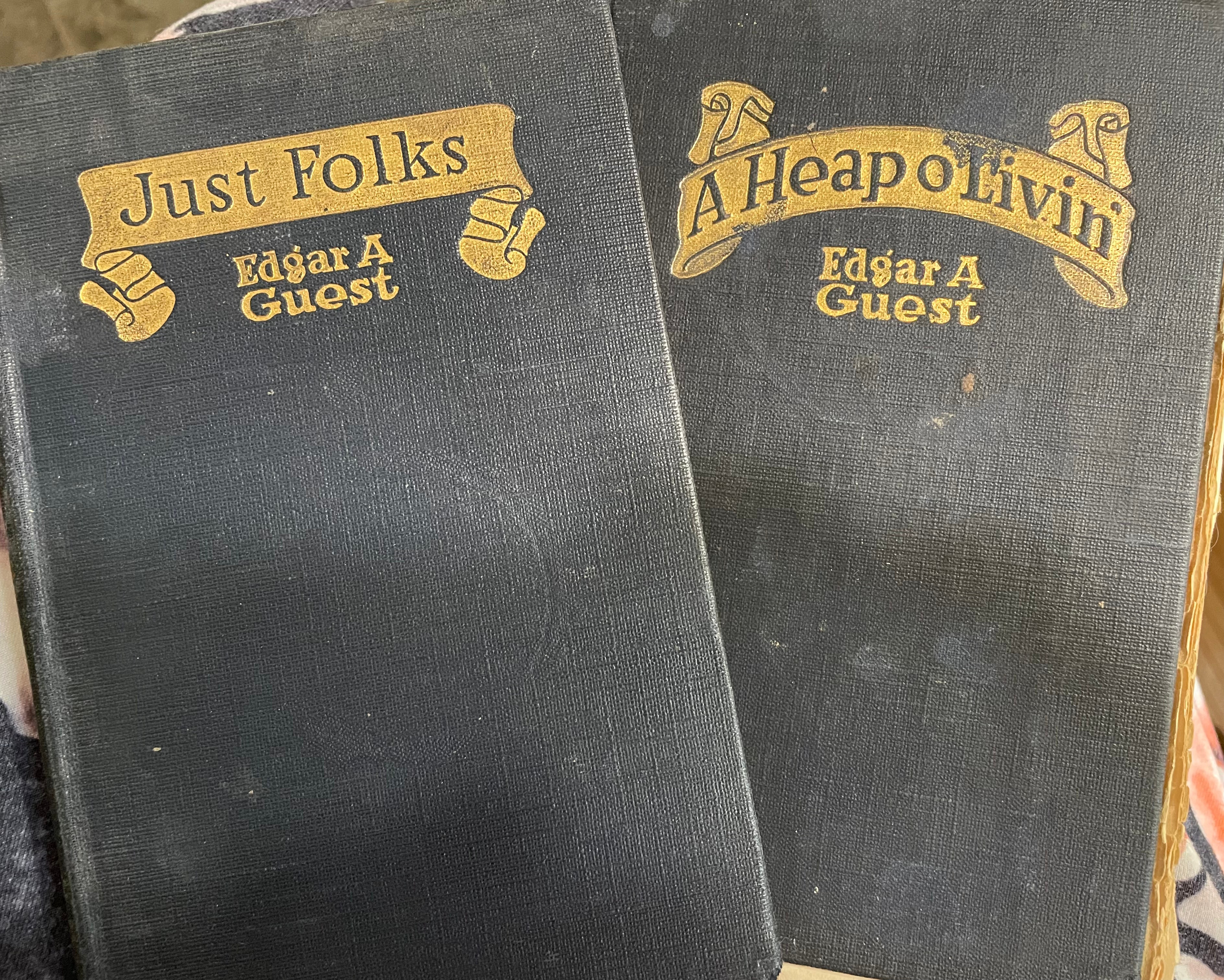
Edgar Guest, 1881-1959, was born in Birmingham England and raised in Detroit Michigan where he lived for most of his life. He started working for the Detroit Free Press as a child. So he was a guy with solid working class credentials and deserves the title The People’s Poet. One would expect his poetry to reflect the nitty-gritty of life in a newsroom but instead he is known for his inspirational and uplifting prose.

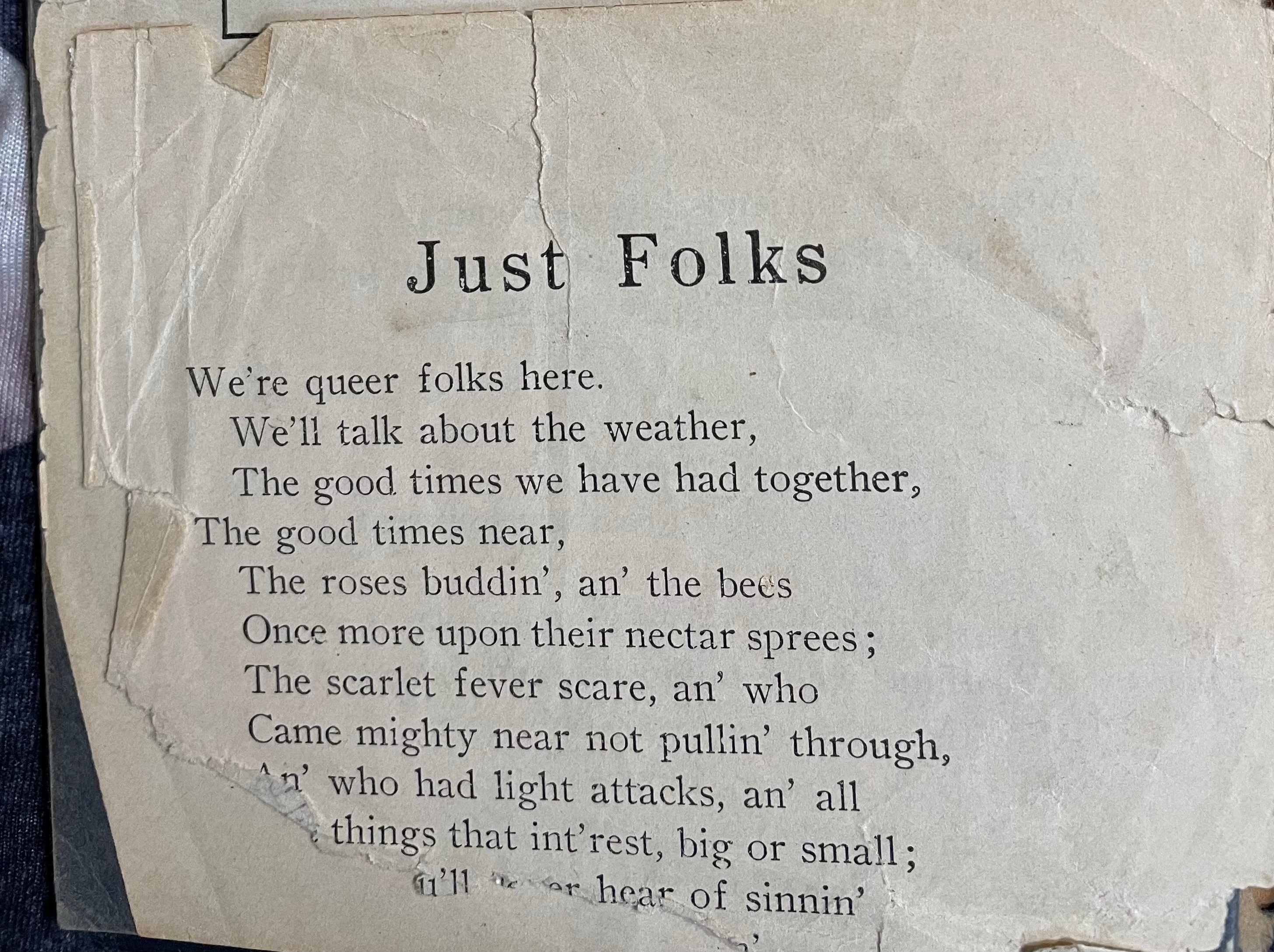
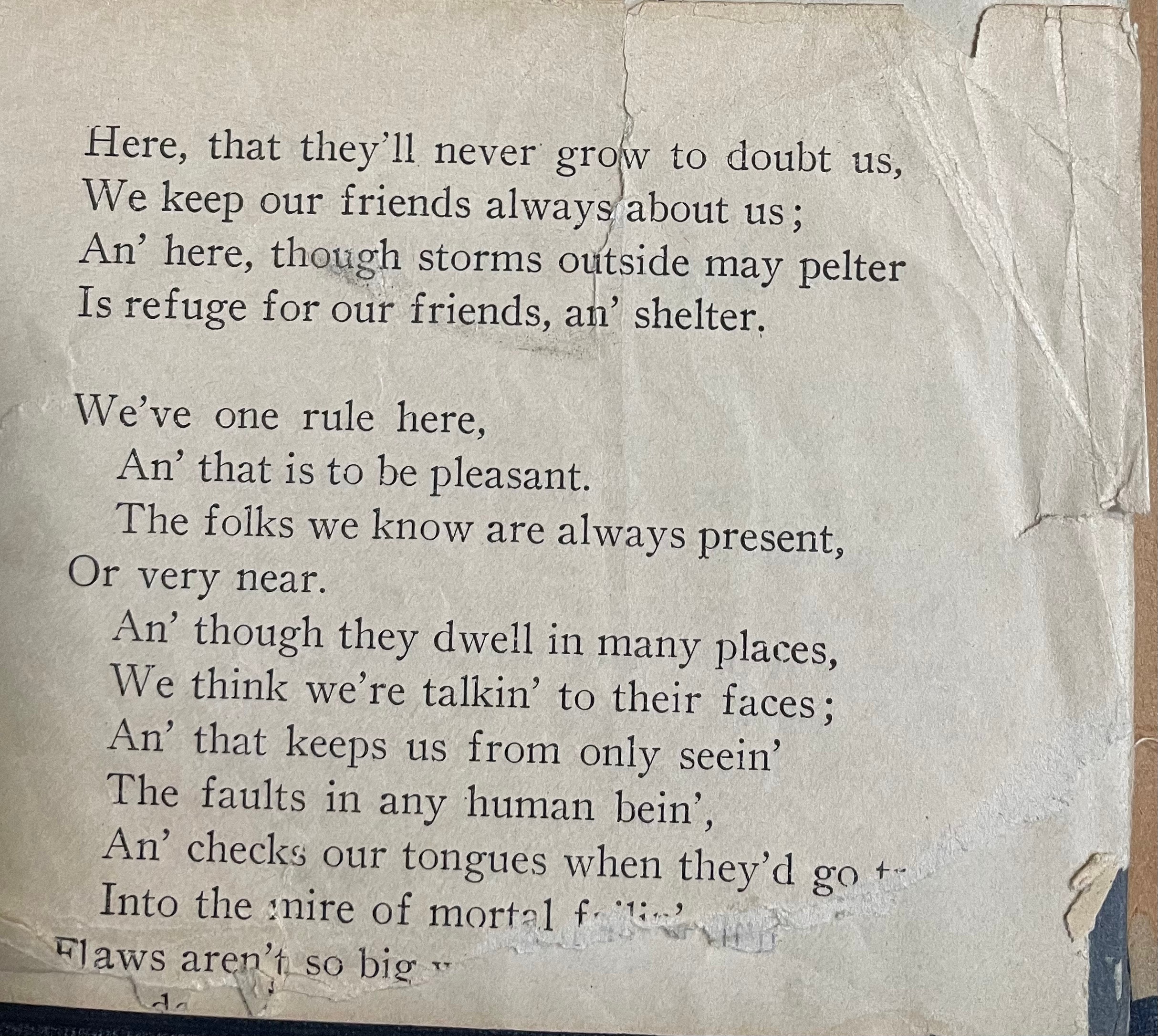
These books were probably published in 1913 and they are in extremely poor shape. Guest is estimated to have written more that 11,000 poems, most of which were fourteen stanzas long. I have no idea why.

The two books of his in my possession probably belonged to my paternal great grandparents, Abezer and Harriet Jameson who lived their entire lives near Chicopee Massachusetts. My other great grandparents were Swedish and probably didn’t speak the language that well.

I am loathe to criticize any artist but I can see why a steady stream of Guest might inspire visions of the zombie apocalypse.

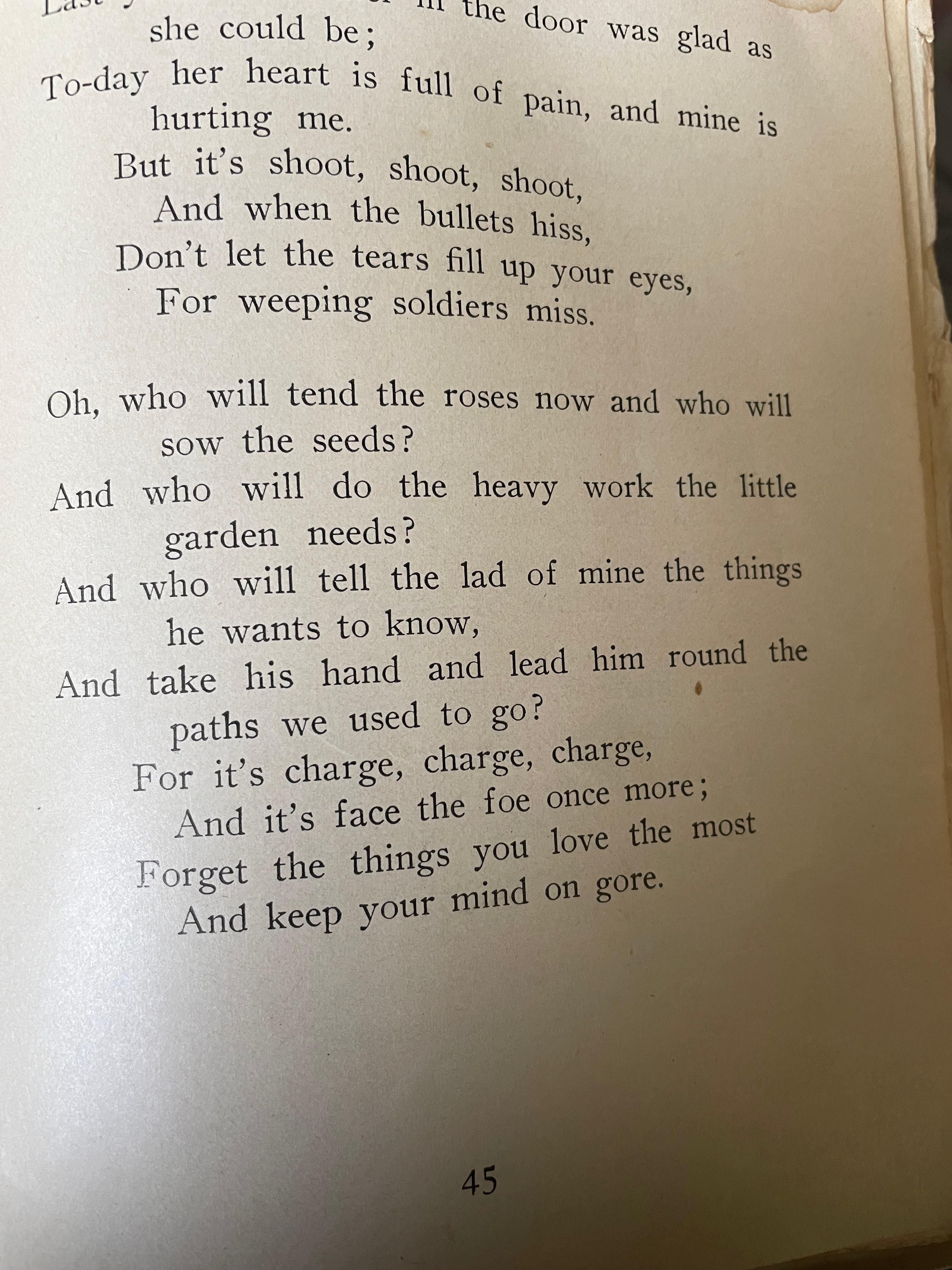
However, I did find this interesting snippet from one of his fourteen stanza, all in rhyme pieces:

It reminded me of a famous song by Pete Seeger. Do you suppose Seeger grew up listening to Guest’s radio program, “A Guest in the House,” and got inspired to write a protest song starting with an unanswerable question?

The Charles Dickens of the Nursery

Any guesses as to who was known in the late 1800s and early 1900s as “The Charles Dickens of the Nursery”? Probably not, unless like Yvonne of the Priorhouse blog, you’re a fan of old and dusty books.

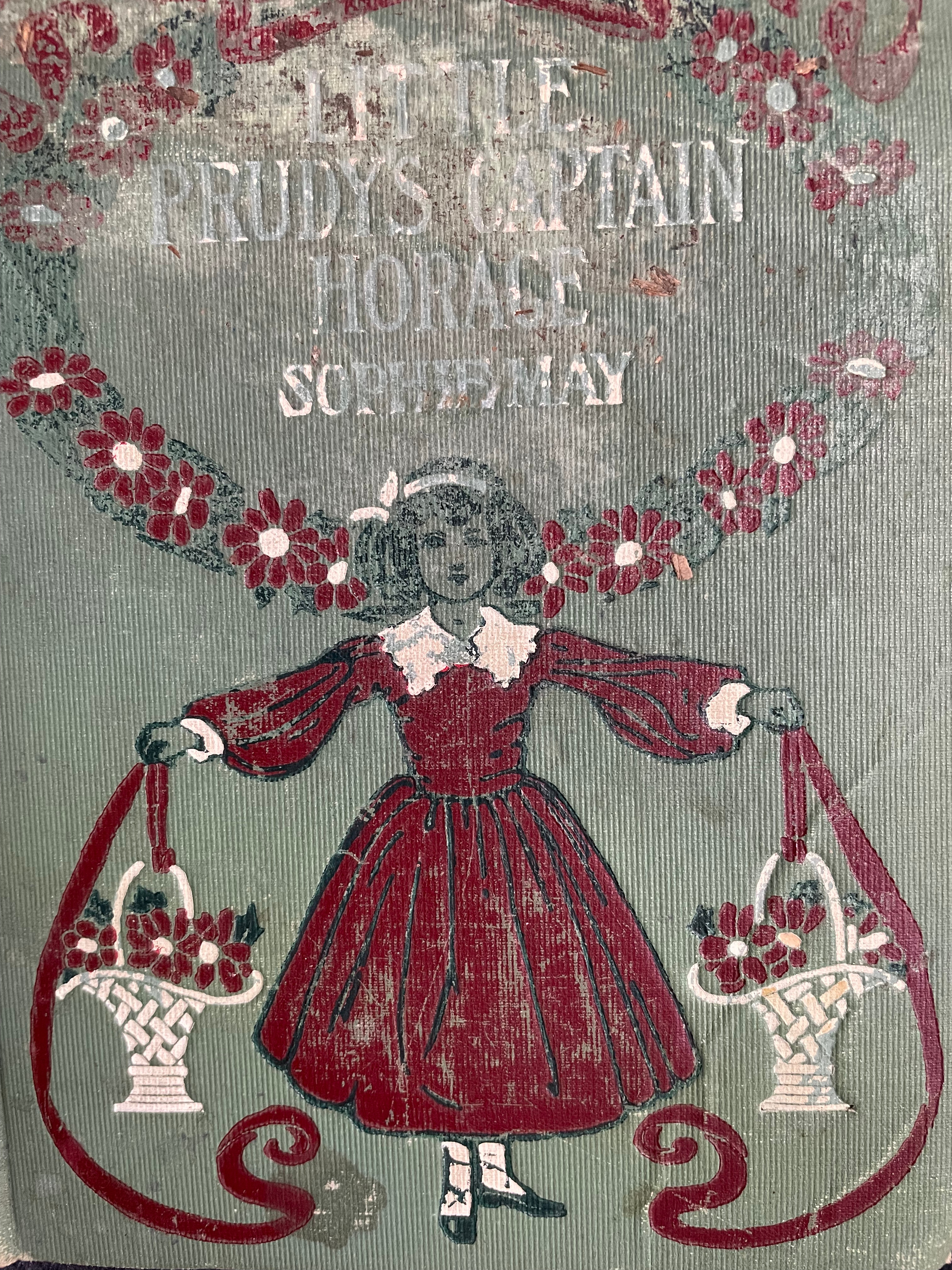
Little Prudy’s Captain Horace, circa 1863. Before you get the wrong idea, Captain Horace is boy who dreams of being a captain. Not some sort of middle age pervert stalking Little Prudy.

It was Sophie May, the pen name of Rebecca Sophia Clarke who spent her entire life in Norridgewick Maine (or perhaps Norridgewock. River Gal, perhaps you know?) Like Dickens, her stories started out being published in magazines such as The Congregationalist and Little Pilgrim where they were considered more realistic than the moralistic children’s tales of the day. Her most popular series was The Little Prudy Series.

M.A. Donohue & Company published high quality children’s books until the 1960s! Now they are more famous for their building on Printer’s Row in Chicago.

I have, in my collection of damaged and dusty, water and coffee stained, and undoubtedly worthless books … two Miss Prudy books. They belonged to Helen Nelson, my maternal grandmother.

Aside from Miss Prudy, described by her creator below:

Miss May also wrote about Dotty Dimple (who seemed to be quite the adventuress), Flaxie Frizzle and the Quinnebasset Sisters.

However, I was a little shocked to find this notation in the back of the book.

Did my grandmother fail to return a library book? Heavens, what would Flaxie Frizzle have thought?

Also belonging to my grandmother were a couple of books by Edgar A. Guest (1881-1959). Anyone care to guess what he was known as?

Aside from:

“The last man in the world is Edgar Guest”

Internal monologue of Robert Neville in I Am Legend, by Richard Matheson.