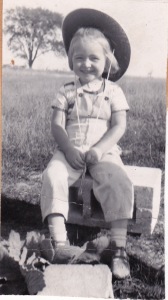
I am a picky eater; I really am. Gooey things make me squeamish.

But I tossed this gelatinous glob into my mouth and, per instructions, rolled it around with my tongue and then … bit down on the seed pod. I chewed a few crunchy bits and swallowed them before being warned by Mason: “You won’t get much sleep tonight but you will be regular as hell!”
I’d eaten the seeds of the cocoa plant; the things which are carefully fermented and ground into award winning cocoa powder. Mason was the Hawaiian botanist who, with all the charm, wit and energy of a young Robin Williams, kept a couple dozen chocoholics entertained for three hours.


Pods come in many shades of red-orange and banana-yellow. To ascertain which ones are ripe, they peel off a bit of the skin. Yellow inside is good-to-pick; green inside needs more time. Mason joked that the reason Hawaii produces so many good football players is that they grow up tossing cocoa pods. They’re about the same size as footballs and their skin is similar in texture.
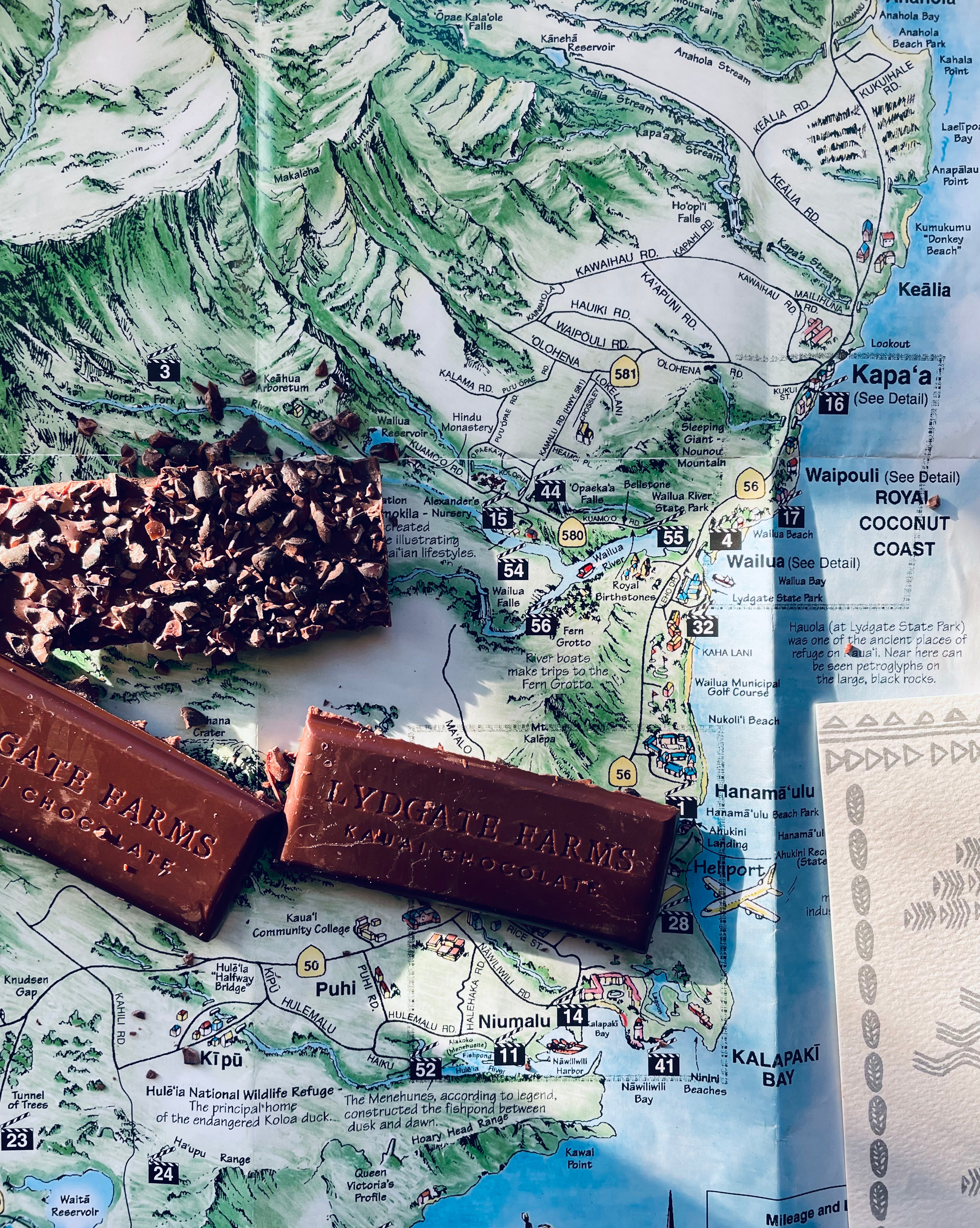
Lydgate Farm is located at the base of the Makaleha Mountains near the end of Olohena Road (581). Besides the cocoa plants, they grow all kinds of native Hawaiian fruits, harvest honey from their own beehives, and, recently they’ve begun cultivating vanilla beans and producing their own vanilla extract. After you’ve heard the process for fertilizing vanilla plants, you’ll appreciate why real vanilla extract is so damn expensive! And always sold out. $65 dollars a bottle. Yikes!
I wouldn’t recommend this tour for everyone. It’s expensive and off the beaten track but for gardeners, cooks, and chocoholics it’s three hours of informative fun. Their chocolate is indescribably good, their honey is sublime and yes … I am still fighting the urge to buy the vanilla extract once it becomes available. God help me, I’m on the waiting list and I don’t even bake. Talk me down folks.
Next – I end with sunrises and sunsets. Let’s see if you can guess which is which! Aloha.


 Saying nothing in particular