Making Mole in the Modern World

Morter

Traditional Mole Grinding Tool

Making Mole Sauce, Part Two (Part One here)

After giving up on the mortar and pesto, we turned to Liz’s antique Mixmaster to grind the chilies into dust.  However, after five minutes of grinding the mixture looked like cornflakes and the machine began overheating. Liz unwrapped a present she planned to give her daughter for Mother’s Day: an electric coffee grinder and so began stuffing it with chilies.

Alas, it soon became apparent that between the smoking mixmaster and the tiny coffee grinder we would be pulverizing chilies until the end of days. Luckily I knew where to find a much more powerful mixmaster and a substantially larger coffee grinder.

tools

Modern day poblano chili grinders!

“You’re not taking my babies to Liz’s house!” My husband said.

He adores his gizmos. Almost obsessively and Liz, well, Liz has no patience with a machine that doesn’t obey verbal orders.  He went on to catalogue all the things we’d lent her which came back a little wonky.

“I won’t let Liz touch it.  I’ll do all the grinding myself.”

He didn’t believe me but when informed no Mixmaster equaled no mole sauce, he relented. I returned to Liz’s house and we commenced our never ending chili grinding operation.

Step 2:  Roasting the spices, fruits and nuts

IMG_1715

Once the chilies were finally pulverized, it was time to work on the other ingredients: hazelnuts, almonds. raisins, pecans, cinnamon, garlic, sesame seeds, anise, and plantains. All of which would need to be roasted until they were fragrant.

garlic

As Liz roasted, I pulled apart garlic.  I love garlic, I really do.  But peeling garlic, oh my, do your fingers get sticky.

When we were young mothers I envied Liz.  I was divorced and struggling in a community were misfortune was treated like rabies while she lived in a sprawling ranch-style house on a hill. Her  husband was an attorney specializing in environmental concerns, her large close-knit family always around for family dinners and impromptu babysitting, her children were invited to all the parties mine were not. So when her family adopted me and my son as a part of their extended family, I smiled and pretended things were not as bad as they were for me. I always assumed the same women who pretended not to see me when I went to school events, welcomed Liz into their fold because, unlike me, she hadn’t caught the misfortune bug.  Apparently she was as a good a pretender as I was. 

Ah, the things we do not see.  Until Liz was 30 she was a legal resident of Mexico, having come to this country at age 5. She graduated college and worked for the state for twenty years but, even after she got those citizenship papers, she still felt like an outsider.

“Remember Miss Crap?” she asked as we were roasting away.

Miss Crap is what she calls our boys’ kindergarten teacher. Her real name was Miss Trap.

“Sure.”

“Remember how we all had to go in and help her out once a week?”

“Yeah.”

“You know what the bitch had me doing?”

Miss Trap generally put me in charge of an art project. I always assumed it was the same for Liz. “No.”

“Cleaning the damn windows!”

mixture

Ground chili powder on top of the nut/raisin/spice mixture.

After filling the house with their heavenly fragrance, we dumped the spices, nuts and raisins into the Mixmaster and let ‘er rip. Unfortunately the raisins proved to be a problem. They don’t grind very well. We ended up with a mixture the consistency of lumpy peanut butter.

And there was another problem.  The plantains were not ripe.  “I’ll call Pat and have him buy some more plantains,” she said.

Pat, Liz’s husband, had been MIA most of the morning.  After she reached him, he called back several times, unable to find plantains anywhere.

IMG_1731

Our hands were chapped and bleeding.  Our wrists aching from that damned mortar and pestle adventure. “Oh crap, I’ve had it,” said Liz. “Let’s have a glass of wine and call it a day.”

I didn’t argue.

Stay tuned for the final episode – will Pat find ripe plantains?  Will Liz and Jan figure out how to turn raisin goop into powder? Or will their mole turn out to be mole paste?

Anyone have a suggestion as to how to grind roasted raisin goop?

Making Mole Sauce

Baseball

Liz and I on another of our adventures – coaching softball, something about which we knew NOTHING!

When my friend Liz announced she was going to make mole (pronounced mole-lay) I offered to help. The process of making mole takes at least a day, even in Mexico where there are special mills for chili grinding so I saw this as a chance for us to spend some time together. You see, her life is in constant flux and I’m always writing, blogging or taking care of my elderly mother so mole-making would force us each to take a day off just for ourselves. In fact, Liz is so busy I half expected something to come up which would postpone our adventure, maybe forever.  But, miracle of miracles, it did not.

Here’s what a commercially made mole looks like:

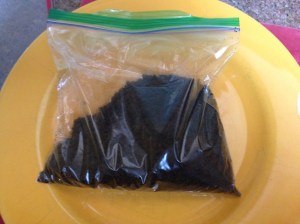
IMG_1724

It’s actually a powder which, before serving, is mixed with crushed tomatoes and freshly grated dark chocolate and then served over meat (generally turkey).  I suppose it could be served over cheese enchiladas, for you vegetarians, but from what I’ve read, it was originally developed to disguise the taste of bad meat.

The last time Liz made mole was in Mexico with her aunt.  At that time they’d roasted the chiles and de-seeded them before taking them to a professional chili grinder. Her aunt was from Puebla, one of the cities claiming to be the mole capital of the world.

Chilis

This is a BIG bowl of roasted poblano chiles – it took us an hour and a half to slice and de-seed all these buggers!

By the time I’d driven to her house, Liz had already roasted the chiles over her gas range. The smell of burning chiles hung over the small enclave of houses on the hill where she’s lived peacefully for twenty five years.

However it wasn’t always a peaceful co-existence. The day she moved in there was a knock at the door. A middle-age woman stood on her welcome mat, a disconcerted look on her face. “You don’t look like a Mexican!”

Without missing a beat Liz fired back: “Well, let me go get my sombrero and serape! Then maybe I’ll look like a fucking Mexican.”

I think the neighbors got the point.

Step One: Preparing the Chiles:

Without much adieu we set to the task of pulling apart the chiles to remove the seeds. You don’t want to leave the seeds in as they are as hot as Hades and they do not grind properly. While we processed the chiles we gossiped and giggled and complained about our husbands, the key ingredients of mole making.

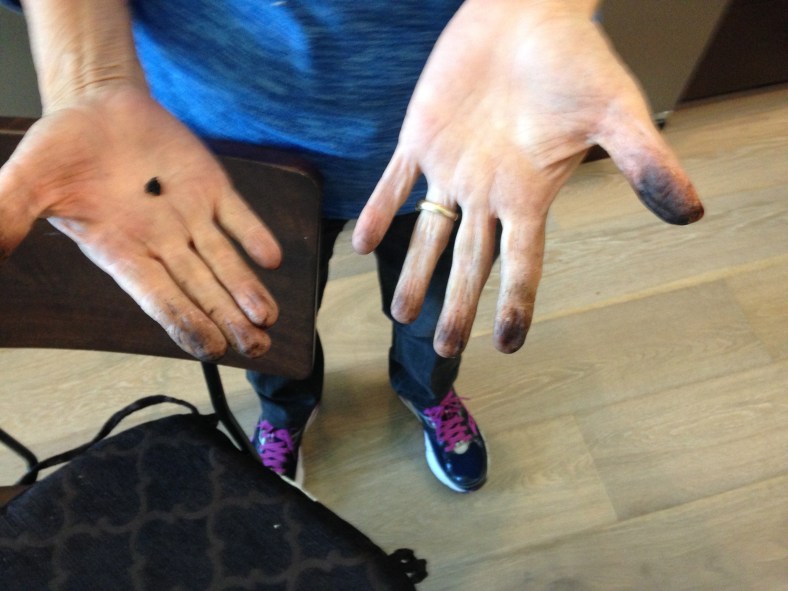
Here’s what our fingers looked like after all that work.

FIngers

Luckily it washed off.

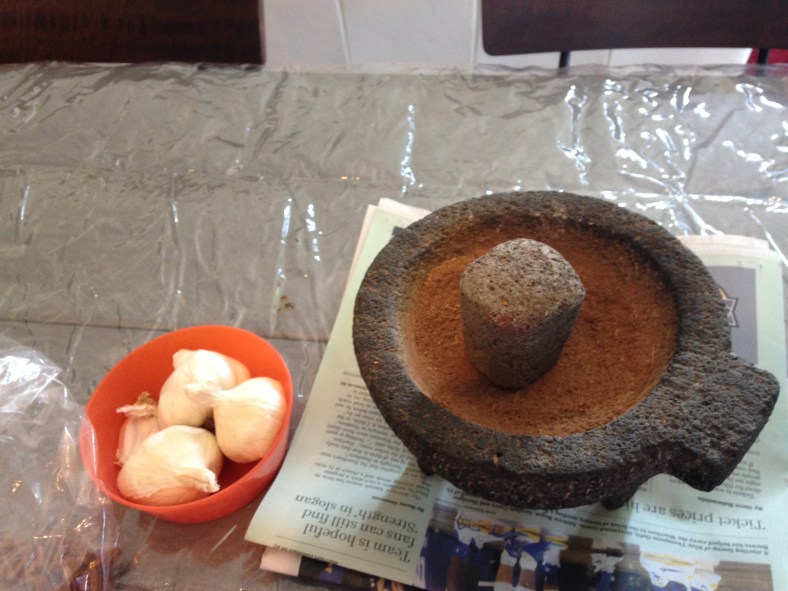
Next came the task of grinding the chiles to powder. Unfortunately we don’t have any nearby professional chili grinders. Here’s what we had:

Morter

Traditional tool used to make mole. You’ve got to be kidding Liz!

It took about two seconds before we realized neither of us had the wrist strength of Liz’s ancestors.

We had to come up with another plan. Next: Grinding Chiles in the Modern World.  In the meantime – chiles are just one of the twenty or so ingredients used in mole. Without googling, can you guess some of them?

#ThursdayDoors: Wismar Germany

This week I’m going back in time to 1995, the year we went to Wismar, Germany.

MapWismar

The dotted red line between Schwerin and Wismar marks the autobahn Germany was building to connect the coastal towns to Berlin.

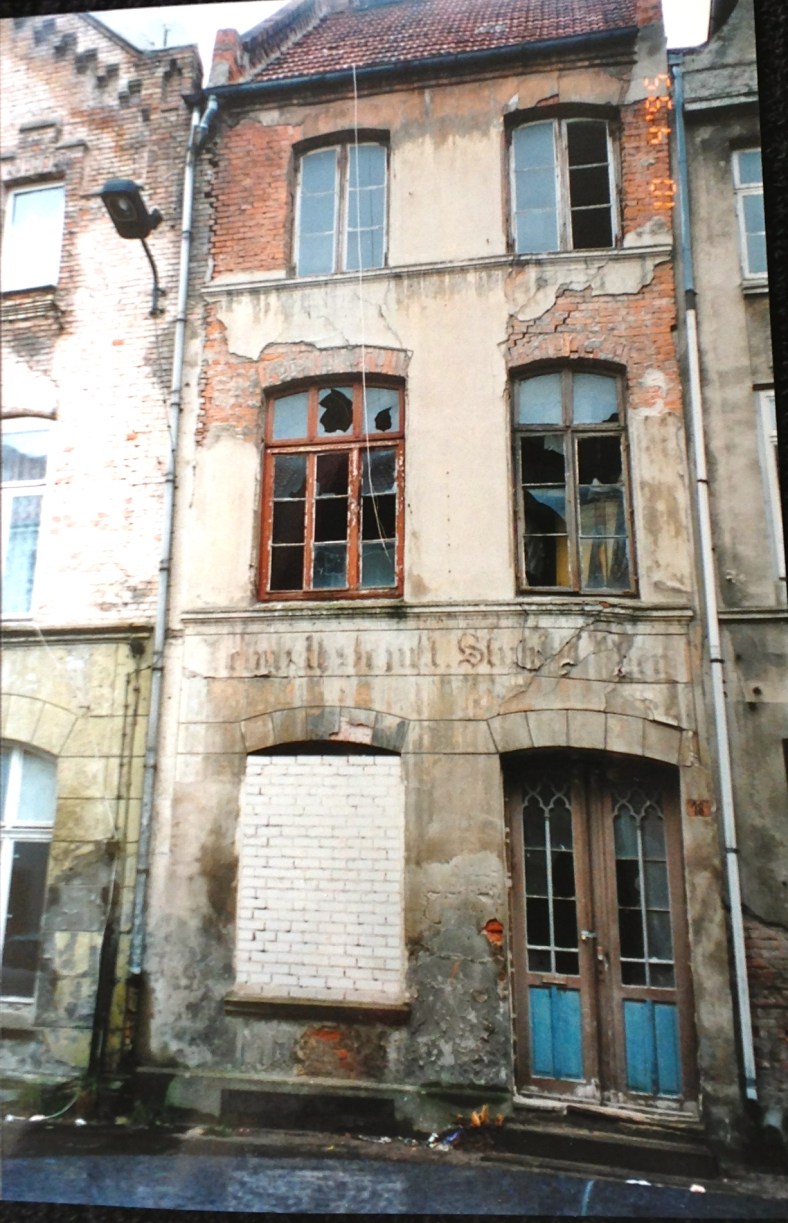
From the end of WWII until 1989, Wismar was behind the Iron Curtain, making travel there almost impossible. Even six years after the Berlin Wall had fallen, the rustic two lane road from Lubeck to Wismar catered more to donkey carts and tractors than cars and thus resulted in a frustrating three hour drive.  Before the war, the towns along the southern Baltic were popular vacation destinations and the thought is evidently to revive them. However, in 1995 Germany still had a long way to go.DoorWismar

Aside from the lack of easy access, many of the coastal towns were heavily bombed by the Allies in 1945. Instead of rebuilding them, the Soviets simply moved the residents to cheaply-built, concrete-block apartments outside the city walls leaving their centers to sit in ruins for decades. When we were there construction cranes hung over the town as buildings that could not be renovated were destroyed.

Wismar4

Our bed and breakfast was one of the more modern buildings.

Another challenge for Germany, the locals seemed to think making money off tourism was a tawdry business indeed. Certainly anyone caught speaking English on the streets was given the evil eye.

WIsmar2

The town center – note the Hanseatic design of the building facades.

Sorry for the poor quality of the pictures.  We didn’t have the best camera and it rained the whole time we were there.Wismar1

I believe this is St. Nicholas Cathedral but, because it was under repair, we couldn’t get near.

In case you’re wondering why we made a difficult journey to an obscure town on the Baltic, well, here goes: In 1663 (or around that time) a Swedish general conquered this important trade route and until 1717 it remained under Swedish rule.  In return the general attained the noble title “Conqueror of Wismar.”  According to a bit of family lore spawned by a Mormon missionary’s trip to the Swedish History Museum, my husband is one of his descendants.  Didn’t know I was married to royalty, did you?

Check out other doors at Norm Frampton’s fun (and often challenging) #ThursdayDoors event.

Dear Dawdling DayDreamer

I stole the idea for this post from the always entertaining Shelley Sackier over at Peak Perspective.  If you could write a letter to your 14 year old self, what advice would you give her/him?  Here’s mine:

girlguitarist

Dream on Dawdler – never stop!

Dear Dawdling DayDreamer:

Learn to forgive yourself.  You are not the saint you think you are.  You are impatient and will make many mistakes.  But it’s okay because those mistakes will lead to experiences you may never have had, had you been more deliberate in your actions.  Thus, learn to forgive yourself.

Beetlejuice

Maybe it’s not a good idea to give this guy a second chance. Remember, you are not a saint!

Always give someone a second chance.  You are not the best judge of character and, although you rarely judge someone by how they look or talk, often your first impression of a person will be wrong.  Of course, because you think you’re a saint, you will try to make the best of a bad decision when you should be running in the opposite direction but then again, forgive yourself. There are lessons to be learned in these experiences.

Never say “I would never…” because you will.   Accept that there

The temp

You will do things you never thought you’d even try!

are no absolutes in life. When you find yourself in a situation you never imagined being in, remember to forgive yourself.  It happens to everyone.  Even saints.

Learn to listen.  You think you are a good listener but often you only hear what you want.  Let people finish their thoughts and carefully reflect.  Conversely, sometimes you hear things people haven’t said, thought or felt.  Remember, lack of confidence is a thief of time. You might feel like a compete mess but no one has x-ray vision.  

Your friends will be diverse.

Your friends will be diverse.

Friends are not perfect.   Some of your friends will be the type of people you never thought you’d enjoy hanging with.  So keep an open mind. Don’t make a list of what a friend should be.  There is no mold.  Just enjoy the ones who somehow get through your hard shell and remember, you are not a saint. 

In conclusion, you will be brave enough to take risks and fool-hearty enough to pursue your dreams. Your smile will always get you through so use it generously.

Balancing

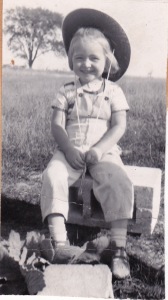
Get used to balancing Dawdling Daydreamer! You’ll be doing it the rest of your life!

Sincerely,

Jan

Talle Svenska?  Ney…..

bookMany of my blogging buddies have hung up  “Gone Fishing” signs and closed comments until September which means they had the good sense to shut down for the month and either work on a novel that’s been suffering from terminal bloggerhea, or maybe, just maybe, they’re actually on vacation.

I wish I’d done the same but alas my head got stuck on another planet. I decided since I’d spent three whole years studying German, which shares its roots with Swedish, it would be no sweat to translate The Letters from Sweden, sender unknown that I talked about in a post a few weeks back.  All I needed was a Swedish/English dictionary! Easy Peasy, hey? 

Reindeer

Inte satsa på det ! (Don’t bet on it)

At the library I was disappointed to learn there aren’t many people in my small town with the urge to learn Swedish. There was only one Swedish/English dictionary. One! However there were books on Amharic, Gujarati, and Slovene – languages I’ve never heard of, have you?

Undaunted I checked out the one book and hurried home, confident that the secrets of the letters were about to be revealed.   

Ha!

Lovely lettering but what does it say?

Lovely lettering but what does it say?

The problem, as you can probably tell, is deciphering the handwriting. The letters were probably written by three different people – all of whom undoubtedly received straight A’s in penmanship two hundred years ago – but I couldn’t tell their a’s from their e’s  which meant I had to guess.  And I’m not very good at guessing.

After several word by word attempts I realized you can’t translate word by word because the meaning of so many words changes depending on how they’re being used.  So I decided to attempt an entire passage and see if Google could make any sense out of it.  This method is rather like speaking in tongues but I was getting desperate. 

The letter below had the clearest handwriting and so I selected the second sentence, the one that begins “Du skribner,” for my little experiment.  I chose this one because I knew the word “skrib” meant “write” so at least I had some idea what the sentence was about.  Letter_0003

Here’s the result of my effort:


Du skribner att ni amnar att visa fron den platoon fom vi ar men vi tysken att mikar gerna blifrader mi an ack inte olag ga negra . . . 

Here’s what Google came up with:

You write that you intend to display from 
Pluto we are but we German to pickups 
willingly and not illegally.

“What does it say?”  My mother (who’d been waiting anxiously for proof of her oldest child’s brilliance) asked. 

“Well, I think your grandfather asked his in-laws to do something illegal so that he could display evidence that the family was from Pluto.  Apparently it is illegal in Sweden to reveal that you’re a Plutonian.”  

“Don’t you go writing anything nasty about the family!” 

“Who me?  Nah!”

My next brilliant idea was to “read” through the other letters looking for proper nouns that might reveal at least where they were from. A couple of the letters contained the word “Herran,” so I googled “Herran Sweden.” 

“Do you mean Herrang?” was the response. 

WTF I thought.  Maybe I meant Herrang. 

According to Wikipedia Herrang is a town with a history of industry and mining located on the northern coast of the county of Stockholm. Although the population is only in the 400s, it does have one claim to fame.  It’s the site of the largest Lindy Hop dance camp in the world.  The Herrang Dance Camp.

I must confess I had no idea what Lindy Hop was so I hopped back to Wiki and asked.  Here goes:

https://www.youtube.com/watch?v=iQrQhdJH4tM

Pretty wild, hey?  Apparently this dance is a cousin of the breakaway, the Charleston and the Texas Tommy and got its start in Harlem, New York in the late 1920s or early 1930s. It was apparently named after Lucky Lindy (Charles Lindberg). I must admit it looks like fun.LIndyHop

So what have I learned?  Well, at least my ancestors knew how to read and write although what they had to say, I may never know!


Letters in Swedish . . . author unknown

After taking a break to ponder the delights of gibberish, I’m back to pulling skeletons out of the family dirty laundry hamper.  Perhaps I’ll find an even more illustrious ancestor than Deacon Samuel Chapin!  What do you think?Letter_0004

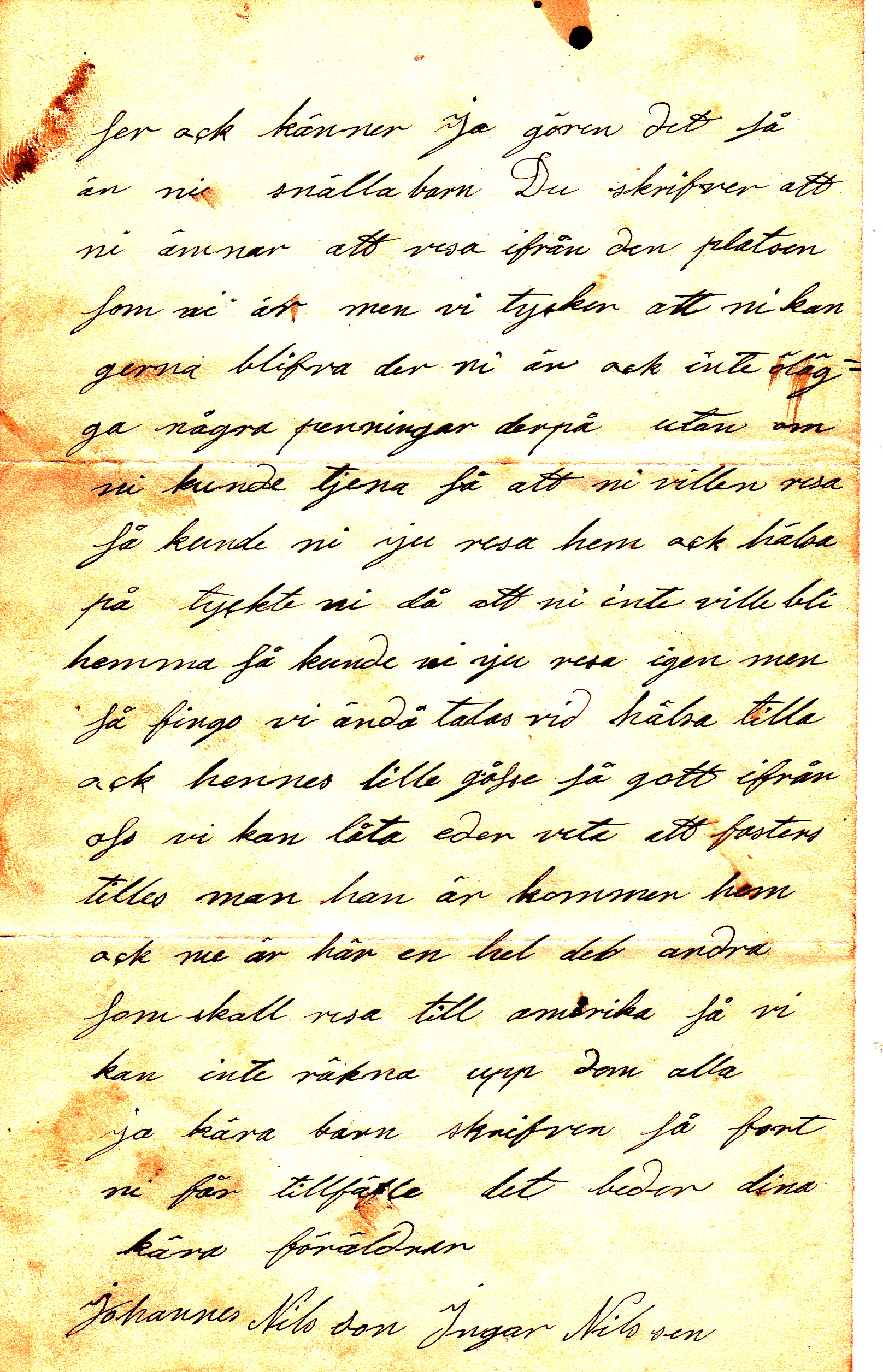
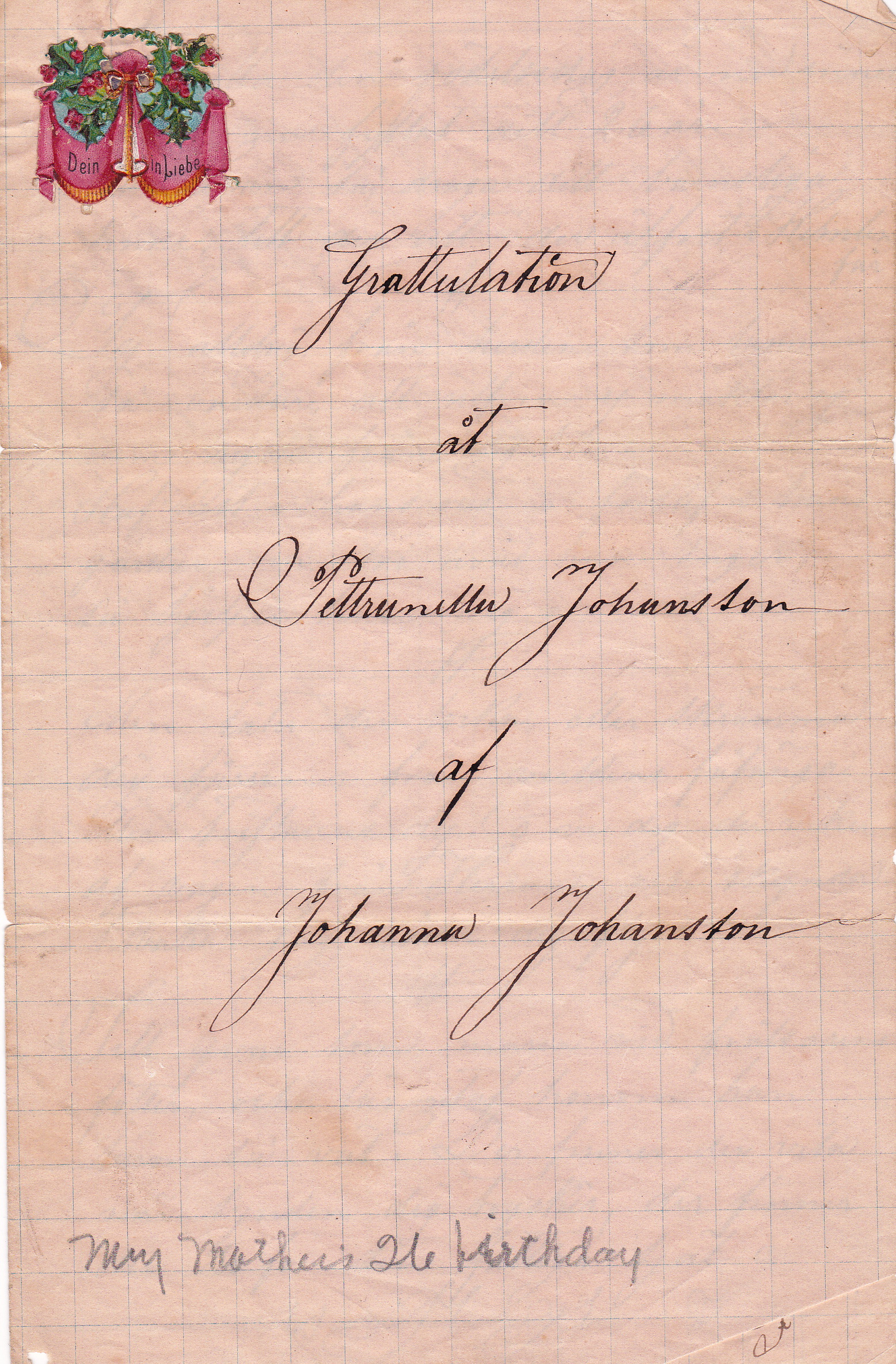
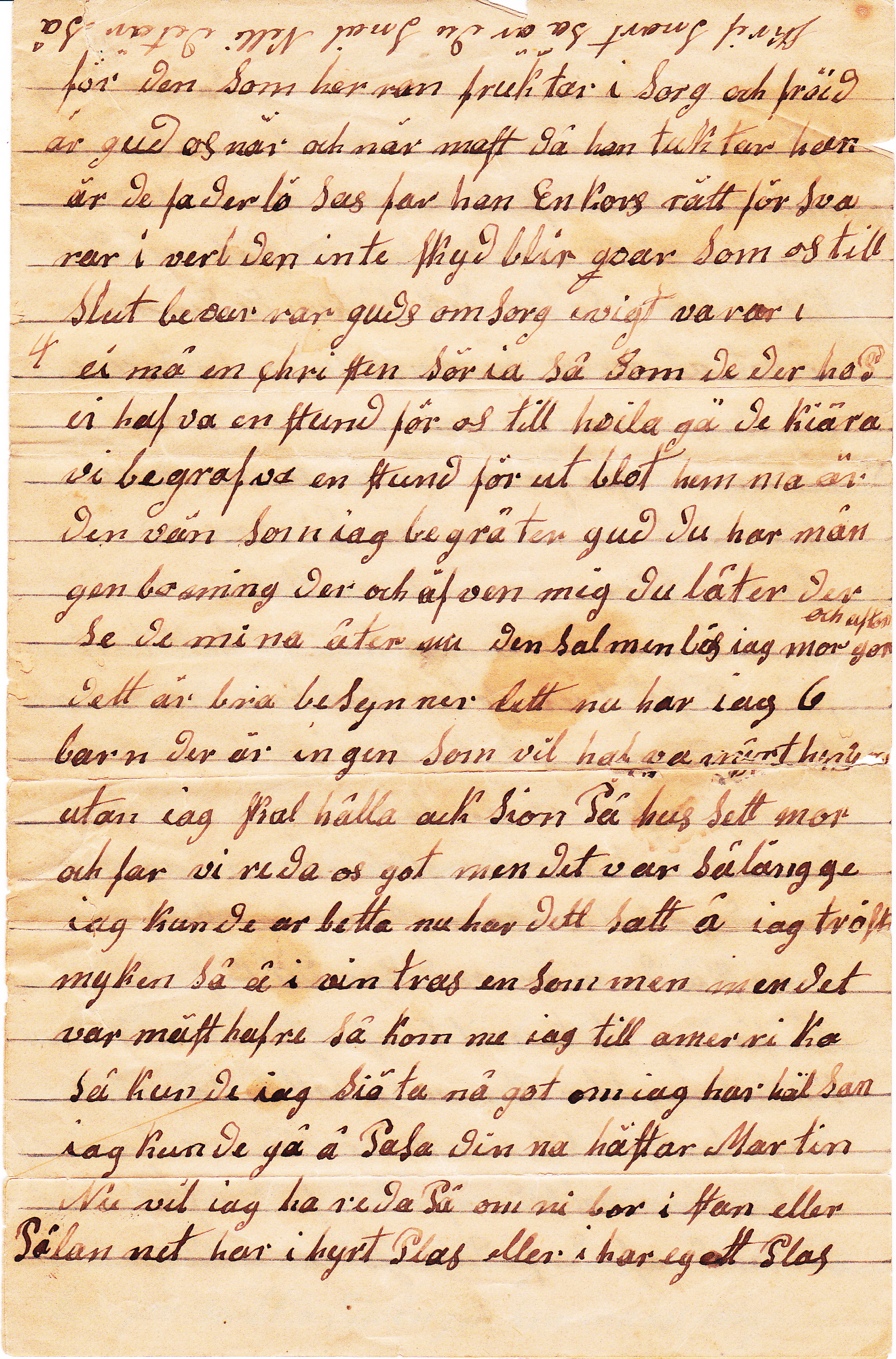
This is one of fourteen letters which were written in the late 1800s to my great grandmother, Nellie Nelson, from someone in Sweden (supposedly . . . we do not have the envelopes to prove this fact).  Nellie died after many years of ill health when her daughter (my gram) was only fifteen years old. After her mother’s death, Gram’s father, who must have been a dour old poop, refused to translate them for her.  He refused to even tell her who they were from.  His stance was “good riddance to old rubbish” and apparently Sweden and every thing Swedish and every one of their Swedish family and friends were old rubbish. Letter_0011

The only clues I have are the notes in my grandmother’s handwriting on the top of a couple of the letters, conjuring up the heartbreaking image of a young girl kneeling beside her mother’s deathbed hoping to learn something about her heritage. Probably while her father was out of earshot.   Letter_0007

Although she had little idea what was in them, Gram cherished these letters her entire life as my mother does now. Today they are very brittle, falling apart in my fingers as I put them on the scanner.  Paper that old should probably be handled by an expert and not someone as klutzy as me but time is of the essence, at any point they could be lost or turn to dust.  

Letter_0013

The one above seems to be in a different hand, meaning that more than one person sent Nellie Nelson a birthday wish or wrote to tell her of family events.  However, the only thing I can glean from these fossils is that Nellie’s real name was Pettrunella Johansson (no wonder she went by “Nellie”). What will happen when I do find someone to translate them?  Do I really want to know the secrets they contain or do I want to assume they were filled with cherished stories from the old country?

Bobbins, Shuttles and Shekels

Chapin

My only claim to fame! Looks like a jolly fellow, doesn’t he?

My great-granduncle Henry had a wife who spent most of her later life in museums and churches transcribing documents.   Her intent was to prove a link back to Henry’s famous ancestor, Deacon Samuel Chapin, one of the founders of Springfield Mass. However because Chapin arrived in this country in 1635 and fathered seven wildly fertile children, the family tree is split into a thousand tributaries. Still Henry’s wife persisted. It was an endeavor that took her all over New England and even across the pond to St. John Baptist Church in Paignton, England which houses Chapin family records dating back to the 1500s .

Will2

Family history written in 1910 by Marie Jameson

Once she completed her investigation she sat down to write an account of the family history. The problem is, she was a genteel lady of her times, devoutly religious and intent on writing a glorious account of the family that would make us all proud.  For this reason certain not so glorious moments were carefully wrapped in delicate lace and sweetened with lavender, such as this account of my great-great-great grandfather, Samuel Jameson.     

Permit me to say one thing: he was a man of strong intellect and reasoning powers: but few men had such a memory: he could repeat any passage of Scripture you might mention.    

Wonderful! Sounds like another jolly fellow to hang out with!  However, reading on we learn that this scripture spouting dude went south “for his health” leaving his wife and four children to fend for themselves:

Note:  Mrs. Samuel Jameson became housekeeper for Dr. Lucius Wright of Westfield, working for her home and from time to time the Dr gave her money for what clothes she needed, in lieu of wages.  The children were placed in homes and had to work for their board and living. Mrs, Jameson died in the Dr. Wright’s home.
shekel

Hebrew Skehel courtesy of Bing images

I don’t know why this detail is in a note.  Perhaps so we won’t think unkindly of one of our noble ancestors.  Who knows.  

On the next page she details the fate of the poor children of Mrs. Samuel Jameson:  Philander (what a name, hey?) became a manufacturer of bobbins and shuttles* who married – what else? – a dressmaker!  Samuel Jr went west in search of gold and was never heard from again. Abiezer married Mahala Chapin, evidently in an attempt to improve the gene pool.  Lastly there was poor Calvin.  After being “mustered” and then injured in the Civil War he became a collector of rare coins, including: “a Hebrew shekel of a very high antiquity and 2 cent English pieces of the years 1001 and 1098.”  Who knows what happened to those rare IMG_0677family gems?  At this point she’d reached Abiezer, my great-great grandfather, and thus proven the connection between the Jamesons and Chapins.  Hurrah! My claim to fame has been validated. 

Despite my sarcasm, it is a truly wonderful document, even if the interesting and telling sections are housed in notes.

* bobbins and shuttles = parts of a sewing machine

**muster = to call the troops to action  

Reindeer Herders and Lovesick Photographers

Sorting through old pictures and documents has left me in a funk, primarily because they detail lives I know were hard, where victories were probably few and disappointments many.  However, given the fact that over half my ancestors came to this country in the late 1800s, a time when travel was arduous and a future uncertain, I have to conclude that conditions in the countries they left – Ireland, Norway and Sweden – were much worse. 

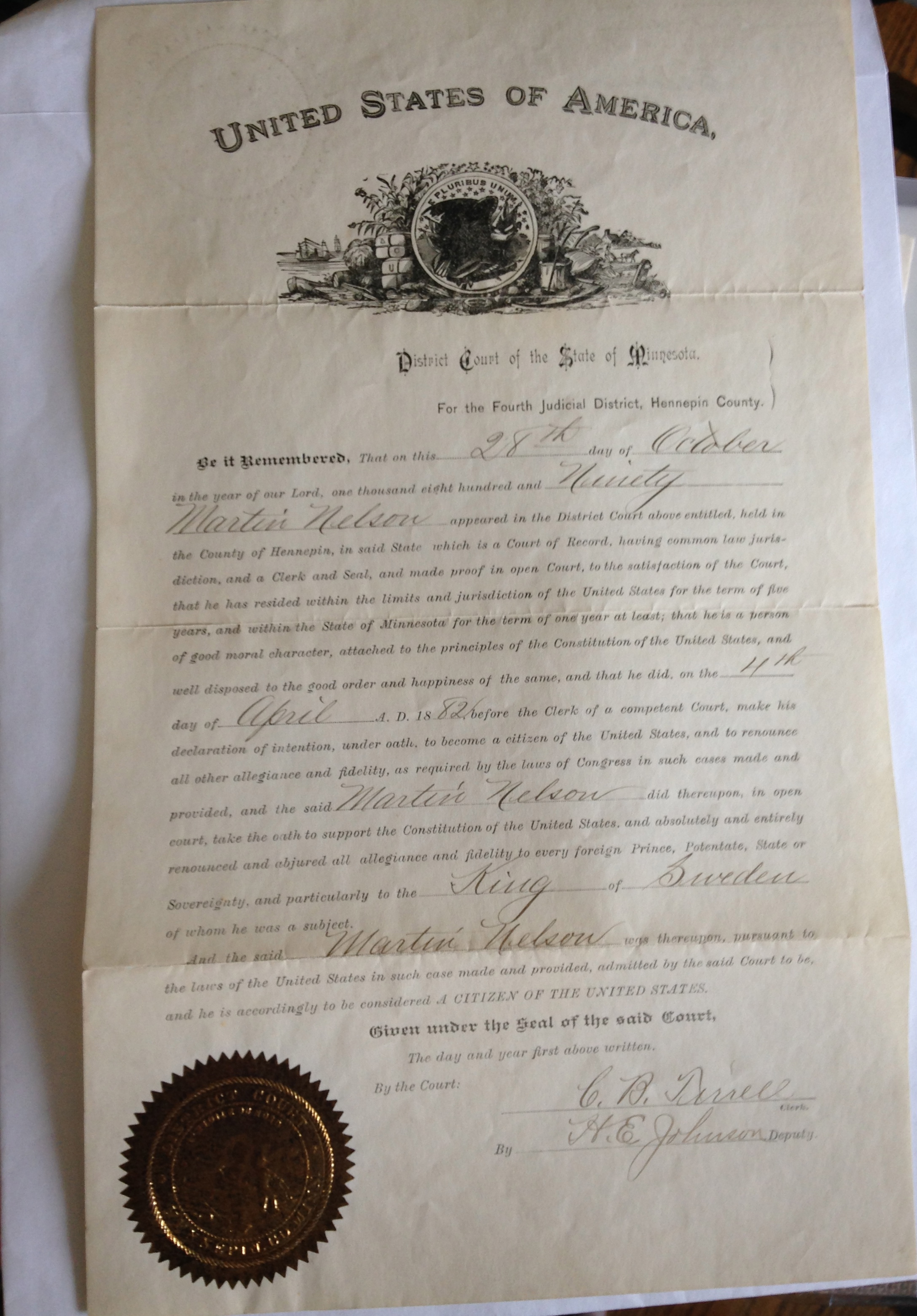
Citizen

Citizenship papers circa 1880

The Irish diaspora has been widely analyzed.  As anyone who’s read Angela’s Ashes knows: “Worse than the ordinary miserable childhood is the miserable Irish childhood, and worse yet is the miserable Irish Catholic childhood.” So no mystery there.  However, over one million people migrated from Norway between 1880 and 1920, which represented almost a ninth of their population. Can you imagine?  One in every nine people suddenly disappearing?  And to where?  Some barely settled land across an endless sea. 

The number of Swedes fleeing the motherland was far higher, however they had more folks to piss off and so Norway wins the distinction for the biggest brain drain of the north. There’s only one explanation officially given as to why Nordics fled the land of cod liver oil in hordes: crop failure.  Really?  In a land of long dark winters and never-ending summer days, what crop could have survived in the 1800s?  Other than cod, that is. 

I suspect there were other reasons such as lack of opportunity,  however you’d think those poor souls who left behind beloved grandmas, mothers and cousins would yearn to return to the warm hearth of youth for at least a visit, wouldn’t you?

Well my ancestors never did.  Once in the US, they turned their backs on the old world including its customs and languages.  As a result I never heard tales of the old country nor did I hear mother tongues being spoken. And so, I did what any ordinary child would:  I made up stories.

Lovebirds

Just a couple of wild and crazy reindeer herders from Lapland!

These two love birds supposedly stole away on a merchant ship from Stockholm in the 1880s.  Because they had the same last name my mother theorized they were cousins who fell in love and had to run away in order to get married.  I went a little further and decided they were brother and sister.  (I’d been reading far too many Swedish novels and plays at the time.)

Reindeer

Lars and Helga won’t you please come home? Mother misses you!

Someone who knew the real story wrote a letter to my grandmother in the 1930s.  Sadly the letter is in an obscure Swedish dialect that no one can translate.  This has lead me to conclude my great grandparents were not Swedish at all but incestuous reindeer herders from Lapland.

My great grandfather on the other side was from Vang Norway but the only way I found out anything about him was through a google search.  

Flaten

Ran off with a Sioux Warrior Princess?

He had the misfortune to die just after my grandmother’s birth and, after his widow married The Judge (by all accounts a man sans any sense of humor or love for children), Gilbert Flaten’s memory was left to wither on the vine.  When I asked my father what happened to his real grandpa I got this answer, “he just died.”  No matter how much I nagged him, I got the same response, “he just died.” When I asked what he did for a living all I got was “he was a photographer.” 

And so naturally I assumed that while photographing prairie life around his home (Fargo North Dakota), young Gil fell madly and passionately in love with a Sioux warrior princess and, unable to resist the temptation to ride the plains on horseback chronicling the lives of the noble Sioux, he soon abandoned the restraints of Victorian life.  

My version of his story seems logical, doesn’t it? 

Well, that’s not exactly what happened. After my father’s sudden death, I sat down at the computer and out of nowhere got the urge to google Gilbert Flaten.  Here’s what I found out. 

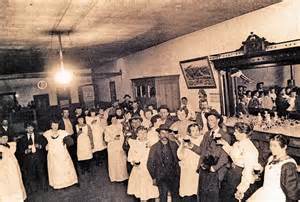
saloonThe real reason they  never spoke of him is that he ran a saloon during prohibition.  Horrors!

signageBut he also ran a successful portrait studio and worked for the volunteer fire department before his premature death at 40 from some ungodly flu.

Okay – now that I’ve got ancestors on both sides rolling in their graves, I’ll sign off with a salute to all those wonderful folks who left family and homelands to travel to this crazy country!  Happy Fourth everyone!

STUFF

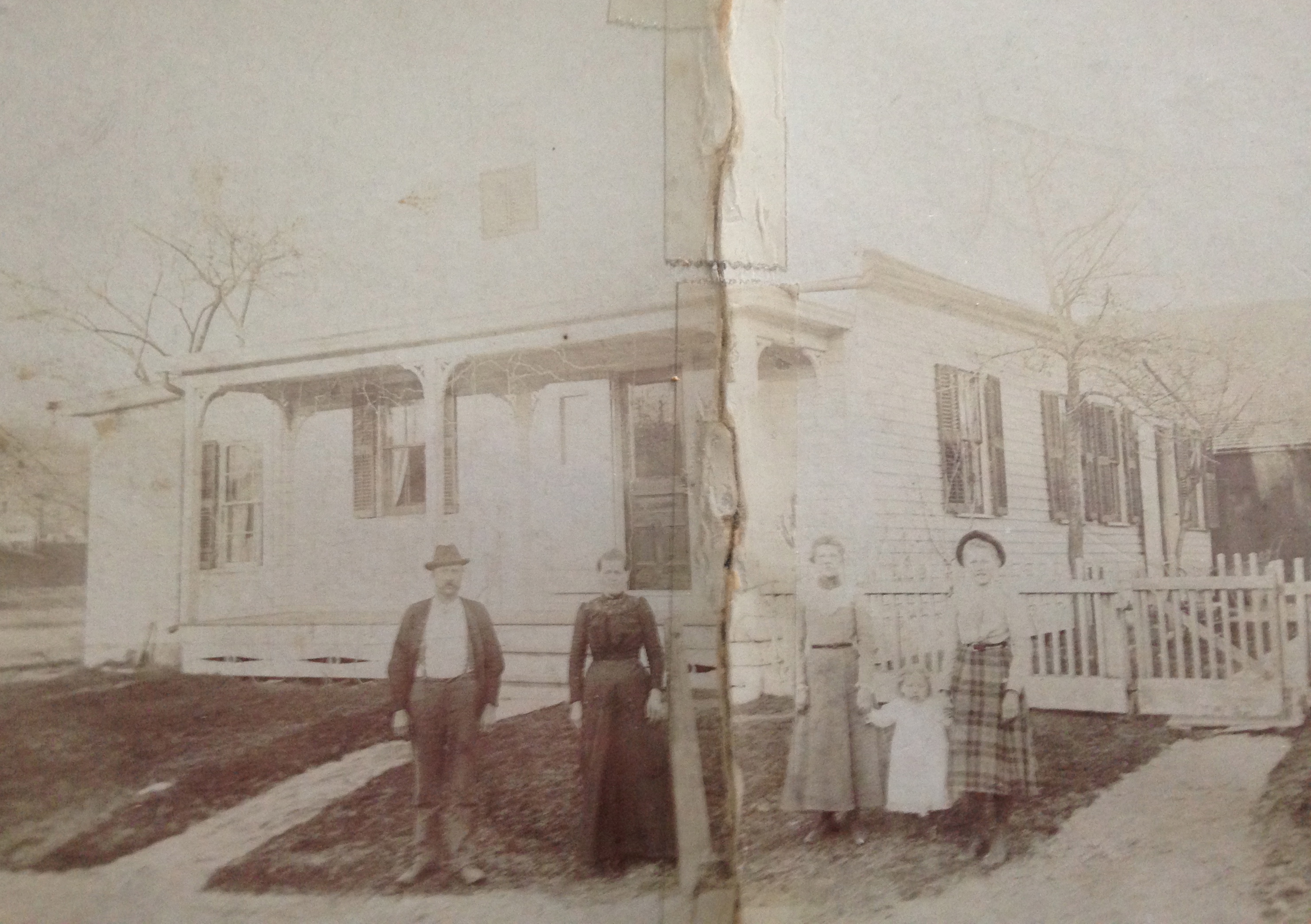
HouseThis house in Monson MA is rumored to have been the town’s first elementary school and because the town predates the Revolutionary War nary a floor is level.  The original structure had only two rooms whose blackboard walls are now hidden by layer upon layer of wallpaper.  From this simple dwelling, my ancestors added two bedrooms, an indoor bath, a kitchen, covered patio and small television room.  The room to the left was probably built by my great-grandfather as storage for his three children (two of whom are in the above picture along with a girl identified as only “My cousin Myrtie.”)  Because the toddler in the picture is my grandmother, born 1899, I figure this picture dates from the early 1900s.  The original deed is handwritten.

BillofSale

Receipt for the house on Main Street

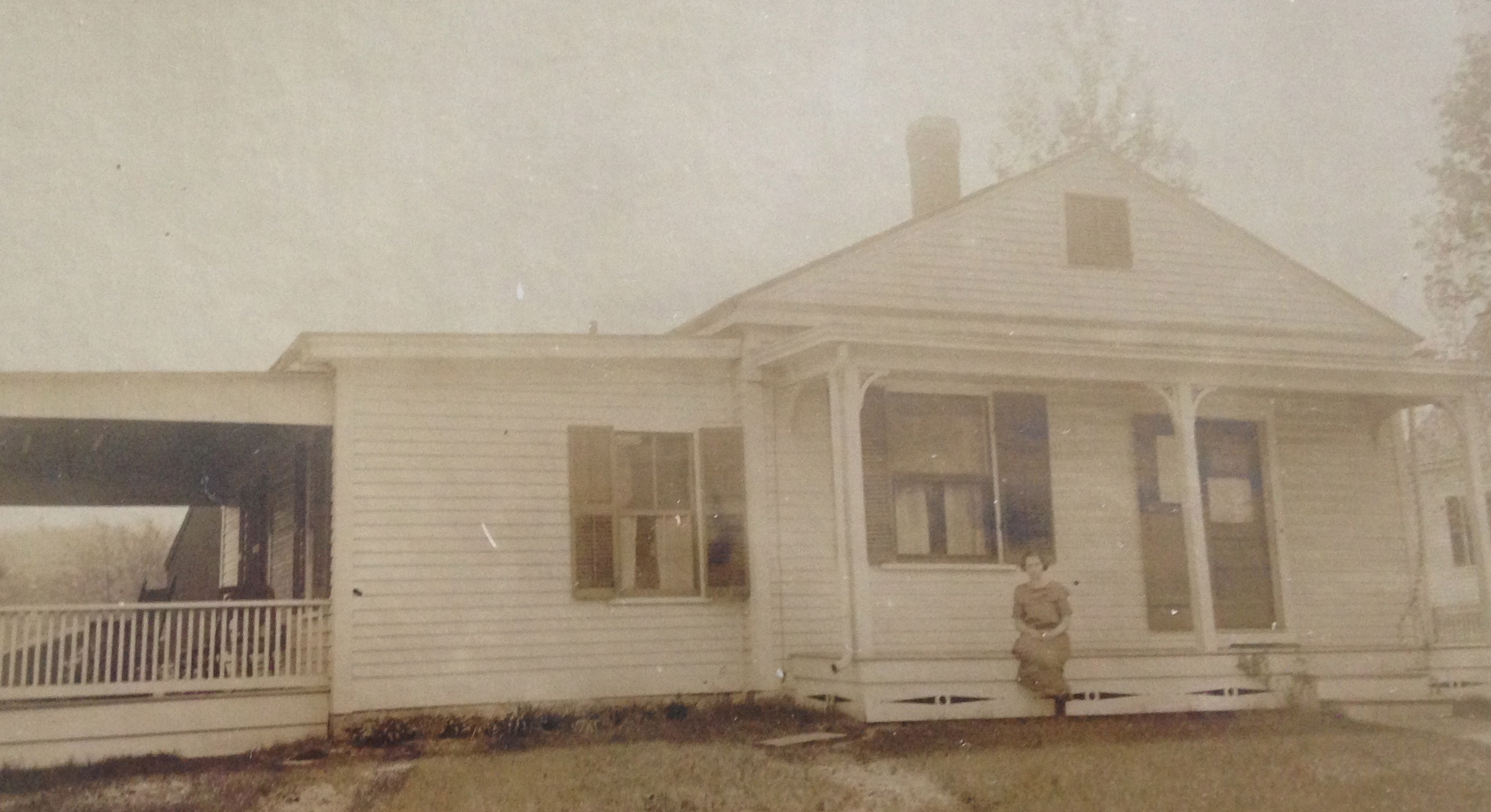
Here’s the same house on Main Street in a photo probably taken in 1910 after they added the porch :

House1

This porch (now screened in) overlooks a boulder-filled creek where as children we played for hours, always within shoutin’ distance of Gram.  The last time I visited, the untended blackberry vines choking the creek and newly constructed storage facility on the other side stole all hope of a return to what once was.  Nonetheless, the house’s eventual slip from our fingers still stings.

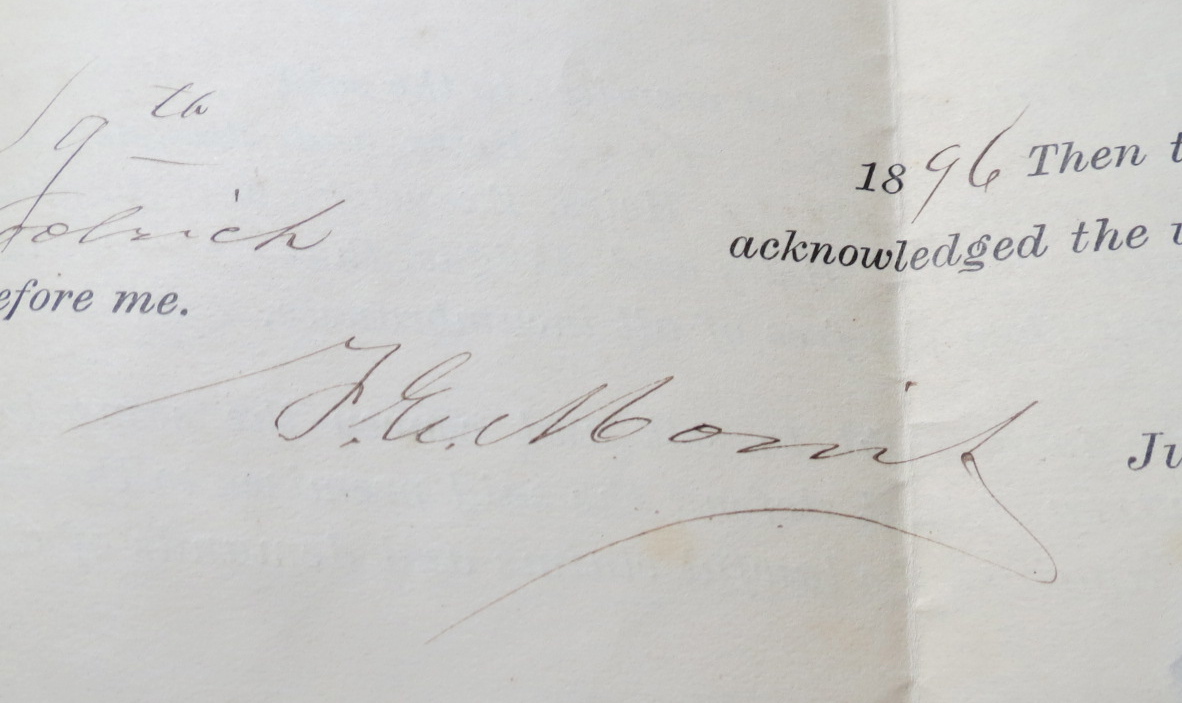
SignatureI know that, in the end, old houses and photos are just stuff, stuff our children probably won’t give a hoot about, stuff that will end up either in a garbage dump or in some moldy basement, pages stuck together, edges eaten by rats.  I’ve accepted that eventuality however for some insane reason I decided to go through the five million boxes of unorganized STUFF I rescued from my mother’s house.  If you’ve ever had to clean out grandma’s house and go through her stuff then you’re probably thinking what an idiot I am. And I admit, it is exhausting, unrewarding work that has kept me from blogging, writing, exercising and cleaning house.  But every now and then I’ll find something which might be mildly interesting to the kids. Know what it is?

DanceCard

Play Me Please

kidsI was once the grandmother of a girl as black as I am white. She was also quite beautiful – a Serena Williams lookalike and about as tall and curvy.  Wherever we went – to restaurants, to parks, to the mall – we got stares that made her uncomfortable.

“They’re staring because you’re so beautiful,” I tried to assure her but she didn’t believe me.  I didn’t believe me.  It didn’t help that she was accustomed to getting food and clothes from soup kitchens, food banks, and other giveaways and thus had no idea how to act in restaurants or clothing stores.  For example, she wanted to go to a Chinese restaurant and once there she ordered fried chicken.  She’d gotten the idea somewhere that if you went to sit down restaurants you could order whatever you wanted and when she realized that was not the case, her embarrassment turned to shame which turned to agitation. It didn’t help that she was with foster parents who basically ignored the fact that the four teens in their charge were dodging school, smoking pot, staying up all night and quite possibility prostituting themselves.  I tried not to make assumptions as I had no proof and they were not abusing the children. They were getting fed, clothed, etc., which hadn’t been their situation when they entered “the system.”  When dealing with these kids the first thing you’re taught is not to judge the lifestyles of other people by your standards.

At my first meeting with the “social” he warned: “She’ll play you.” To which I wanted to say: I don’t care.  I’d rather be played by a fourteen year old whose father was in jail and whose mother’s whereabouts were unknown than by the traitors in the Congress claiming to be patriots or by the dancing jackals of corporate America cutting their own taxes while freezing out the poor. But instead I kept my mouth shut.  I’d been so excited to meet my first “child” that I’d driven thirty miles sans wallet or cell phone sweaty and flushed after a tennis match.

KittyGirlMy black grandchild answered the door in an oversized sweatshirt with a half dozen kittens up her sleeve and her hair knotted on the top of her head in a scarf. Instead of fourteen, she looked eleven.  I was immediately enchanted. Then we sat at a table in the fosters’ dining room for a half hour as her social lectured her.  After he left I was exhausted.  She said she was too and so we made plans to get to know each other the next week.

A week later, I could have sworn a hooker from downtown Oakland answered the foster’s door.  The darling girl I’d met the week before had on a long curly wig, a low-cut skintight mini-dress, full make-up, and five inch gladiator heels.  HookerHeelsI thought for sure I had the wrong house but before I could beat a hasty retreat, she recognized me and off we went in search of Cheetos. The stares that time were brutal.  We decided if we ran into anyone she knew, she would tell them I was her grandmother.

It takes a long time to get to know a child who’s been in the system for awhile.  To them, you are just another stranger in a long line of strangers who make decisions about their lives which sometime put them in judgetenuous and frightening places, one of them being Dependency Court.  I don’t know many times I explained to her that she was not in trouble and that the judge was on her side, the undeniable fact is, it’s a court with bailiffs and lawyers and tons of paperwork. Despite the smiles and toys, it is intimidating.

HT_baltimore2_ml_150429_4x3_992

Photographed by Bishop M. Cromartie

Because of confidentially rules I cannot go into the particulars of my black granddaughter’s case but, suffice it to say, I was a failure.  Mine was not the heartwarming, inspirational story told on posters and in the brochures.  I wish I could say I was the only one but sadly there are more failures than successes.  However, regarding all the debate over whether or not racism is still alive and kicking, if you’re white and you want to know what it’s like to be black in America, became the grandparent of a black child.