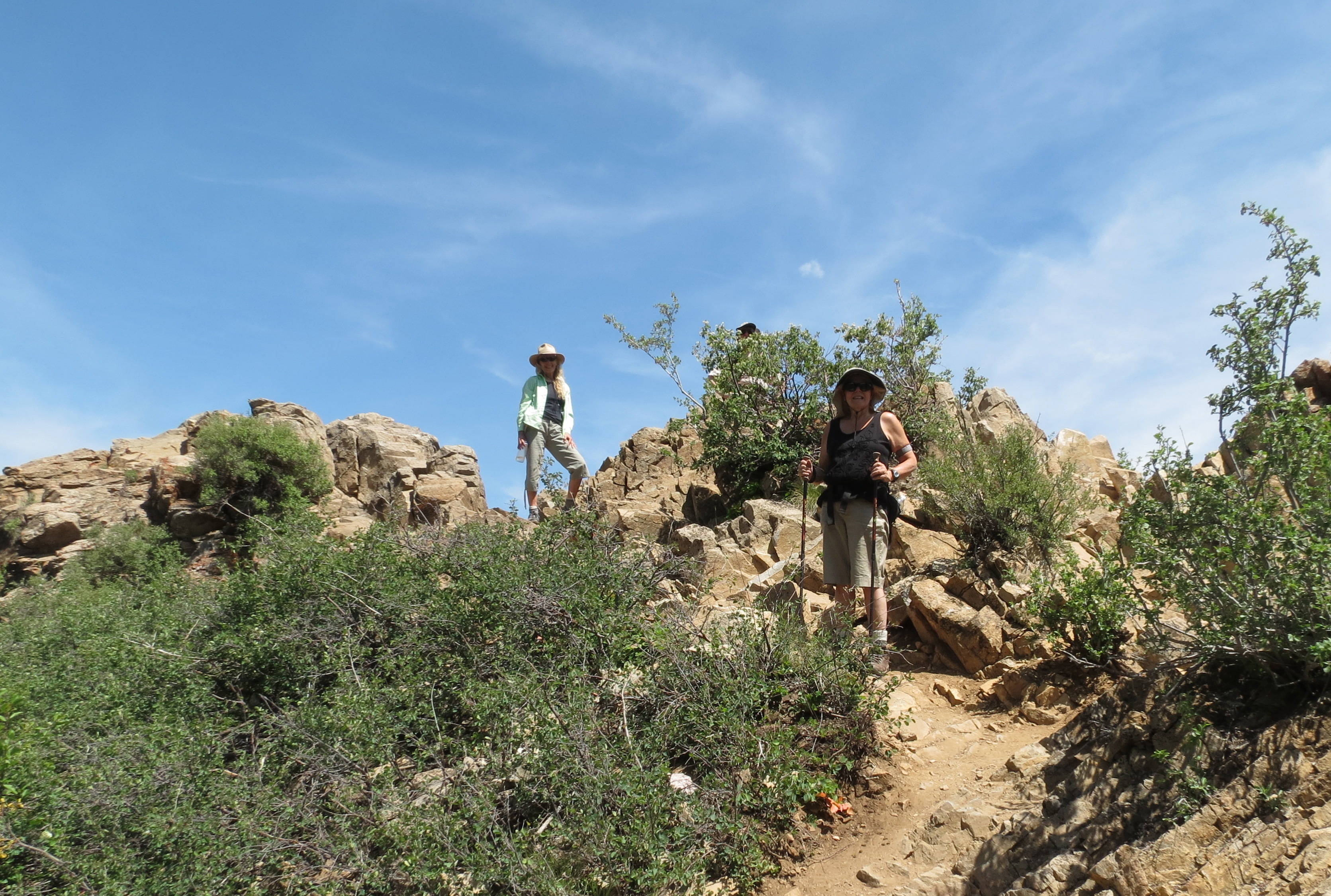
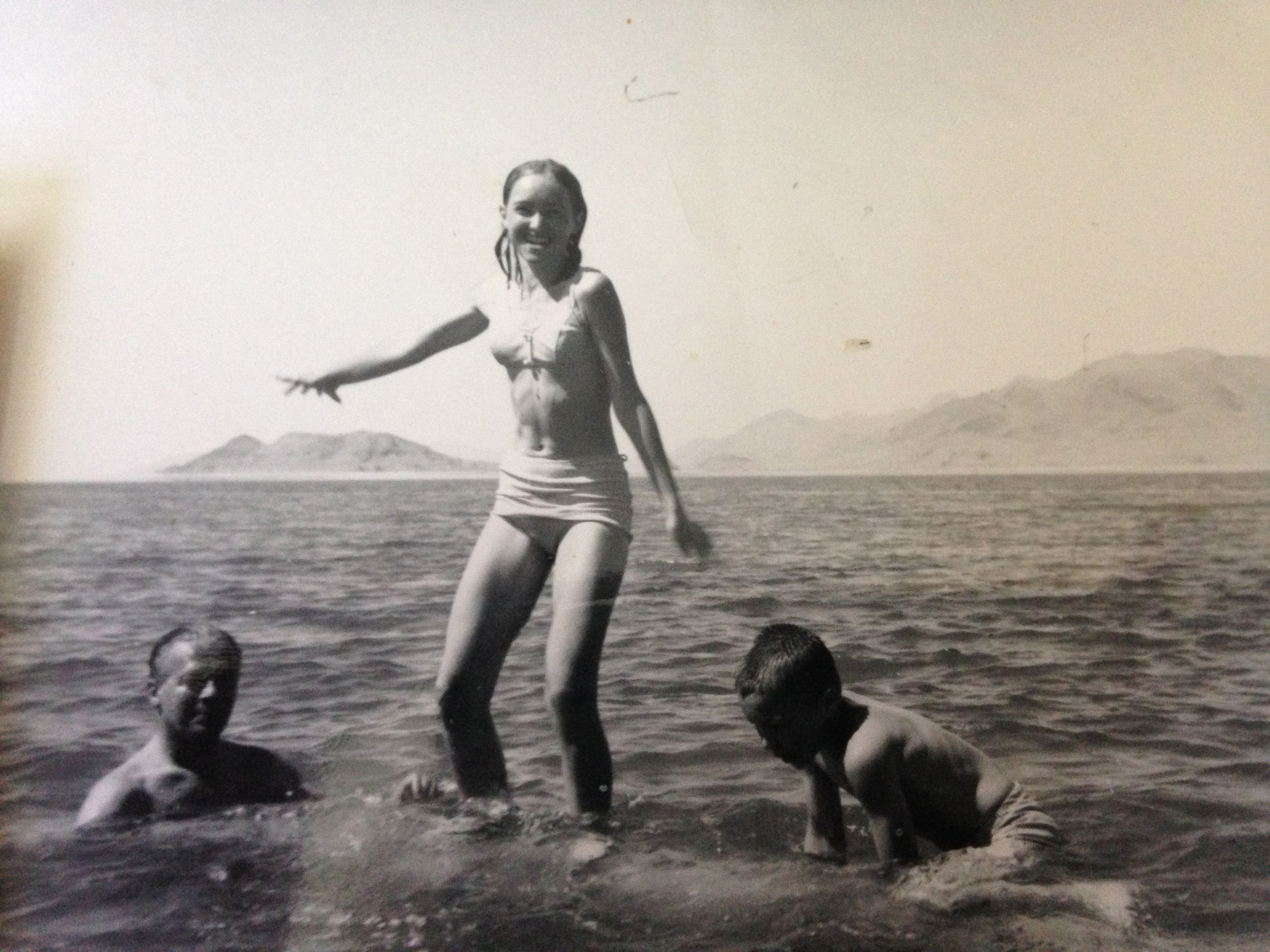
Carol in the creek for some reason: “Hot damn, that water’s cold!”
Nothing my friend Carol does surprises me though often I’m left scratching my head and vowing to never again get involved in any of her shitteries (being stranded at three in the morning outside a hospital after a horse kicked her in not one but both legs comes to mind!). I’m sure she’s felt the same about me from time to time. But long ago I realized: friends are like condiments. You need a combination of the spicy and the sweet. Sometimes you need a jolt of tabasco and a wild ride through the mix-master to make a memorable meal. Besides, she’s a clever and amusing writer, generous and loving towards her friends and quite a hoot to hang out with (unless she’s getting you into trouble).
(shitterie – a Carol-made-up term generally meaning a misunderstanding that ends up tussles and tantrums!)
“What’s taking you so dang long Jan?” (Carol on the ridge prancing around while I’m huffing and puffing to get caught up!)
Anyway, her latest adventure is a ten day trek through the Australian outback with a couple of elderly horse women. Since these jaunts generally result in some amusing tales I’ve asked her if I can share them with my blog readers and she said yes. So everyone – welcome the first episode of Carol in Oz (via her friend Griselda’s iPad, thus the shortcuts):
Good morning,
We r packed except for final items and will leave around 10 after breakfast, run and showers. Taking loads of food and big containers of water.
We r headed into a huge reserve called the great western woodlands. G. has a book on it which I’ve been reading. Natural areas w all sorts geology plants animal life but also gold mines and grazing.
It’s cold this morning! The neighbour is bringing me all sorts of large mens clothing to borrow bc he is worried I will freeze.
Still waiting for unlock code to use my phone. Will keep msgs minimal while using G,s iPad, she has data limits and pics or calls can eat that up fast.
We r taking iPad and my phone in case the code comes and I can make it work on my own. Connections available only when we r near towns I think. Will b gone roughly 10 days.
Will use a roo (kangaroo) as there r no alligators in my vicinity. So far anyhow…
Wish me luck. My dear old bod is likely to b challenged
According to the Nature Conservatory, the Great Western Woodlands in southwestern Australia is “a blossoming bullseye of biodiversity.” I’m not sure what Carol plans to do with the roo – I guess we’ll have to wait until the ladies are near civilization to find out.
The Great Western Woodland, picture from the Nature Conservatory
I snapped this picture while climbing up to the abbey of Mont St Michel. I believe the door was level and that I was on a steep staircase but I had drunken a quart of hard cider for lunch so anything is possible.
Mont St Michel is one of my favorite places in France although many people (hubby among them) feel it’s become just another typical tourist trap, cheap trinkets, over-priced food and crowded lookouts.
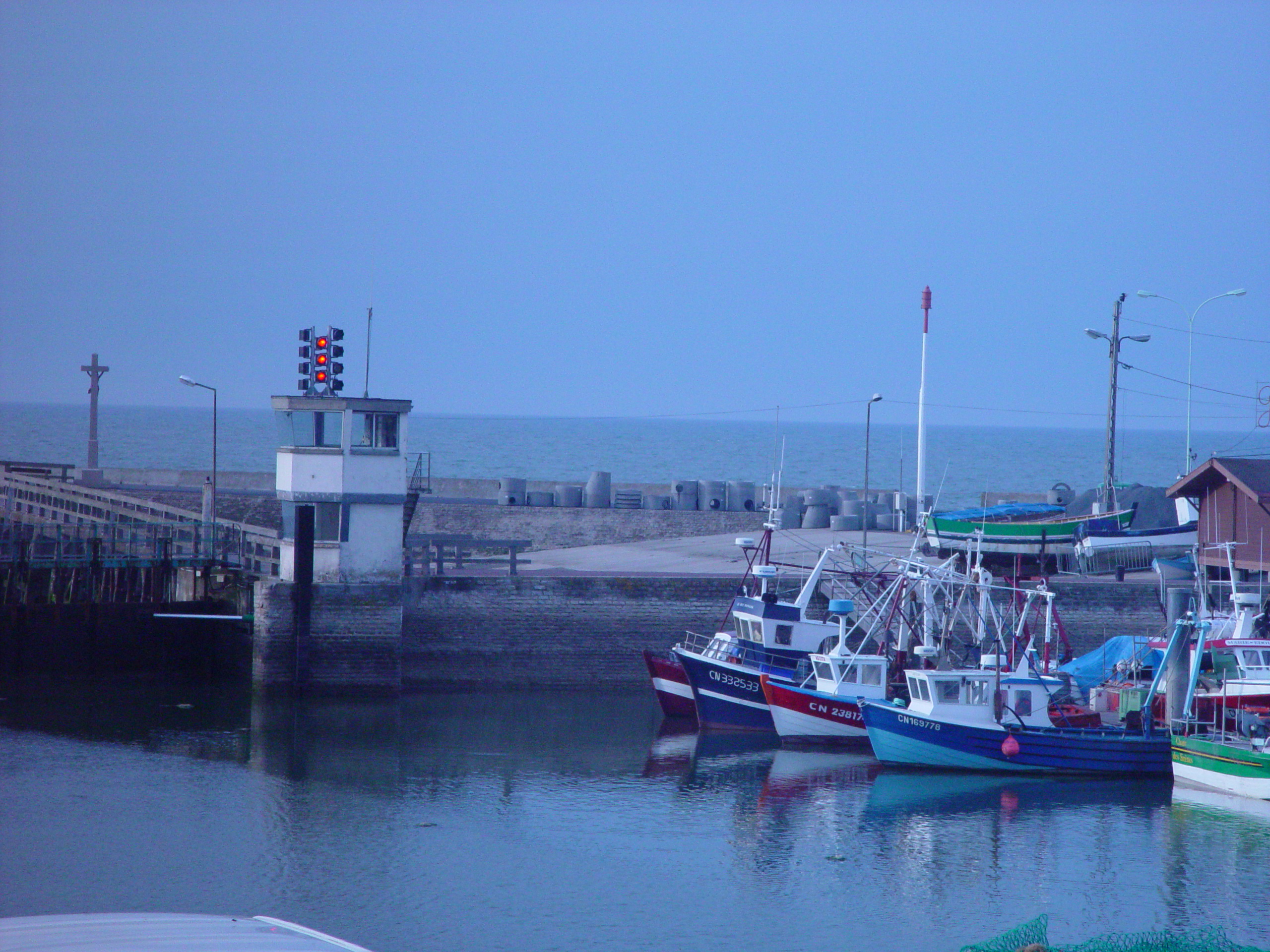
Harbor of Grand Camp Maisy
While in France we stayed in the small town of Grand Camp Maisy, a fishing village somewhat off the beaten path.
Rising from the salt flats.
The Mont is over an hour’s drive from Grand Camp Maisy but it was well worth it!
The view from the top – surrounded by mud until the tide comes in!
#ThursdayDoors is the brain child of Norm Frampton. Check out what people are sharing today!
If you could write a letter to your 14 year old self, what advice would you give her/him? Here’s mine:
Dear Dawdling DayDreamer:
Learn to forgive yourself.You are not the saint you think you are.You are impatient and will make many mistakes.But it’s okay because those mistakes will lead to experiences you may never have had, had you been more deliberate in your actions.Thus, learn to forgive yourself.
Maybe it’s not a good idea to give this guy a second chance. Remember, you are not a saint!
Always give someone a second chance.You are not the best judge of character and, although you rarely judge someone by how they look or talk, often your first impression of a person will be wrong.Of course, because you think you’re a saint, you will try to make the best of bad choices when you should be running in the opposite direction but then again, forgive yourself. There are lessons to be learned in even the worst of experiences.
Never say “I would never…” because you will.Accept that thereare no absolutes in life. When you find yourself in a situation you never imagined being in, remember to forgive yourself.It happens to everyone.Even saints.
You will do things you never thought you’d do! Like work nine to five in an office.
Learn to listen.You think you are a good listener but often you only hear what you want. Let people finish their thoughts and carefully reflect and don’t assume the worst. Lack of confidence is a thief of time.
Your friends will be diverse.
Friends are not perfect. Many of your closest friends will be the type of people you never thought you’d enjoy hanging out with.So keep an open mind. Don’t make a list of what a friend should be.Just enjoy the ones who somehow get through your hard shell and remember, you are not a saint.
In conclusion, you will be brave enough to take risks and fool-hearty enough to pursue your dreams. Your smile will always get you through so use it generously.
Get used to balancing Dawdling Daydreamer! You’ll be doing it the rest of your life!
Many of my blogging buddies have hung up “Gone Fishing” signs and closed comments until September which means they had the good sense to shut down for the month and either work on a novel that’s been suffering from terminal bloggerhea, or maybe, just maybe, they’re actually on vacation.
I wish I’d done the same but alas my head got stuck on another planet. I decided since I’d spent three whole years studying German, which shares its roots with Swedish, it would be no sweat to translate The Letters from Sweden, sender unknown that I talked about in a post a few weeks back. All I needed was a Swedish/English dictionary! Easy Peasy, hey?
Inte satsa på det ! (Don’t bet on it)
At the library I was disappointed to learn there aren’t many people in my small town with the urge to learn Swedish. There was only one Swedish/English dictionary. One! However there were books on Amharic, Gujarati, and Slovene – languages I’ve never heard of, have you?
Undaunted I checked out the one book and hurried home, confident that the secrets of the letters were about to be revealed.
Ha!
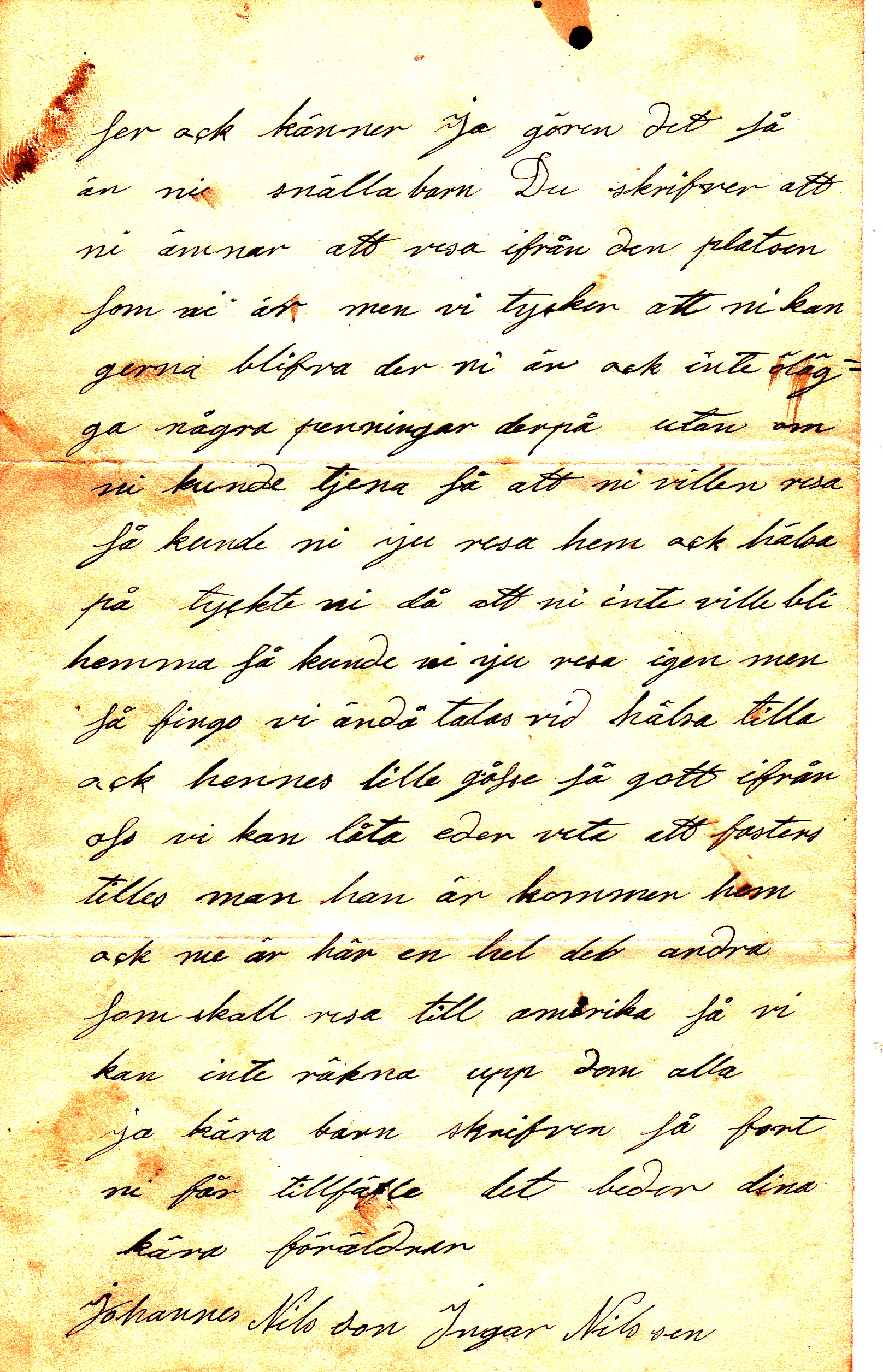
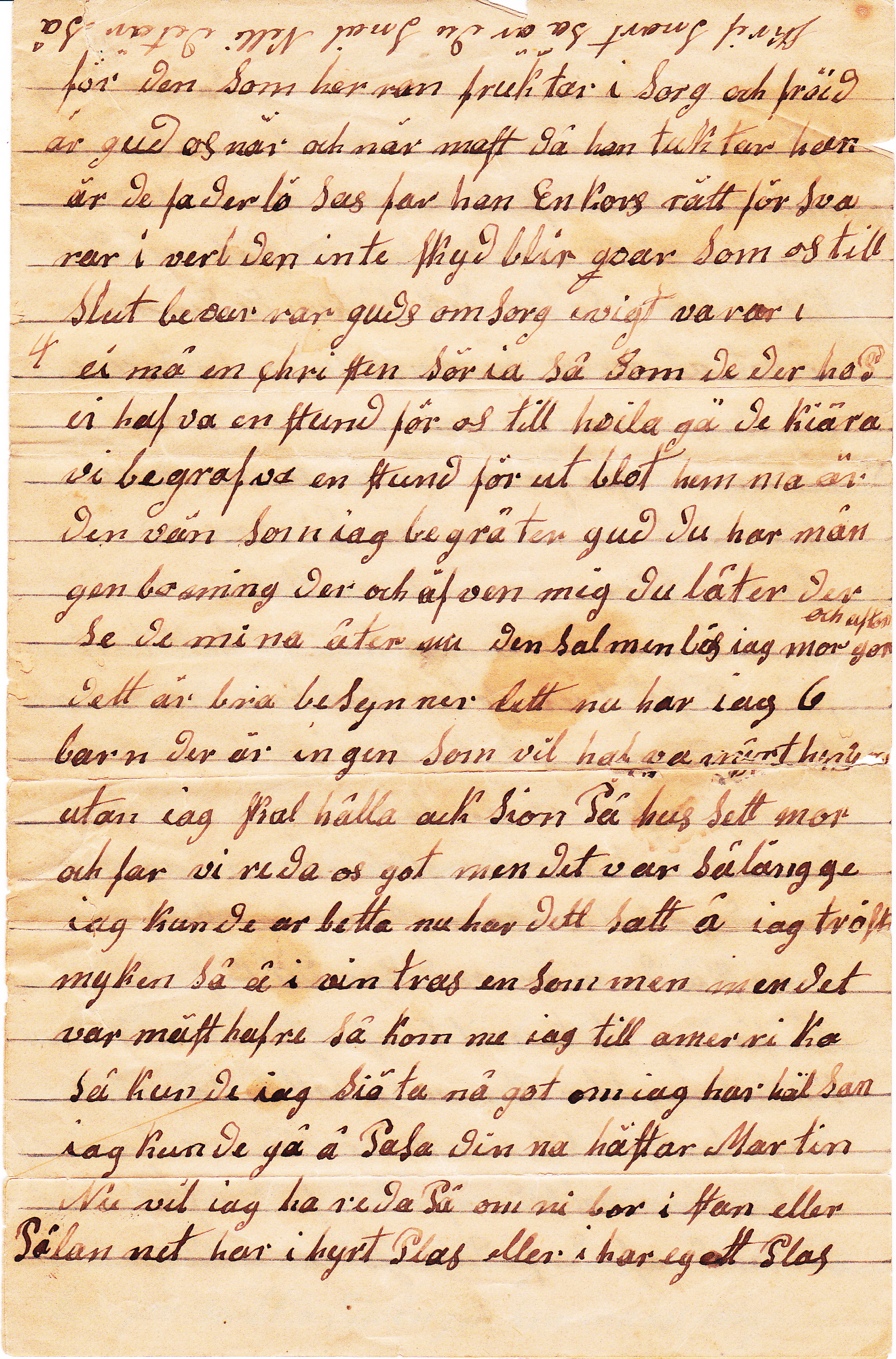
Lovely lettering but what does it say?
The problem, as you can probably tell, is deciphering the handwriting. The letters were probably written by three different people – all of whom undoubtedly received straight A’s in penmanship two hundred years ago – but I couldn’t tell their a’s from their e’s which meant I had to guess. And I’m not very good at guessing.
After several word by word attempts I realized you can’t translate word by word because the meaning of so many words changes depending on how they’re being used. So I decided to attempt an entire passage and see if Google could make any sense out of it. This method is rather like speaking in tongues but I was getting desperate.
The letter below had the clearest handwriting and so I selected the second sentence, the one that begins “Du skribner,” for my little experiment. I chose this one because I knew the word “skrib” meant “write” so at least I had some idea what the sentence was about.
Here’s the result of my effort:
Du skribner att ni amnar att visa fron den platoon fom vi ar men vi tysken att mikar gerna blifrader mi an ack inte olag ga negra . . .
Here’s what Google came up with:
You write that you intend to display from
Pluto we are but we German to pickups
willingly and not illegally.
“What does it say?” My mother (who’d been waiting anxiously for proof of her oldest child’s brilliance) asked.
“Well, I think your grandfather asked his in-laws to do something illegal so that he could display evidence that the family was from Pluto.Apparently it is illegal in Sweden to reveal that you’re a Plutonian.”
“Don’t you go writing anything nasty about the family!”
“Who me?Nah!”
My next brilliant idea was to “read” through the other letters looking for proper nouns that might reveal at least where they were from. A couple of the letters contained the word “Herran,” so I googled “Herran Sweden.”
“Do you mean Herrang?” was the response.
WTF I thought.Maybe I meant Herrang.
According to Wikipedia Herrang is a town with a history of industry and mining located on the northern coast of the county of Stockholm. Although the population is only in the 400s, it does have one claim to fame.It’s the site of the largest Lindy Hop dance camp in the world.The Herrang Dance Camp.
I must confess I had no idea what Lindy Hop was so I hopped back to Wiki and asked. Here goes:
Pretty wild, hey? Apparently this dance is a cousin of the breakaway, the Charleston and the Texas Tommy and got its start in Harlem, New York in the late 1920s or early 1930s. It was apparently named after Lucky Lindy (Charles Lindberg). I must admit it looks like fun.
So what have I learned? Well, at least my ancestors knew how to read and write although what they had to say, I may never know!
Here is my contribution to Norm 2.0’s #ThursdayDoors event:
From China Camp where in the 1800s, a group of fisherman pulled shrimp from the marshes along the San Pablo Bay, dried them, and shipped them off to China in boxes like this:
Here are some more pictures of China Camp:
The cabin
The Dock
Sadly the fishermen were forced out of business in the early 1900s and so now it is a portal to the past and a popular picnic spot.
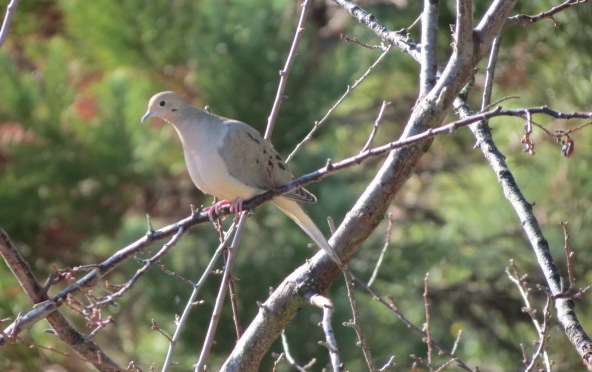
I found this guy lying on the concrete patio near where I’d chased away a grey cat who likes to tease our indoor cat.At first I thought he was a goner but as I drew closer he started flopping about in a vain attempt to fly. His wing looked crooked and he couldn’t stand. His pinprick eyes pleaded with me – don’t leave me here, easy pickings for whatever predator might happen by.So I ran inside, found a shoe box, laid a piece of soft linen in the bottom and rousted Joel from his sudoku.He’s the animal person.Oh, I love animals but I don’t know how to handle them like he does. He gulped, donned his garden gloves and then followed me out to where the dove still awaited a painful ending. Luckily I knew – from years of field trip carpooling – about the wild animal hospital near us and so, after a quick phone call, off we went.
Pamphlet urging people to keep cats inside
At the hospital a soft-hearted volunteer took our dear friend into the examination room and asked us to sign in. The walls of the lobby were filled with stories about other wild animals who’d been brought in and rehabilitated, giving us hope, although it was hard to imagine a bird with a cast on his wing. When she returned I asked why we’d been asked to sign in and she explained that “our” bird had been given the number next to our name so if we called in they could tell us how he was doing. She also said his hopes were slim. We haven’t called in.
Did you know that mourning doves are monogamous? Not only that but legend has it that once a mourning dove’s mate dies, he will not take another. Kind of hard to believe, isn’t it? Well, here’s my story:
Many, many years ago – so many that I’ve lost track – we decided to built a teahouse on a lower meadow where only weeds grew.It took a long, long time because we were working full time, raising children, and trying to see some of the world while we were still relatively young and so it was a weekend only project further winnowed by family visits and the like.
It was also a family affair; my father architected the elaborate roof, my teenage son buffed up during the summer months by hauling blocks and concrete down the hill for the foundation, and hubby, of course, acted as financier and project coordinator.They would work together all day often squabbling over the how-tos and then after supper fall asleep on the old blue couch (which even then had seen better days) while watching British mysteries and drinking red wine.
Two Doves, by Connemoira
One evening Joel decided to finish off a few things down at the teahouse. He didn’t notice that Mr. and Mrs. Dove, a lovely couple who’d visited us routinely in the past, had followed him down, probably because they knew he generally carried bird seed and peanuts in his pocket.
With a screech that set his hair on end a hawk, talons drawn, buzzed past him and grabbed Mrs. Dove by her long slender neck. She didn’t stand a chance.
After that Mr. Dove held vigil in the oak near our deck. Always a welcome visitor, a he was a mannerly gent among the raucous jays, chickadees and wood peckers. We will miss him.
Today I’m delighted to welcome Shelley Sackier, creator of the always entertaining blog – Peak Perspective – and author of the upcoming teen novel DEAR OPL.
JTT: Hey Shelley – thanks for being here! First of all, how did you come up with the title Peak Perspective?
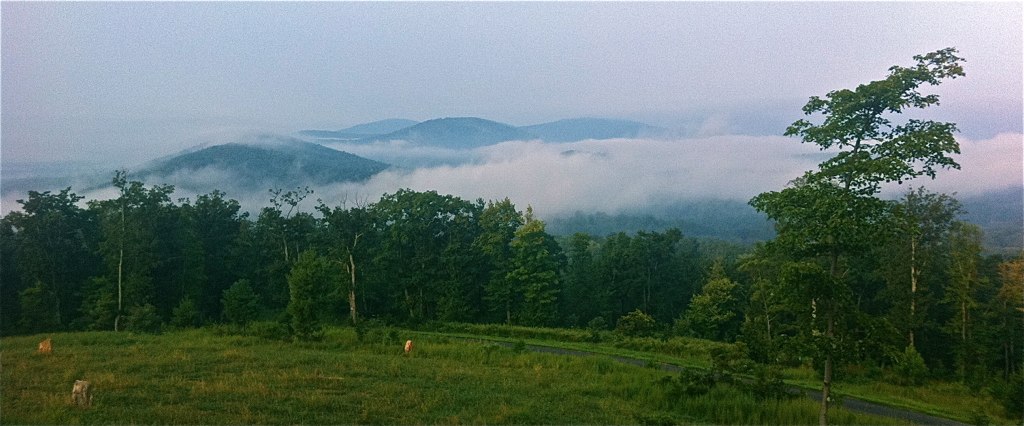
SS: The blog title and tagline (Peak Perspective: trying to see above the fog.) was born of both sight and wordplay. I live in the Blue Ridge Mountains. I’m surrounded by mountains, and living on top of one gives me a spectacular view, except when it doesn’t. Some days I’m fogged in, occasionally I’m above the cloud base, but most days, the scene is truly breathtaking and allows me a view of three counties. As I’m always staring out one window or another for a moment of inspiration, rare is the day when something remarkable does not flit across my field of vision. It’s a little like living on the live set of a National Geographic special filmed by the Weather Channel. Some days are truly spectacular. Some days are scary. A couple have made me think that it might be time to start doing bladder strengthening exercises.
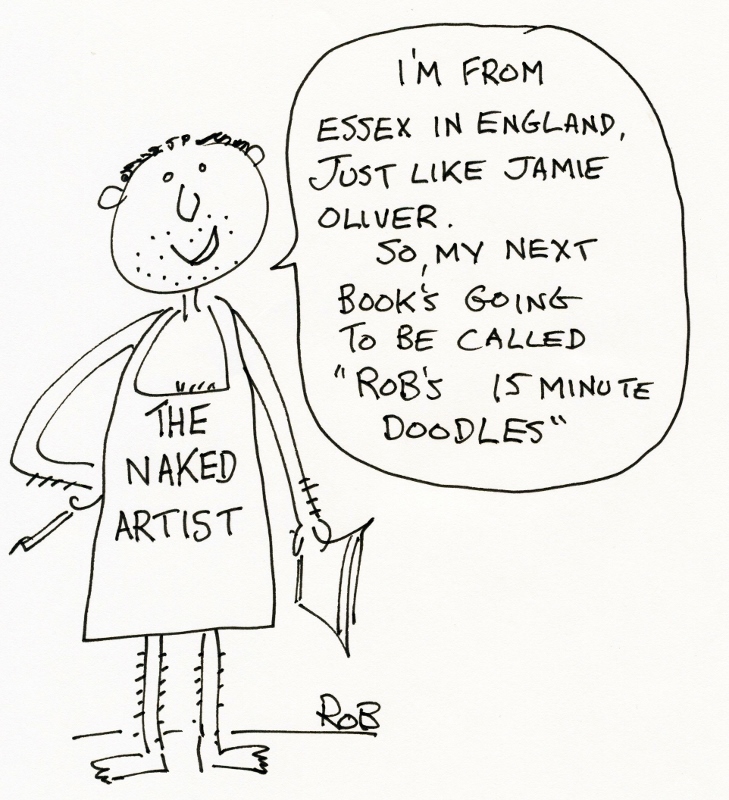
JTT:Please send me a copy of those bladder strengthening exercises ’cause I need ’em. With those spectacular views there must bea lot of artists living in your part of the world however your illustrator, Robin Gott (who I just adore), lives in Essex England. How did you find him?
Cartoon courtesy of Robin Gott
SS: I love the fact that Rob and I live in separate countries and have worked together for a few years but have never met. There’s something so remarkably “today’s business world” about that. We were introduced years ago and had almost worked together on a different project. The blog venture just sort of spilled out of that serendipitous past.
Robin is one of those incredibly multi-talented folks whose craft spills over into myriad dimensions. Animation, acting, drawing, writing. His work is prolific and I feel so fortunate to have this time to be creative with him. I’ve discovered what it feels like to work with someone whose brain will likely be preserved for science.
However long the blogging business keeps us artistically woven together, I can think of so many other missions I’d like the two of us to take a crack at. Time will tell. Fingers are crossed. Pencils are sharpened.
JTT:Blogging does provide us with some interesting bed fellows doesn’t it?Well, ”bed fellows”isn’t exactly the right term. Collaborators?Gads, that’s not much better… (help me troops!)
Haggis of Peak Perspective
Speaking of blogging, I’ve been in awe of your blog for a long time. I wonder if you’d mind sharing some blogging tips and tricks (or is it top secret)? When did you start? How did you build your incredibly supportive audience?
SS: Well, firstly, thank you for saying so. That’s the hope of so many writers. Tips and tricks? I think, as with so many things in life, you have to be willing to stick your neck out and embrace vulnerability. And even more importantly, you have to be willing to fail. I’ve gotten pretty good at kicking myself out of safe mode, skinning both knees, and then moving on. There’s so much to learn when you make mistakes. Being careful does not make a terribly exciting life. And I crave challenge. And chocolate. I’m not sure which I devour more.
Also, it might be extraordinarily helpful to have a roadmap—a story grid of a sort. Why are you blogging? Is it to share wedding photos? A trip to Dubai? Your time in the slammer? It helps to understand what the end goal is.
My blogging exploits began strictly to develop a skill I thought I needed improvement with—churning out about 1000 words on demand. Butt in chair, holler to muse, write the damn essay, finish the laundry. When you devote attention to something every day, bit by bit the challenge begins to feel increasingly more comfortable. Welcome to the new normal.
And building the supportive audience comes from caring about what people have to say. There are so many wildly interesting people on our planet, each with a distinctive voice, and I find it’s like a funky orchestral hot mess when I engage with everyone. It’s a huge time commitment, and I’m not looking forward to the approaching day when I’ll have to back off because of other writing commitments—ones from people who are actually paying me to produce work for them, but I’m hoping to have at least created a community of people who can carry on the conversation if I’m not there and who have made worthy friendships simply from having had my blog site been their playground.
JTT: “Butt in chair, holler to muse,write the damn essay,” AMEN!However, you did manage to finish DEAR OPL while building your audience.Congrats on that major accomplishment.You deserve chocolate, lots of chocolate. However, I know from reading DEAR OPL (and your blog) that keeping our food safe, nutritious, and delicious are important issues for you. I don’t want to spoil the plot for potential readers but the main character, Opl,achieves some amazing things while battling a common bugaboo for many of us growing up: a negative self image. At first, I have to admit I thought the mother was cruel – always making a big issue of Opl’s understandable weight gain (I mean, she had just lost her father!) but by the end you managed to make the mother sympathetic. I think it had to do with Opl’s growing awareness that staying healthy need not be an arduous task. Was personal experience a motivation for writing DEAR OPL?
SS: I’ve had food issues for as long as I can recall, but not of the same type as Opl. Working in the entertainment industry, one gets judged every which way but Sunday. It was brutal. Costumes were measured and remeasured on a regular schedule. If you lost a pound of sweat during a show from exertion, and your waistband had a half an inch worth of give in it, it was immediately sewed shut. I survived for years believing that fat was an enemy and that tinned peas and Cream of Wheat was my culinary lot in life. This was horrifically rough for someone who grew up in a family full of caterers, butchers and chefs. I loved food, but was always being deprived of it because of the fearful sweeping top to bottom gaze of an unforgiving producer or director.
I was determined to raise kids with the idea of nutrition as the motivating factor for meal planning and food education, and didn’t want to create battles over what we put into our mouths. I knew that as my kids grew more independent I’d lose a lot of sway over what they’d be choosing to eat. I knew that layering information in small bite-sized chunks, and also walking the talk would be important components of whether or not they’d remember what I’d said, and did as I advised. Most importantly, indulging in food they knew I’d cringe at was a given, but I hoped that they’d pay attention to the correlation between what they ate and how they felt afterward. I know the pressures teens feel when trying to fit in with their friends, and that sometimes food issues become friendship issues. In my mind, I believed they’d make diet related decisions based on things other than what the crowd was doing. They learned to love good food, and cooking it themselves has been an ongoing joyful discovery.
JTT: You’re absolutely right – making decisions about what to eat based on how you will feel afterwards is far wiser than going along with the crowd but it is a hard lesson for many teens to learn. On your blog you’re doing an excellent job of what marketeers call “building your platform” and so I’m fairly confident this next question will be an easy one for you to answer, please describe Dear Opl’s ideal reader? Who are you talking to? What do you hope your readers take away from the book?
SS: DEAR OPL’s reading base is 9 to 13 year-olds, but I’m hoping to attract kids who may be in a similar situation as Opl—those who feel like they are either losing the battle with weight, or who feel they can’t stop eating junk food, but mostly kids who are desperately looking for a bit of direction. People don’t realize how much help is available and often give up before they’ve even begun.
My hope is that Opl will be able to communicate that there is no “magic pill,” and that change can happen in small ways that have a ripple effect result. If we expect to shift the habits of a lifetime, it requires education, support, patience and faith that you’re doing the right thing. (And a big dose of self-forgiveness when you don’t.) I feel that all too often we’re told by marketers to expect a miracle effect with their slick headline promises and a mind-blowingly easy overnight success. I’m hoping to impart some savviness.
JTT: You’re absolutely right – kids are bombarded by “lose weight overnight” ploys which are nothing by quackery.It’s horrible.Speaking of horrible, now onto the uncomfortable revelations part of the interview (just pretend I’m Barbara Walters). You’re a pilot and whiskey drinker, is that correct? Were you also abducted by aliens like other famous whiskey-drinking pilot drinkers, i.e., Harrison Ford? Please describe some close encounters of the third kind you’ve had while soaring through the clouds.
SS: Really? Ford was abducted?
JTT: Whoops, sorry. I was actually thinking of the drunken pilot from the movie The Fourth of July who saves the world from aliens somewhat in retaliation for having been abducted by them.
SS: Well, flying and whisky have been a significant part of my life. Although, never at the same time for obvious reasons.
When I was first learning to fly, in order to gather up the courage to do solo night flying (which is incredibly different than daytime flying — you’ve got nothing but a Lite-Brite board beneath you), I’d belt out the theme song to Raiders of the Lost Arc while doing finals and preparing to land the aircraft. You have to acquire a fair amount of knowledge to fly and land an airplane, and a teensy bit more if you’re hoping to reuse it. But you also have to have an element of faith.
Also, having an old codger for a flying examiner was a lucky thing. I think he realized as I was taking my final physical flight exam that I was still too timid with the aircraft. He took the controls and shouted, “You’ve got to manhandle this beast, lass! And you’ve got to know its limitations.” He then proceeded to pull the plane up into a stall and let her do a falling leaf pattern for about twenty seconds before recovering the aircraft. Kept telling me, “She ain’t gonna break!”
Flying at night
I think that was about as close to an extra-terrestrial experience as I’ve ever had, as I was fairly sure I’d not live to walk on our planet again.
JTT: I love that story! My father was a pilot – he loved to get me into his little Cessna and do loop-de-loos! Okay, here’s your chance for revenge, what embarrassing question would you like to ask me?
SS: You see, this is where I’m struggling, Jan. I can find absolutely no dirt on you. You are one of the most impressive humans I’ve come to know. Your work with the Make a Wish foundation, your advocacy for at risk foster children, your books, your blog, your terrific writing … yeah, I got nothin’.
But maybe I’ll ask the question readers are probably wondering: how is it that you can get so much done in one lifetime?
JTT: How sweet of you but perhaps I should have given you my ex-husband’s phone number!
Whenever I hear the theme song from Raiders, I’ll think of you soaring across the skies! Thanks so much for taking the time to talk with me and best wishes for the release!
DEAR OPL’s back cover
DEAR OPL is available for pre-ordering on Amazon here. The official release date is August 4, 2015. Here’s my review:
DEAR OPL is an honest look at a problem facing many young teens: negative self-image brought on by weight gain.It is also the story of a family trying to move ahead after a catastrophic loss.Young OPL (who left the “A” off her name in order to lose weight – LOL!) has a talent that surprises her classmates and gives her an outlet for the ongoing frustrations of teen life.She can blog!In fact, she rapidly becomes a blogging superhero as “Dear Opl” dispelling advice to her peers with an abundance of sass and wit. But she doesn’t just make a difference in her own life, she reaches out and makes a difference in the lives of others.
No update on the letters from Sweden – but as soon as I find someone to translate, I’ll let you all know!
After taking a break to ponder the delights of gibberish, I’m back to pulling skeletons out of the family dirty laundry hamper.Perhaps I’ll find an even more illustrious ancestor than Deacon Samuel Chapin! What do you think?
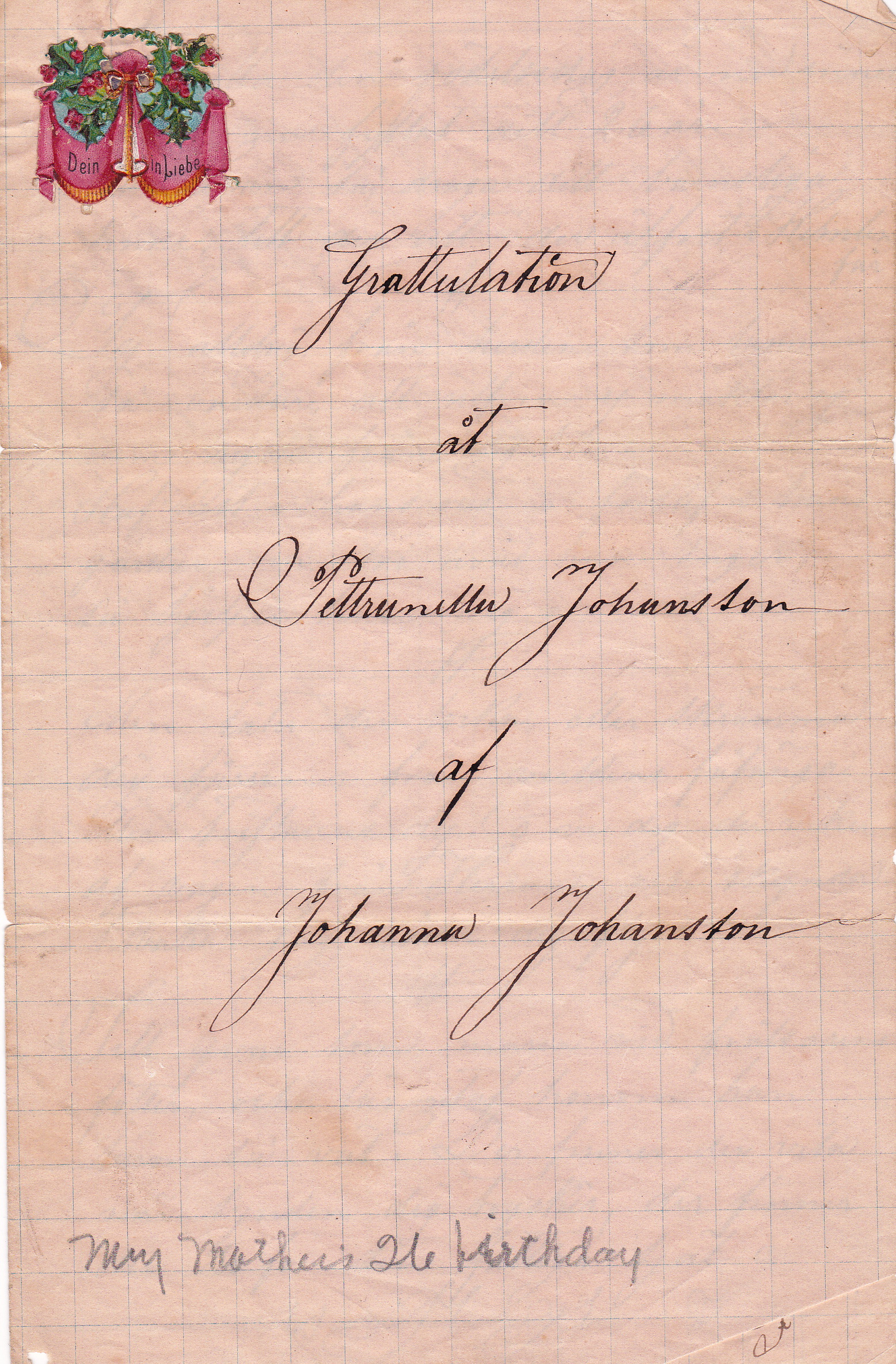
This is one of fourteen letters which were written in the late 1800s to my great grandmother, Nellie Nelson, from someone in Sweden (supposedly . . . we do not have the envelopes to prove this fact).Nellie died after many years of ill health when her daughter (my gram) was only fifteen years old. After her mother’s death, Gram’s father, who must have been a dour old poop, refused to translate them for her.He refused to even tell her who they were from.His stance was “good riddance to old rubbish” and apparently Sweden and every thing Swedish and every one of their Swedish family and friends were old rubbish.
The only clues I have are the notes in my grandmother’s handwriting on the top of a couple of the letters, conjuring up the heartbreaking image of a young girl kneeling beside her mother’s deathbed hoping to learn something about her heritage. Probably while her father was out of earshot.
Although she had little idea what was in them, Gram cherished these letters her entire life as my mother does now. Today they are very brittle, falling apart in my fingers as I put them on the scanner.Paper that old should probably be handled by an expert and not someone as klutzy as me but time is of the essence, at any point they could be lost or turn to dust.
The one above seems to be in a different hand, meaning that more than one person sent Nellie Nelson a birthday wish or wrote to tell her of family events. However, the only thing I can glean from these fossils is that Nellie’s real name was Pettrunella Johansson (no wonder she went by “Nellie”). What will happen when I do find someone to translate them? Do I really want to know the secrets they contain or do I want to assume they were filled with cherished stories from the old country?
Daisy spent much of her life in museums and churches transcribing records relating to her husband’s family history. Otherwise, I don’t much about her, nor did my mother (her niece).
She was married to my great uncle Henry who was about ten years older than my grandfather and, from the photos I’ve seen, very handsome. I never met him. I don’t think. Although my mother often mentioned Marie Ange, her French Canadian aunt, with a softness so uncommon in her family.
And so I assumed (as did Mother) that the exhaustive research on Henry’s background had been done by Marie Ange.
My only claim to fame! Looks like a jolly fellow, doesn’t he?
Her intent was to prove a link back to Henry’s famous ancestor, Deacon Samuel Chapin, one of the founders of Springfield Mass. However because Chapin arrived in this country in 1635 and fathered seven wildly fertile children, the family tree is split into a thousand tributaries. Still Henry’s wife persisted. It was an endeavor that took her all over New England and even across the pond to St. John Baptist Church in Paignton, England which houses Chapin family records dating back to the 1500s .
Family history written in 1910 by Daisy
Once she completed her investigation she sat down to write an account of the family history. The problem is, she was a genteel lady of her times, devoutly religious and intent on writing a glorious account of the family that would make us all proud.For this reason certain not so glorious moments were carefully wrapped in delicate lace and sweetened with lavender, such as this account of my great-great-great grandfather, Samuel Jameson.
Permit me to say one thing: he was a man of strong intellect and reasoning powers: but few men had such a memory: he could repeat any passage of Scripture you might mention.
Wonderful! Sounds like another jolly fellow to hang out with! However, reading on we learn that this scripture spouting dude went south “for his health” leaving his wife and four children to fend for themselves:
Note:Mrs. Samuel Jameson became housekeeper for Dr. Lucius Wright of Westfield, working for her home and from time to time the Dr gave her money for what clothes she needed, in lieu of wages.The children were placed in homes and had to work for their board and living. Mrs, Jameson died in the Dr. Wright’s home.
Hebrew Skehel courtesy of Bing images
I don’t know why this detail is in a note. Perhaps so we won’t think unkindly of one of our noble ancestors. Who knows.
On the next page she details the fate of the poor children of Mrs. Samuel Jameson:Philander (what a name, hey?) became a manufacturer of bobbins and shuttles* who married – what else? – a dressmaker!Samuel Jr went west in search of gold and was never heard from again. Abiezer married Mahala Chapin, evidently in an attempt to improve the gene pool. Lastly there was poor Calvin. After being “mustered” and then injured in the Civil War he became a collector of rare coins, including: “a Hebrew shekel of a very high antiquity and 2 cent English pieces of the years 1001 and 1098.”Who knows what happened to those rare family gems? At this point she’d reached Abiezer, my great-great grandfather, and thus proven the connection between the Jamesons and Chapins. Hurrah! My claim to fame has been validated.
Despite my sarcasm, it is a truly wonderful document, even if the interesting and telling sections are housed in notes.
* bobbins and shuttles = parts of a sewing machine
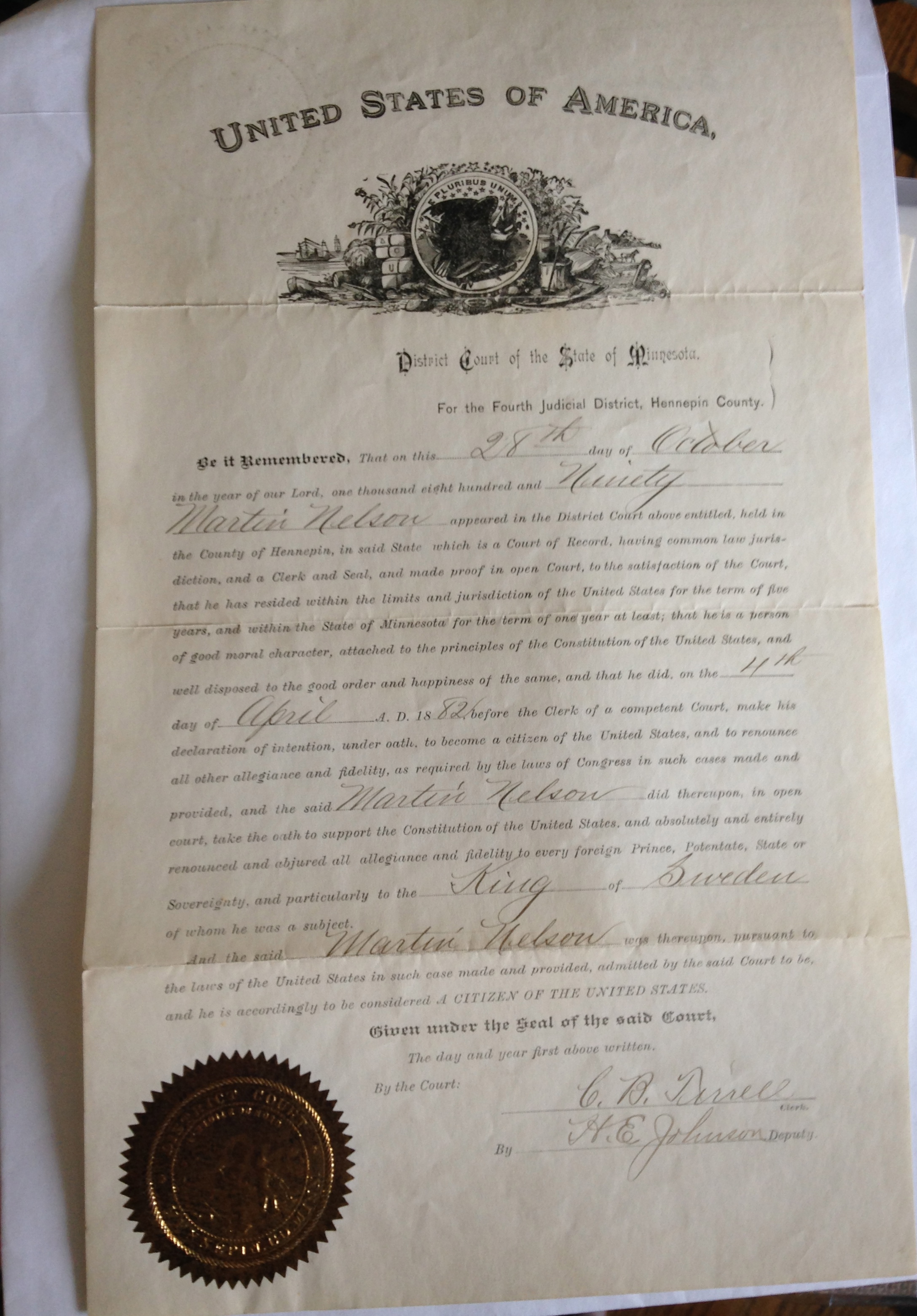
Sorting through old pictures and documents has left me in a funk, primarily because they detail lives I know were hard, where victories were probably few and disappointments many.However, given the fact that over half my ancestors came to this country in the late 1800s, a time when travel was arduous and a future uncertain, I have to conclude that conditions in the countries they left – Ireland, Norway and Sweden – were much worse.
The number of Swedes fleeing the motherland was far higher, however they had more folks to piss off and so Norway wins the distinction for the biggest brain drain of the north. There’s only one explanation officially given as to why Nordics fled the land of cod liver oil in hordes: crop failure.Really?In a land of long dark winters and never-ending summer days, what crop could have survived in the 1800s?Other than cod, that is.
I suspect there were other reasons such as lack of opportunity, however you’d think those poor souls who left behind beloved grandmas, mothers and cousins would yearn to return to the warm hearth of youth for at least a visit, wouldn’t you?
Well my ancestors never did. Once in the US, they turned their backs on the old world including its customs and languages.As a result I never heard tales of the old country nor did I hear mother tongues being spoken. And so, I did what any ordinary child would:I made up stories.
Just a couple of wild and crazy reindeer herders from Lapland!
These two love birds supposedly stole away on a merchant ship from Stockholm in the 1880s.Because they had the same last name my mother theorized they were cousins who fell in love and had to run away in order to get married.I went a little further and decided they were brother and sister. (I’d been reading far too many Swedish novels and plays at the time.)
Lars and Helga won’t you please come home? Mother misses you!
Someone who knew the real story wrote a letter tomy grandmother in the 1930s.Sadly the letter is in an obscure Swedish dialect that no one can translate.This has lead me to conclude my great grandparents were not Swedish at all but incestuous reindeer herders from Lapland.
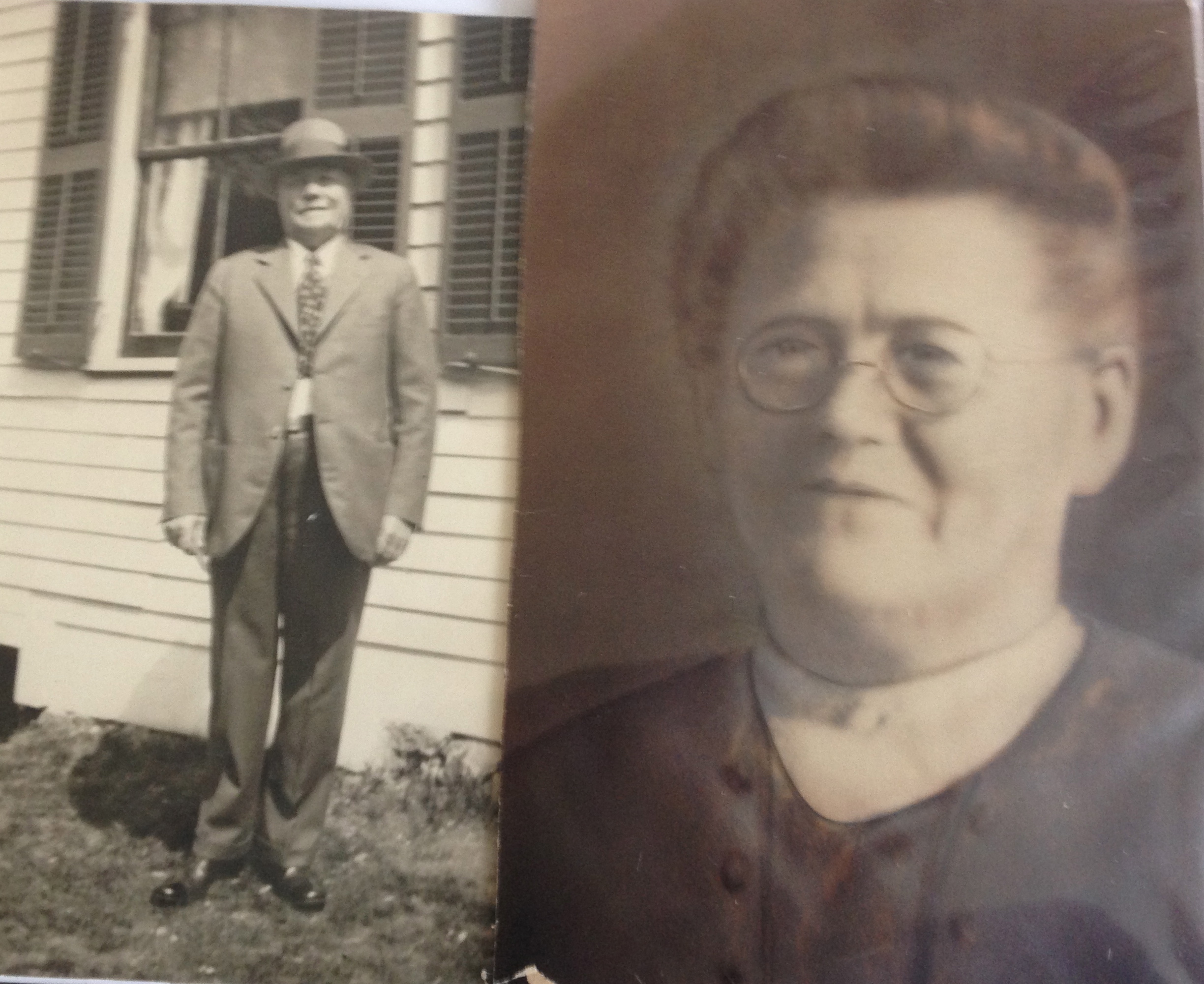
My great grandfather on the other side was from Vang Norway but the only way I found out anything about him was through a google search.
Ran off with a Sioux Warrior Princess?
He had the misfortune to die just after my grandmother’s birth and, after his widow married The Judge (by all accounts a man sans any sense of humor or love for children), Gilbert Flaten’s memory was left to wither on the vine. When I asked my father what happened to his real grandpa I got this answer, “he just died.”No matter how much I nagged him, I got the same response, “he just died.” When I asked what he did for a living all I got was “he was a photographer.”
And so naturally I assumed that while photographing prairie life around his home (Fargo North Dakota), young Gil fell madly and passionately in love with a Sioux warrior princess and, unable to resist the temptation to ride the plains on horseback chronicling the lives of the noble Sioux, he soon abandoned the restraints of Victorian life.
My version of his story seems logical, doesn’t it?
Well, that’s not exactly what happened. After my father’s sudden death, I sat down at the computer and out of nowhere got the urge to google Gilbert Flaten.Here’s what I found out.
The real reason they never spoke of him is that he ran a saloon during prohibition. Horrors!
But he also ran a successful portrait studio and worked for the volunteer fire department before his premature death at 40 from some ungodly flu.
Okay – now that I’ve got ancestors on both sides rolling in their graves, I’ll sign off with a salute to all those wonderful folks who left family and homelands to travel to this crazy country! Happy Fourth everyone!