
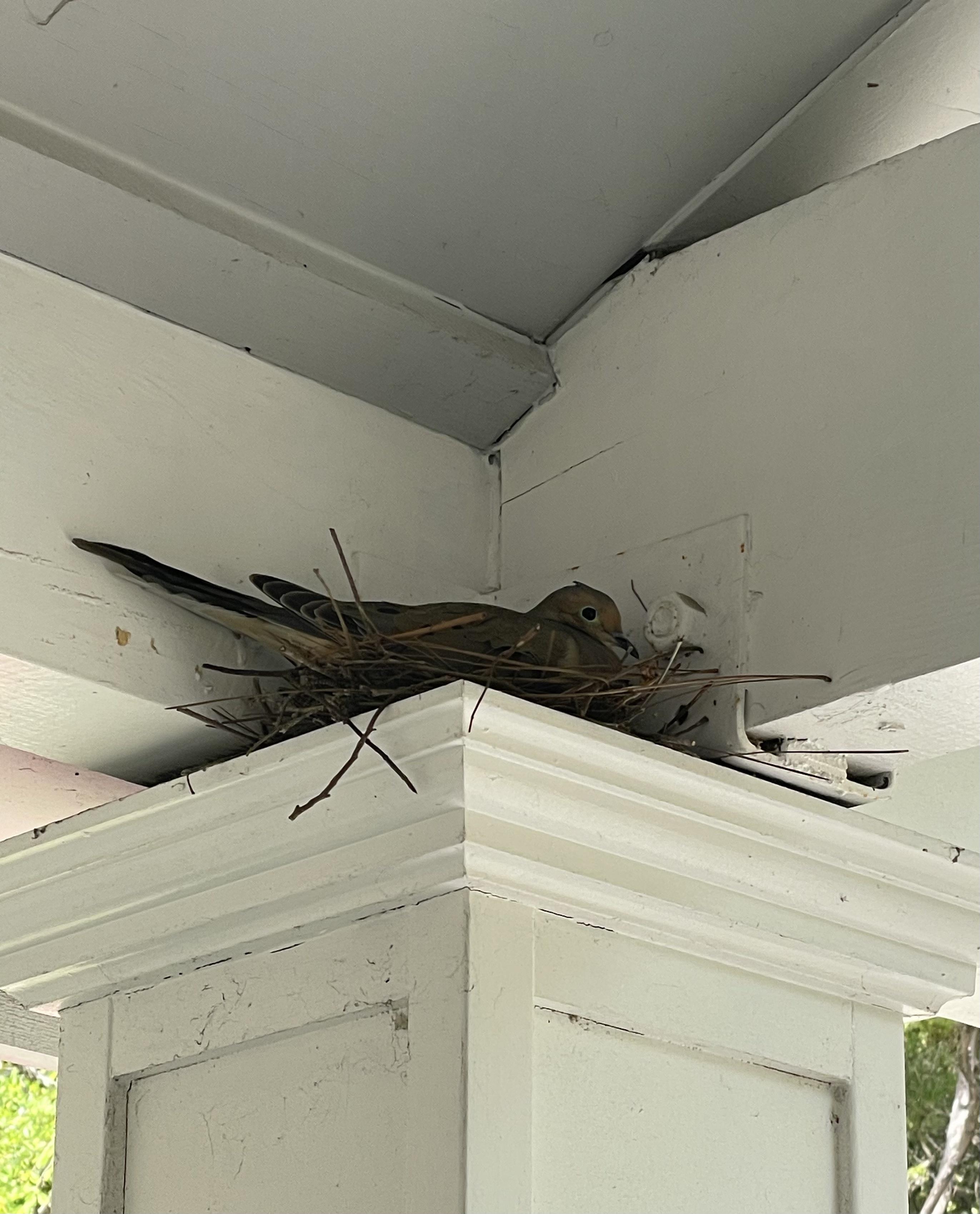
I have no idea when Mama Mourning Dove laid her eggs. I first noticed that the nest (which someone had begun to build at the end of April) had occupants on June 7 while I was still preoccupied with other guests. And, as you can see from the following shots, the nest is not easy to spot.
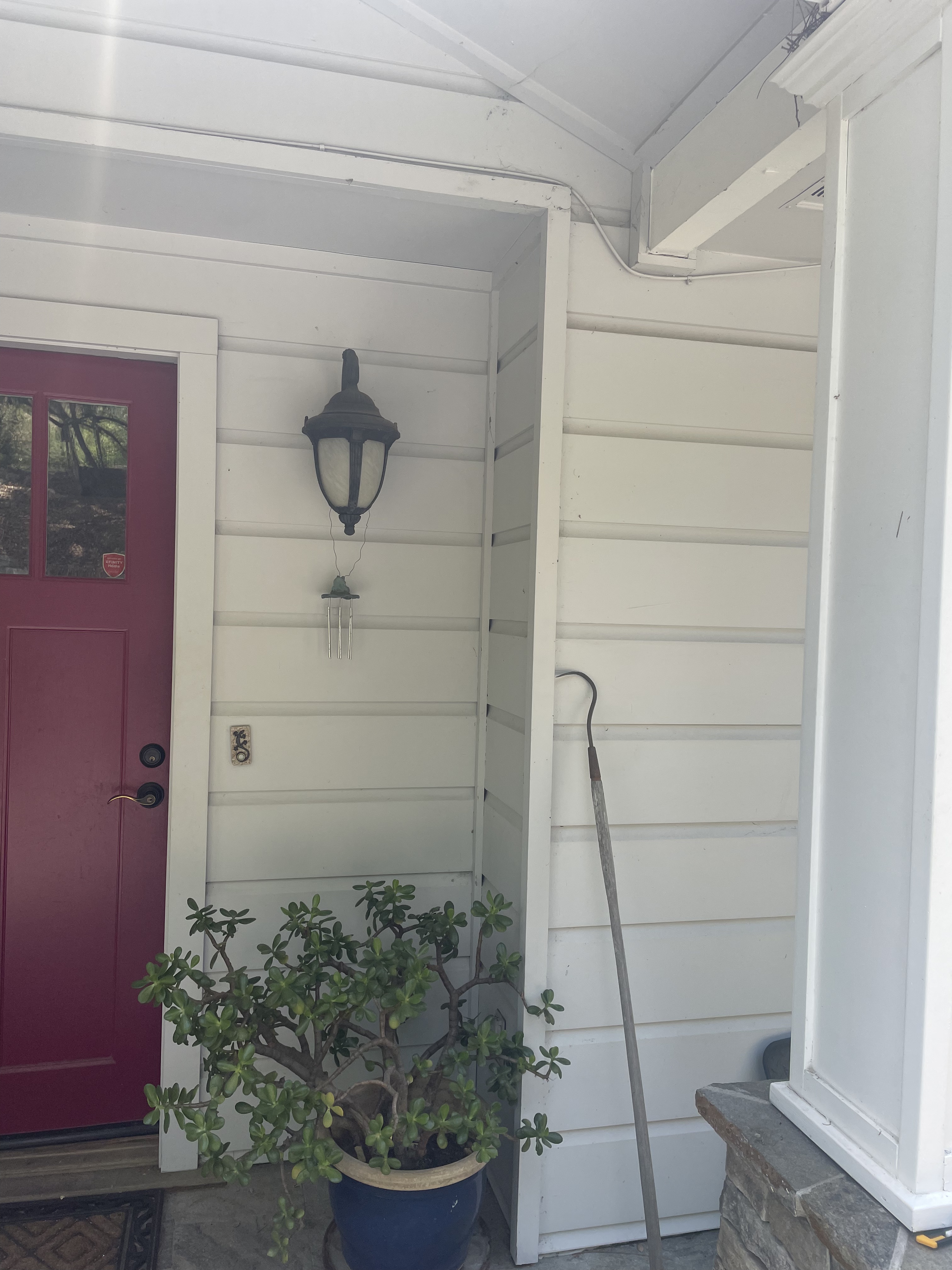
She could have been for who-knows-how-long, silently tending her eggs.
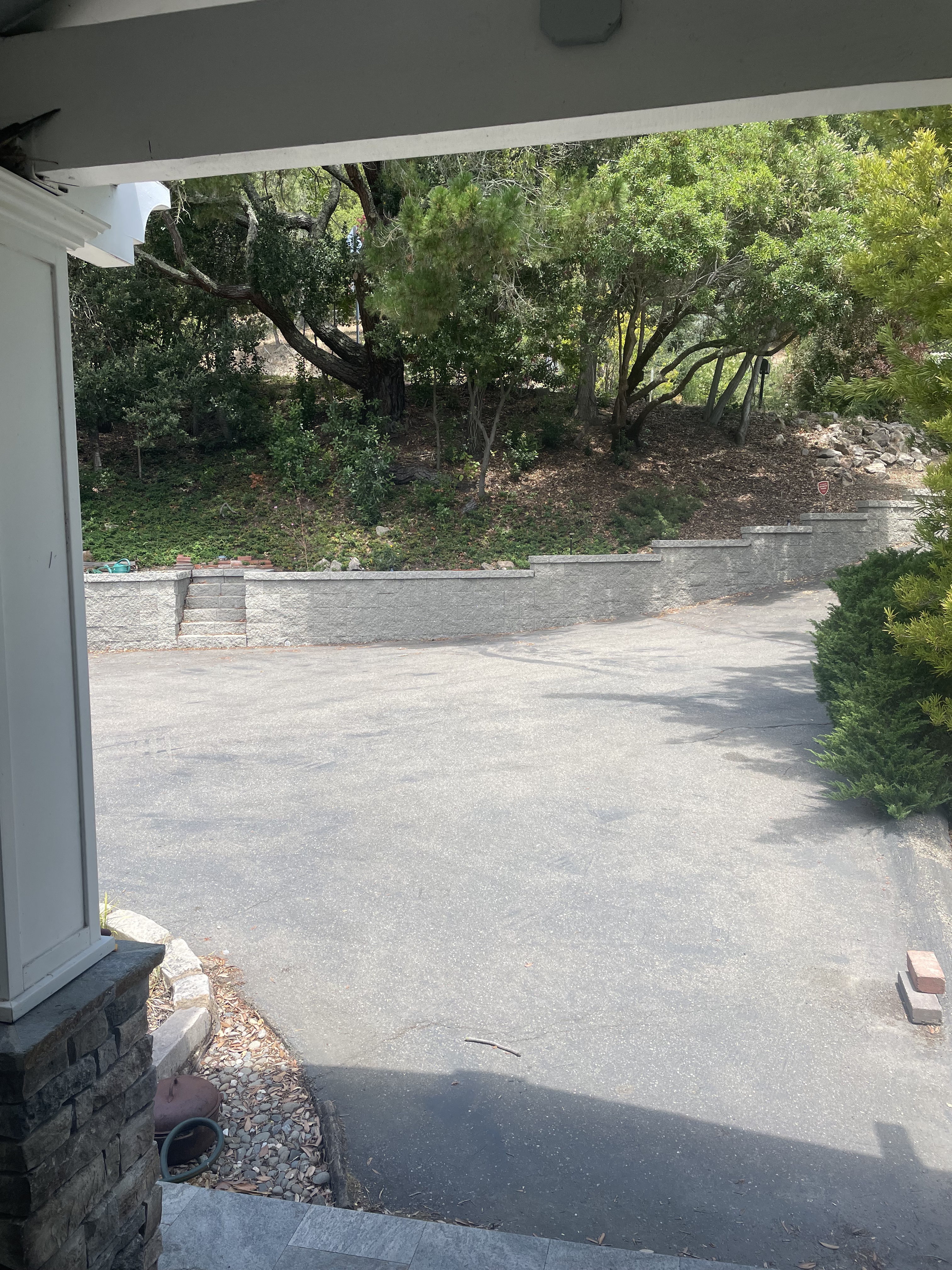
According to AI, it could take up to 15 days for the eggs to hatch and then another 12 to 19 days for the baby birds to fly away. There will probably only be two baby birdies, if we’re lucky. If we can help protect the nest from predators. Like raccoons and squirrels.
I was worried about the poor mother bird because she never seemed to leave her nest. Was she getting enough food and water? And then I read that both mother and father mourning dove tend to the nest and . . . to their offspring. So perhaps Mother takes the day shift and Dad the night shift?
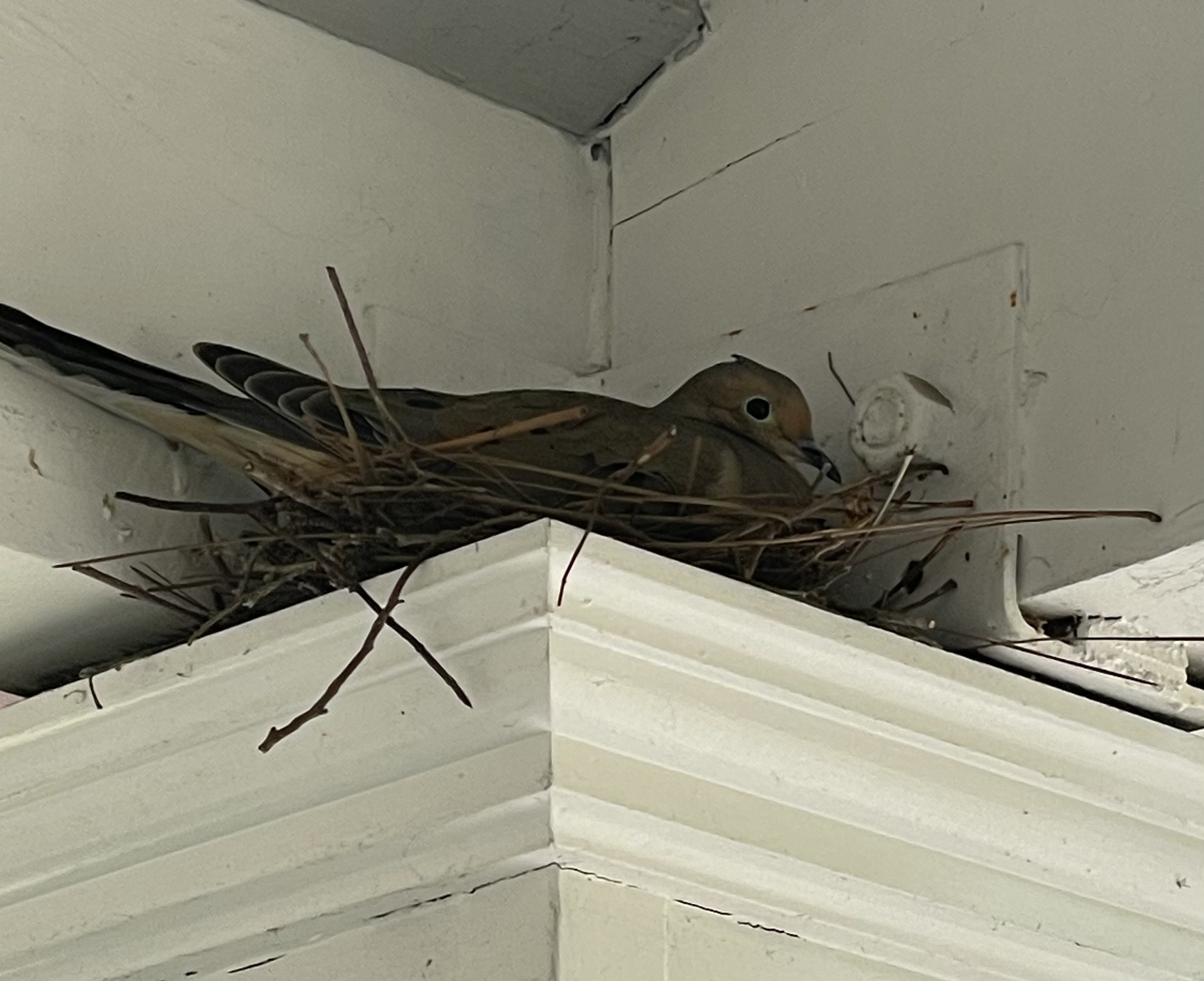
Or I could have the process in reverse. Does anyone know how to tell a male mourning dove from a female?
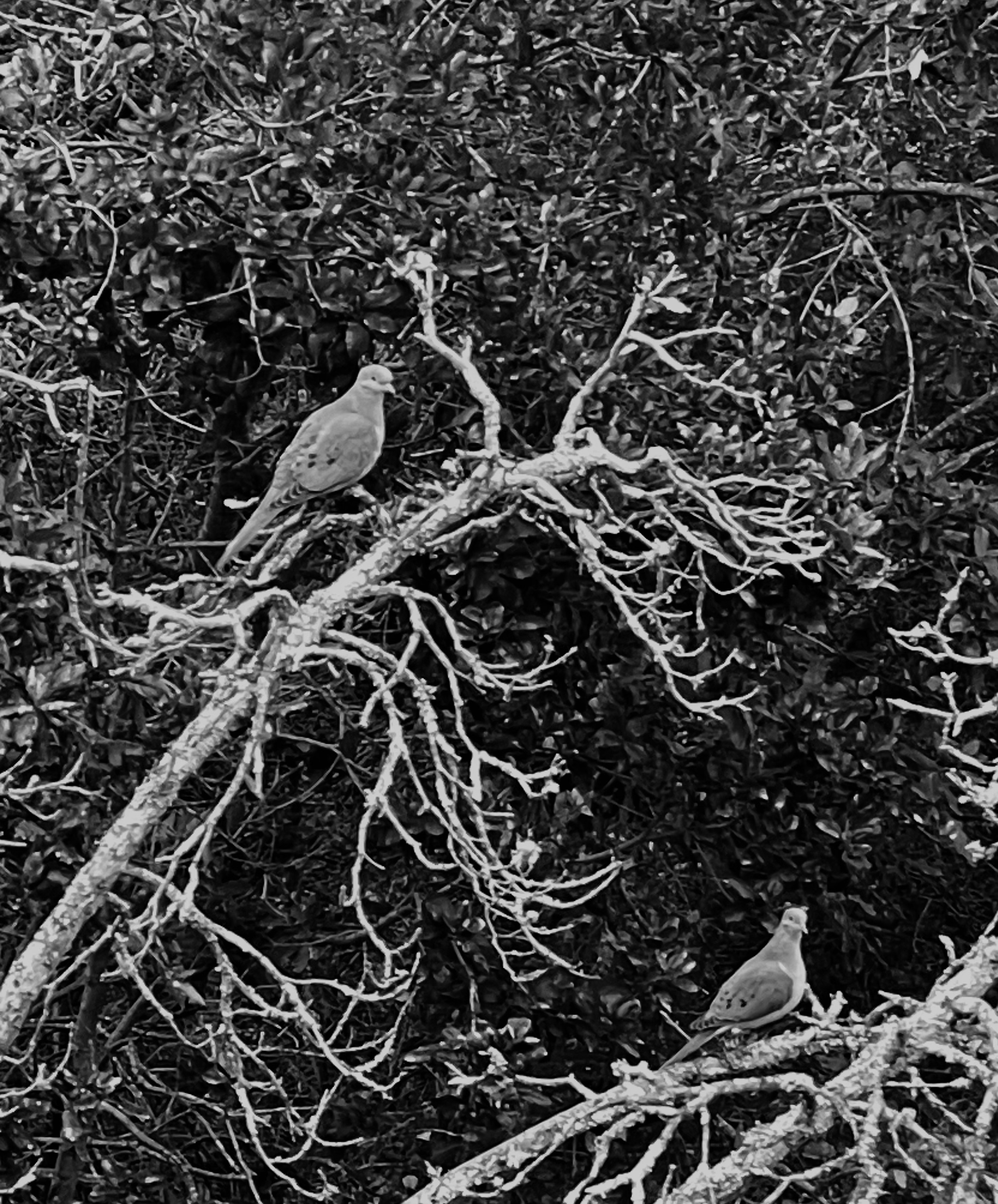
From 2024 – perhaps the grandparents to be?


I’ve found when it comes to birds and nests, they know better than we do and usually work it out.
But holy hell… is that a giant jade plant by your front door? Impressive.
I’ve had that jade for a long time. It has many babies which I’ve planted around the yard. None have gotten quite that big yet!
We have a lot of Mourning Doves visiting our yard. I’m not sure where they live.
Supposedly mourning doves mate for life – so generally you’ll see them in pairs. They’re probably looking for a nesting spot.
Mama is guarding those eggs well. She is going to be okay.
Active fathers these doves. There is a nest just outside Beth’s patio door, did you see it when you were here? I imagine I sometimes conversed with Mama and sometimes Dad.
No, I didn’t see it. Maybe they were the ghosts I kept hearing!
My daughter had about three batches of babies at her house. Two new eggs just hatched the other day. My son-in-law built a nice besting site on their house, since they come back every year. He also set up a camera so they can watch the nest and make sure everything is ok. And, of course, they can see the babies.
Oh how sweet! I’m going to try to figure out how to set up one of those cameras! Wish me luck – it’s probably beyond my skill set!
I’ve never had a nest at my house; the birds can’t find very many hidden spots. I could see a little bit of the nest in those photos–not much though.
They’re soo quiet that unless you look up, you’d never know they were there. I noticed all the twigs on the front porch.
Hi Jan,
I had a crazy week, don’t know how it got so busy while I am not working or doing much…. I appreciate your note, I would love to come down and spend some time in a little humidity! Do you have any more summer plans?? Do you like to visit someplace and just enjoy that?
Sometimes, I get so frustrated when Dave doesn’t answer or help me with decisions and I know I have to expect that, but it is just tough at times. What things are frustrating for you?
Love you
Jane ________________________________
Give me a call and we can talk.
We have ring-collar doves that nest in the trees around the garden. I don’t think we have mourning doves? love the photos, Jan. And, I’ve never had a jade plant either – wonder if they’d survive in Wales!
You’d probably have to keep the jade plant out of the rain. That’s what I do during the rainy season. Otherwise I think Wales has a similar climate to the Bay Area.Just a lot more rain.
Right, thank you. I shall search out a jade plant, it looks lovely.
Oh wow!!
Lucky you! Love the dove.
I found this, if it helps?
Male and female mourning doves look very similar.
Both sexes have an iridescent patch on their necks, but the male’s is much brighter with a vivid pinkish-purple hue, whereas the female’s is more muted.
And that’s about it.
Hope all the chicks hatch and survive.
Thanks Hugh. I hope so too! Yikes, I don’t want to see disaster on my front porch! imagine they change positions after dark as we have only ever seen the one bird on the nest. At least I think it’s the same bird! Who knows!
Well, this is very exciting. I hope you get pictures of the babies to share.
Unfortunately something happened and the birds have flown the nest..
That’s a pity ❤️🩹
It’s life I’m afraid.
They have indeed picked the most secure spot.
No idea about gender differentiation. Many bird species it’s the male has the brightest colours. (To protect the female and offspring)
AS I see couples on my window sill, they look just about the same… Does AI say anything?
Unfortunately it wasn’t a very good spot for them. They’re gone.
Oh. Sorry about that. No time for the eggs to hatch them?
My husband claimed he saw at least one chick but I think he was only trying to make me feel better.
Probably yes…