Interview with Bojana Stojcic, author of Knives All Blade

For years now I’ve been following Bojana Stojcic whose work has been published in a whole slew of online magazines. Recently she pulled together a collection of her short short and flash fiction pieces for DarkWinter Press, an independent publishing company located in Ontario Canada that wants “your weird, your traditional with a twist, your humour, your dark thoughts, or your elation. We’re open to anything—just make it interesting. Make us think.” They certainly hit the ball out of the park with Bojana. Her work does all of those things.


Imagine, if you will, Bojana and I are sitting at an outdoor cafe in Munich, which is her current home, discussing her book.


From Bing Images

Jan: Thank you for stopping by for tea to discuss your new book! I must say, you look divine. Not at all the frazzled writer! As I was reading your book I kept thinking: this writer is a chameleon who’s not going to let readers pigeon hole her work. At times, wise and witty (“today I am a future pile of dust like you.”) and at other times raw to the bone (“I need evidence that I’m alive.”) Is there a writer with whom you most identify?

Bojana: There are a lot of writers I look up to but, rather than identifying with any particular writer, what matters more to me is to identify as one. Writing doesn’t come easily to me. I know some people who write prolifically, whether it be essays or blog posts or poetry. I’m not one of them, although that doesn’t stop me from wondering what specific mindset allows someone to write that much. Then I find comfort in the thought that fiction requires a somewhat different approach. An author summed up writing fiction beautifully: the first draft is like getting lost in the woods, editing is your map and revision finding your way back out. And, to quote Robert Frost, “The woods are lovely, dark and deep.” It’s easy to get lost in them.

Writing means observing, listening, reflecting. It also means research and regularity. Most importantly, to be a writer, you have to read like one, which is precisely what I do. As someone who is more curious about how than wow, I analyze instead of getting lost in the story. I study characters thoroughly, reread interesting dialogues, monologues and descriptions, I pay attention to the sentence structure. Finally, I contemplate the word choice to better understand the motivations and conflicts. I need to think long and hard about every single detail, always keeping in mind the emotion I’d like to provoke. I need my readers to feel the horror, envy, anger. I want them to grieve with my protagonists, to ache with them, to be equally disgusted or brokenhearted or utterly apathetic and withdrawn. Like in real life. It’s easy to judge. What’s way harder is to understand someone’s reluctance to make any effort to change or improve things. To show compassion and a willingness to believe that choosing pain doesn’t always mean making the wrong choice.

Jan: Is there an example of what you mean in one of your stories?

Bojana: Yes. In Once You Have a Duvet, You’ll Be Fine

Jan: You hear a lot about flash fiction these days, but how is it different from short stories and does the genre have anything to do with the title of your book? You know, knives cutting like editors editing?

Bojana: For the record, I came up with the recurring knives and blades symbolism after I’d written at least a dozen stories, when I realized I could be actually working on a book. The thing is, I needed a strong metaphor, some sort of a unifying idea which would put together seemingly dissimilar things and, since I’m a huge fan of everything chilling and eerie in storytelling, blades seemed like a good choice, as they only further stressed the emotional turmoil and expectations the protagonists had to cope with.

Back to flash fiction which is actually a shorter version of a short story, its length normally not exceeding 1,000 words. Plenty of editors/publishers are pretty specific about publishing one, but not necessarily the other, which is why I like to call Knives All Blade a collection of short stories and flash fiction. Let’s put it this way: flash fiction tries to tell big, rich, complex stories quickly and concisely, each word carefully chosen to convey emotion and atmosphere. For me, telling a story compressed into limited language, without wasting time or space, is what’s most challenging about it.

One of the keys to flash fiction is a sense of urgency. The point is to start in medias res, to throw readers right into the thick of it. This creates a sense of immediacy and helps build tension, as it raises questions that readers will be able to answer only if they go on reading. I enjoy writing intense, gripping stories, pulling readers by the heart without releasing tension from the beginning to that climax, every scene compelling them to hold their breath or stop breathing altogether. It’s a process. It takes time to learn the ropes. To learn how to build tension and when to slow things down, how to effectively use a mix of long and short sentences to communicate the protagonists’ thoughts and feelings, how to surprise the reader, write a story that inverts themes.

Jan: Can you give us an example of what you mean by sense of urgency and stories that invert themes?

Bojana: Here’s an example of urgency from Life to the Throat

A knife will always manage to surprise you, like your period," I told my little girl, giving her one as a gift when she started bleeding. "That blood running prepares you for pregnancy. Learn how to use it."

I wish I'd had one. I was so confused.

Regarding “inverts themes” that would be hard, if not impossible, to name an example here because the twist/resolution happens literally in the very end, so you’d have to know the whole story to understand. A good example would be Beyond the Ditches when you come to realize it’s not a story about the challenges of being a mother, but about childlessness. (It was all in her mind, making up the kid as either a copying mechanism or impact of trauma.) Or, say How to Skin a Dogfish when zio Luigi becomes a likely murderer and we see that K is actually a parrot, not a child. Or maybe Once You Have a Duvet … again.

Unknown to her, a letter arrived from court in late January, saying an eviction order had been placed on the house, that she had seven days to leave the property. Her husband stopped paying the mortgage, full of surprises as ever. All the while she waited for him under a tree, blossom-fringed branches bowing toward the ground, as if begging for forgiveness. Waited with bated breath to say I tried so hard to stop the situation getting this far, to see what he would say about her leaving him.

Flash fiction isn’t plot-heavy, thank god. It’s all about capturing moments, and sparking the imagination, which enabled me to put more emphasis on character development. That being said, each story required a different approach. And yes, some were definitely more difficult to tell than the others. It wasn’t always easy to translate all those images and ideas into actual words that carried a story along. That’s something I had to learn as well. To stop fretting about details or editing every little thing. The first draft is ugly for a reason.

There’s more to it, of course. If I didn’t know enough about a subject, for example, I would do research, go back to reading. Slowly and critically. This also included reading relevant books, news, articles, blogs, etc, as well as essays on human behavior to better understand personality development and create believable stories and layered characters that the reader can relate to. Writers need to understand people because we write for people, about people.

Jan: Yes indeed. Thanks for stopping by and spending some time with me. I hope that Knives All Blade will get the widespread attention it deserves.


Lovely Readers, I know many of you write flash fiction, do you have any questions for Bojana?

Happy Hour and Other Sorrows

I haven’t been around lately because I’m planning to re-release two books I wrote over ten years ago. The first one Flipka has a modified ending but otherwise is the same wacky tale described here. The second book has undergone a different POV and will get a new name. Readers had complained they didn’t know what the heroine would do next. That’s not an issue any more!

Rough draft for the cover. Do you think it needs more color?

Many decades ago I spent the week before Christmas hanging out at the Officer’s Club in Worms Germany with military personnel, primarily civilian, who’d opted not to return to the states for the holidays. The club had been decorated for the season with plastic poinsettias and cinnamon scented candles. Canned Christmas carols played. Drinks and bar food were half off but it was still a dreary place. One evening I sat at a table with a be-speckled young man who barely looked up at me as he scribbled on a notepad.

He was a cartoonist for various publications distributed to military personnel.

It was fascinating to watch him work. But eventually Happy Hour was over. I told him how much I loved his work – having spent many a Happy Hour waiting for my uncle to finishing schmoozing with his co-workers so that I could drive him home. And he handed me the drawings.

I wish I’d caught his name but I was so young. At least I had the sense to hold onto his scribbles and the memory of that evening all these years ago.

When I was thinking of a new title, those cartoons came to mind. And a record my uncle used to play …. every damn evening! Stanyan Streets and Other Sorrows by Rod McKuen. And every damn evening it got stuck on the same song:

For a while the only earth that Sloopy knew was her sandbox
Two rooms on 55th Street was her domain
Every night she’d sit in the window among the avocado plants
Waiting for me to come home
My arms filled with canned liver and love
We’d talk into the night then contented but missing something
She, the earth she never knew, me, the hills I ran while growing bent
Sloopy should have been a cowboy’s cat
With prairies to run, not linoleum
And real live catnip mice
No one to depend on but herself
I never told her but in my mind I was a midnight cowboy even then
Riding my imaginary horse down 42nd street
Going off with strangers to live an hour long cowboy’s life
But always coming home to Sloopy who loved me best
For a dozen summers we lived against the world an island on an island
She’d comfort me with purring
I’d fatten her with smiles
We grew rich on trust needing not the beach or butterflies
I had a friend named Ben who painted buildings like Rouault men
He went away
My laughter tired Lillian after a time
She found a man who only smiled
But Sloopy stayed and stayed
Winter 1959 old men walk their dogs
Some are walked so often that their feet
Leave little pink tracks in the soft gray snow
Woman fur on fur
Elegant and easy only slightly pure
Hailing cabs to take them round the block and back
Who is not a love seeker when December comes?
Even children pray to Santa Claus
I had my own love safe at home
And yet I stayed out all one night and the next day too
They must of thought me crazy screaming Sloopy Sloopy
As the snow came falling down around me
I was a madman to have stayed away
One minute more than the appointed hour
I’d like to think a golden cowboy snatched her from the window sill
And safely saddle bagged she rode to Arizona
She’s stalking lizards in the cactus now perhaps, bitter, but free
I’m bitter too
And not a free man anymore
But once was a time in New York’s jungle in a tree
Before I went into the world in search of other kinds of love
Nobody owned me, but a can named Sloopy
Looking back perhaps she’s been the only human thing
That ever gave love back to me

If I were a god …

Many years ago I read One Hundred Years of Solitude by Gabriel Garcia Marquez, a long book with a seemingly endless cast of characters. Generations are born, procreate and die and everything they’ve created is eventually devoured by fast-growing vines, mosses and fungi. Sounds depressing, doesn’t it? It would have been if Marquez had focused only on the world we can see and the realities we can comprehend but he didn’t. He combined the mundane with the mythical which is one of the many definitions of magical realism.

I was curious to see what Netflix would do with Marquez’ masterpiece, primarily because magical realism is one of the least understood of the literary genres. So far, it’s fairly dark and heavy on the realism. But it’s put me in mind of a book published by my friend Duke in 2019.

Duke’s book is far shorter but just as memorable as One Hundred Years of Solitude and the ebook is only $2.99.

Below are some reviews:

In Malverde Days Dylan Thomas exits Milkwood through a vortex and crash lands in the tropical, surreal town of Malverde on the opposite side of the planet. Here too, like their Welsh counterparts, the locals are restless, haunted by dreams that they would nail down if only they possessed a nail gun. In this surreal montage of life in a town cursed by violence death is never far. The pretty young woman in the ice cream shop is shot through the head while making a strawberry sundae. “Citizens of Malverde, do not worry”‘ announces the newspaper the next day. “They are only killing themselves.” Then there is Alice “the only woman who ever tried to kill me with a can opener, so I mourn her in my own way.” This is Duke Miller at his most incomparably irreverent self. His view of humanity is as bleak as the future, but we may as well go out laughing, or at least smiling, and Malverde Days delivers these moments in hallucinogenic spades.

Reviewed in the United States on July 26, 2019

Malverde Days will stop you in your tracks. “Wait! You need to re-read that part.” It’s heavy and yet translucent, letting in the light, illuminating those shadowy corners you feared as a child. And yet proposes that there are closets, dirt roads, alleys that end with your hand to your own throat.
Duke’s words must be savored. Take it easy. Take it slow. But take it.

Reviewed in the United States on July 29, 2019

Duke pulls no punches in this rich dense poetry. One piece made me cry. Another made me laugh out loud, something that words on a page rarely are able to do. Always his writing is worth returning to see how the words wash through your mind this time.

Reviewed in the United States on June 20, 2019

Malverde Days is part prose, part poetry and follows a group of disparate souls as they live, love, work and die beside each other in a sometimes magical, sometimes deadly town which feels south of the border although the exact location seems unimportant. I read many of the chapters on the author’s blog as they were randomly posted. But when I saw the cover I just had to buy the paperback. It’s a good thing I did because in the final product Miller has pulled together a group of blog posts (or cuttings as he calls them) into a plot stream that flows well. He also added a few pieces not posted on the blog that help readers get to know the characters and their motivations. It’s not a long book but you will want to read it again and again just to delight in Mr. Miller’s musical use of words and gentle depictions of even the most retched of souls.

Reviewed in the United States on July 22, 2019

I have both Malverde Days and Neil Gaimin’s bestseller American Gods on my Kindle, and was switching between them. Just realized I haven’t even opened American Gods in a week, because Malverde is so much more interesting, engaging, and enjoyable.

Tomorrow I’ll post some excerpts.

Thanks for the lift Uncle Bob

Legend has it that my mother’s water broke while she was shooting the bull with her two younger brothers in my grandmother’s kitchen. Charley, the elder of the two boys, frantically called The Enforcer (aka Grandma), who was the head nurse at the hospital in the next town over and she ordered him to drive Mother to the hospital PDQ. But Charley couldn’t do it. Perhaps it was the sight of all that embryonic fluid on his mother’s kitchen floor or perhaps Charley had begun to celebrate the weekend a little early. And so fourteen year old Bobby took charge and drove my mother to the hospital.

Uncle Bob age fifteen. That’s Charley’s wife next to him – my Crazy Auntie Dottie.

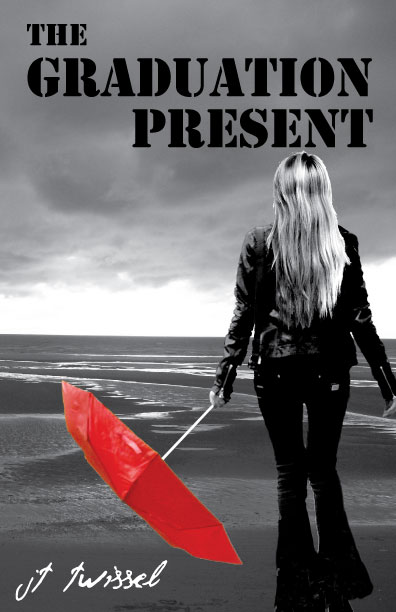
I guess you could say, without my Uncle Bob’s calm in the time of crisis, I would have been born on the kitchen floor. And how did I thank him? I wrote a book about the time I spent with him in Germany in 1970.

Click here for a synopsis of the book.

My mother had a predilection for stretching the truth. Thus I landed in Europe believing my long lost uncle was some sort of a spy.

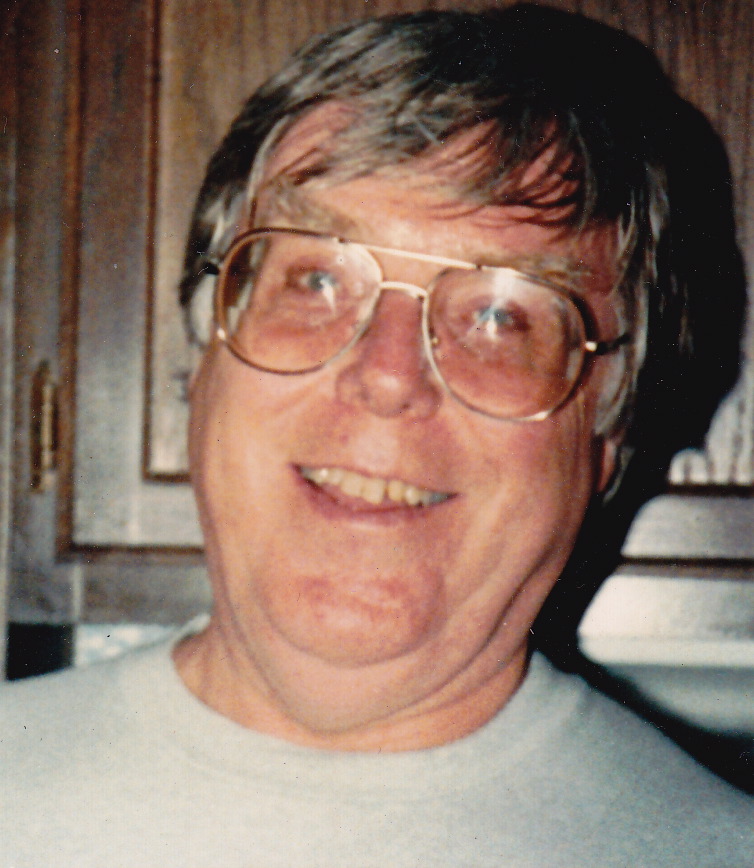
Uncle Bob in his late thirties discussing top secret spy stuff over a beer with his friend Bruce, also a top secret spy.

He quickly disabused me of that notion. Below is an excerpt from The Graduation Present.


“Gilberto, did you get a look at the knockers on Lou’s new secretary?” Uncle Bob asked the driver as we drove along.

“Molly, you mean Molly, right?”

“Yeah, I guess that’s her name. You know, the big ones are fun to cuddle but there is something to be said for frisky little titties. The French have a saying that the perfect size tit fits into a champagne glass. What do you think of that Gilberto? You like the little bitty titties?”

“Ah, Uncle Bob. I’m in the backseat,” I reminded him.

“So? You got a thing against tits?”

“I can’t believe I actually thought you were a spy.”

“Spies don’t like tits?”


By the time the book came out (it only took me four decades), my uncle had retired to Florida with his church-going, Texas-loving second wife. She took great umbrage at my portrayal of her husband and threw the book away before anyone in her family could read such rubbish. I doubt she read much beyond the frisky little titties scene which is a shame because the book is really about a silly, clueless girl in a complicated world.

Robert Ross Jameson, April 1, 1936 – December 4, 2024.

Hope there’s lots of peanut butter up there in heaven! And, thanks for the lift.