Here is a post from five years ago. Hard to believe we may be in an even worse place now. I didn’t think it was possible, did you?
I have noticed that many of the bloggers whose writing I’ve come to enjoy over the past seven years are paralyzed by the social turmoil all around them and are trying to focus on Anything … Else … But (AEB). Fires in the streets, virus in the air, the seas rising (the Native Americans were right: the devil has blue eyes). The crap won’t want to stop piling on, will it? The Armageddon was supposed to be the quick and final punishment of mankind. Not years on life support hoping for some miracle drug.

But since there’s nothing I can do, I will focus on Anything … Else … But. My current AEB are the illustrations in a Bible that literally crumbles when handled. Who were the artists? What did the original artwork look like before the book got into the hands of my less than pious mother?
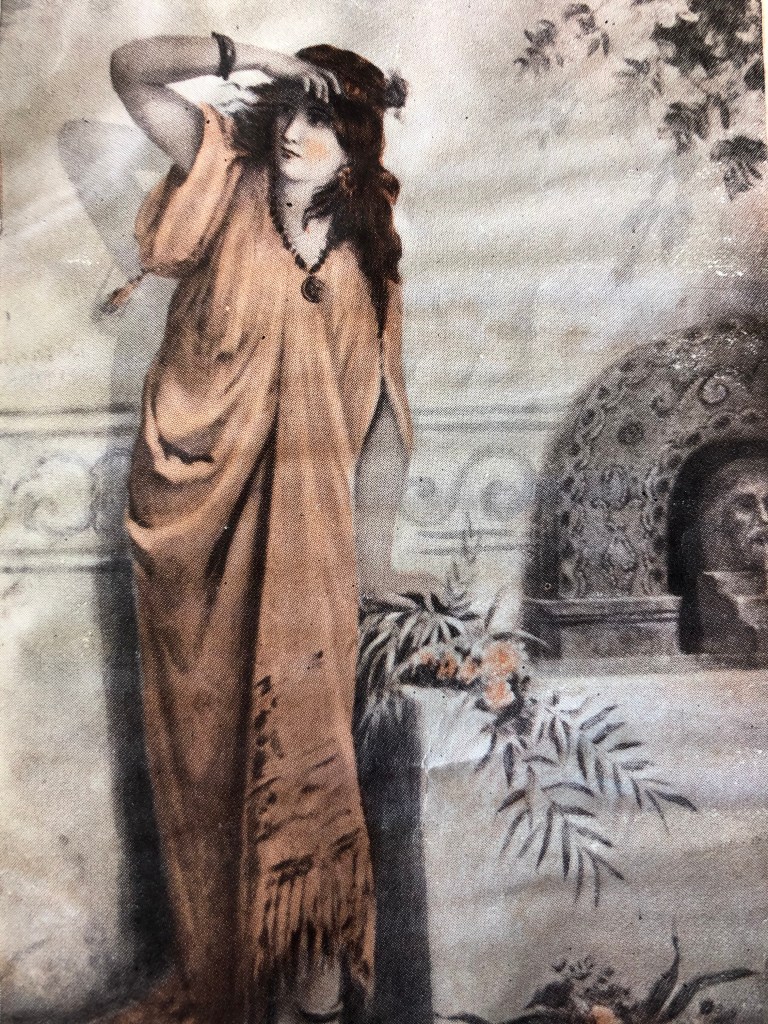
Some of the artists, perhaps feeling it blasphemous, did not sign their work. The illustration above is simply captioned “Rebecca.” I would guess the artist was a Pre-Raphaelite but I can’t find any matches.
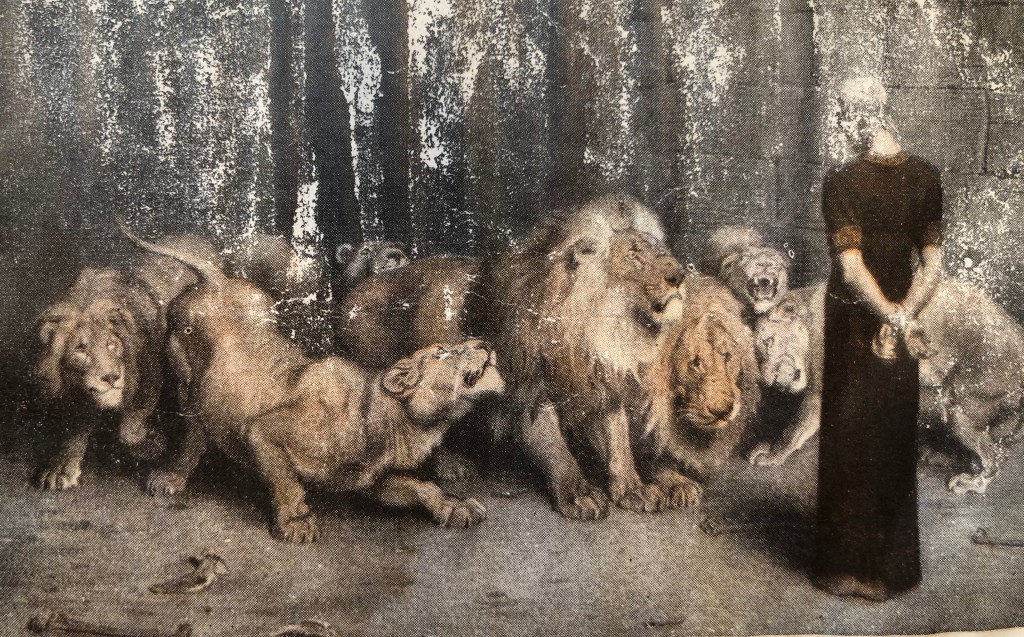
I am not an expert on the Bible by any stretch but I identified this scene right away, did you? The artist was identified as Briton Riviere who was well-known in the 1850s for his animal studies. Again, I could not find copies of the original.
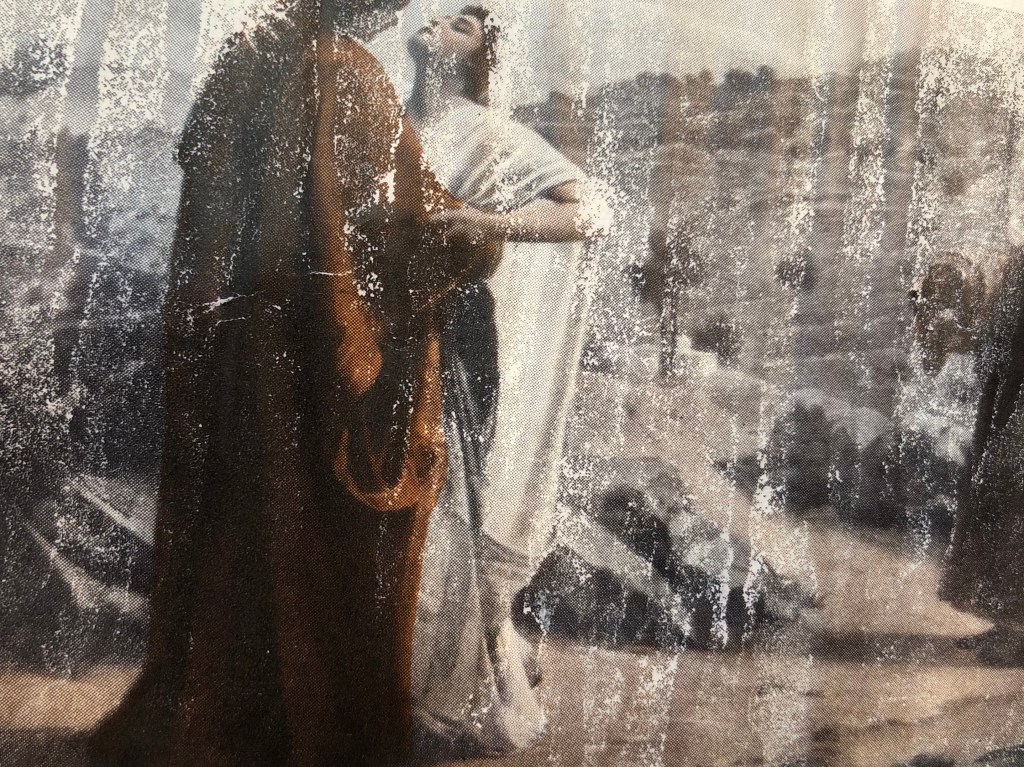
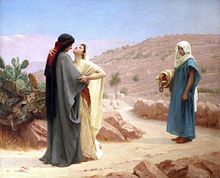
According to a quote on the back, this illustration portrays Naomi imploring her mother-in-law “whither thou goest; I shall go.” Looks to me like she’s attempting to seduce Ruth. However, because the artist, identified as “Calderon,” was also well known in the 1850s (and the onetime Keeper of the Royal Academy) I was able to find a copy of the original. That’s Boas she’s rubbing up against while Ruth waits off to the side.
The only other illustration in the Old Testament not damaged beyond repair is this one.
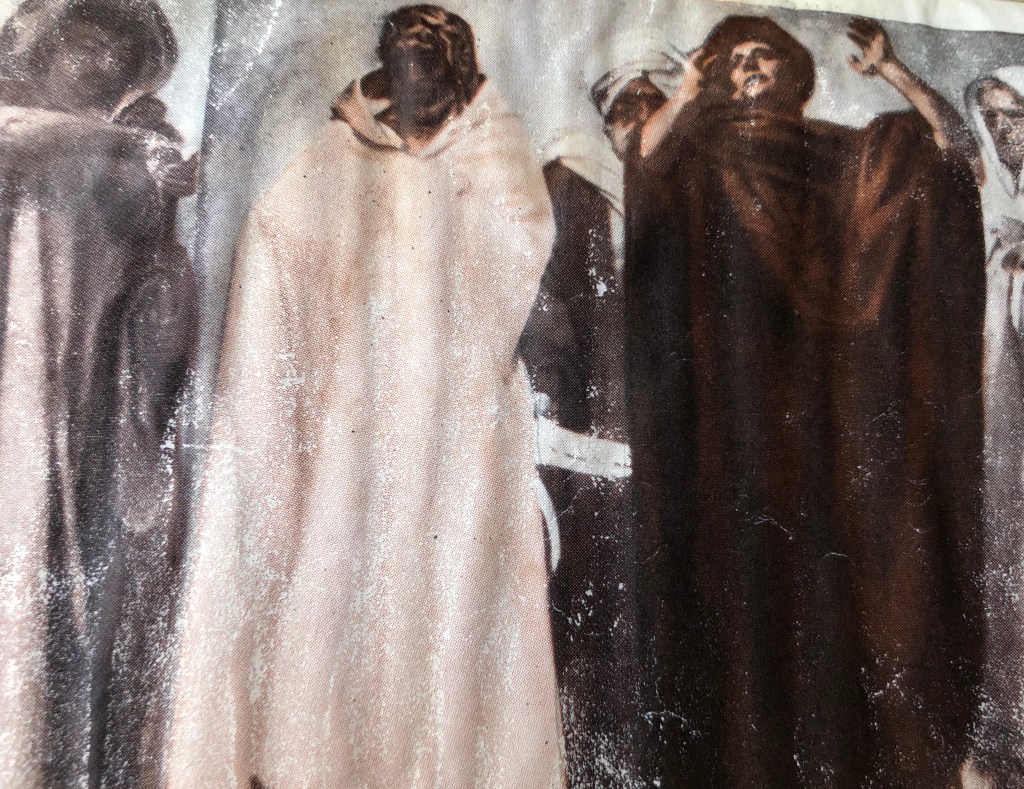
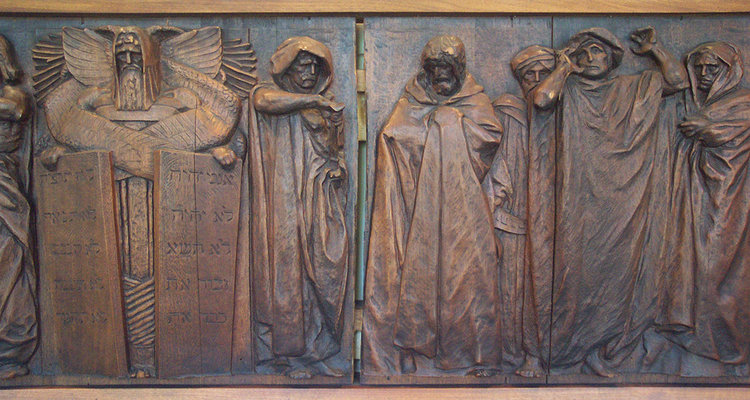
The inscription on the back reads The Frieze of Prophets by J.S. Sargent. I googled and sure enough John Singer Sargent did create a frieze by that name, however this must have been an early study as the completed piece looks like a bit different.
The New Testament was more inspirational to artists of that time:
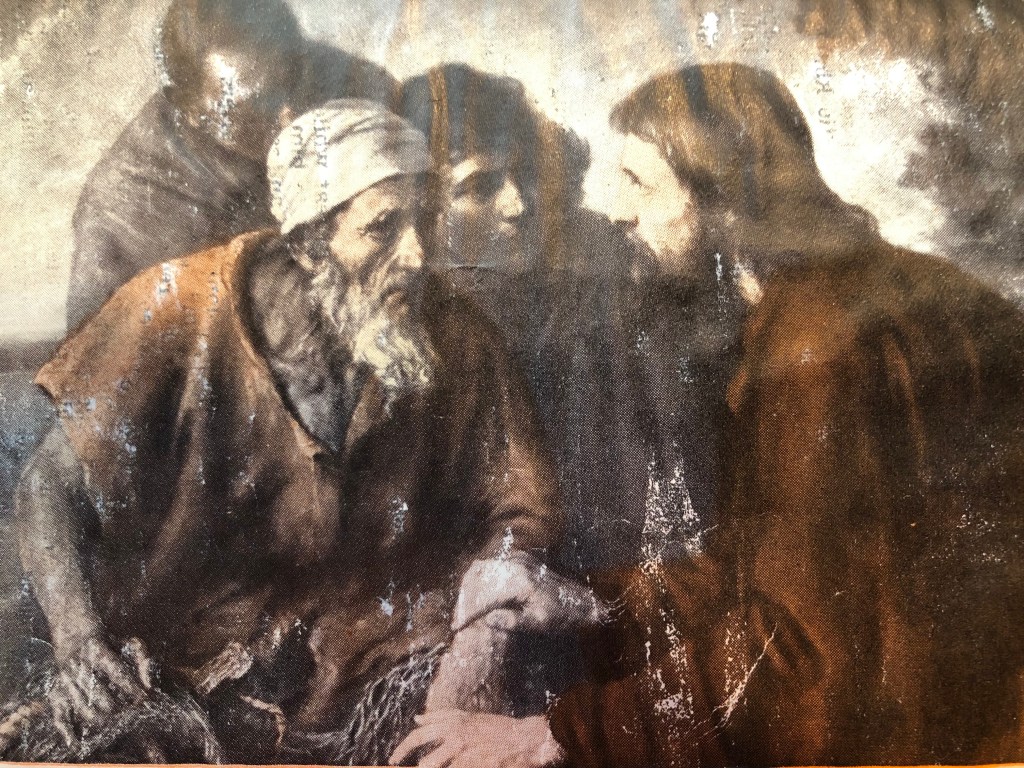
I particularly like this one: “Christ and the Fisherman” by E. Zimmerman, a German artist. You can see the rough hands of the fisherman and feel the bond between the men.
And this one:
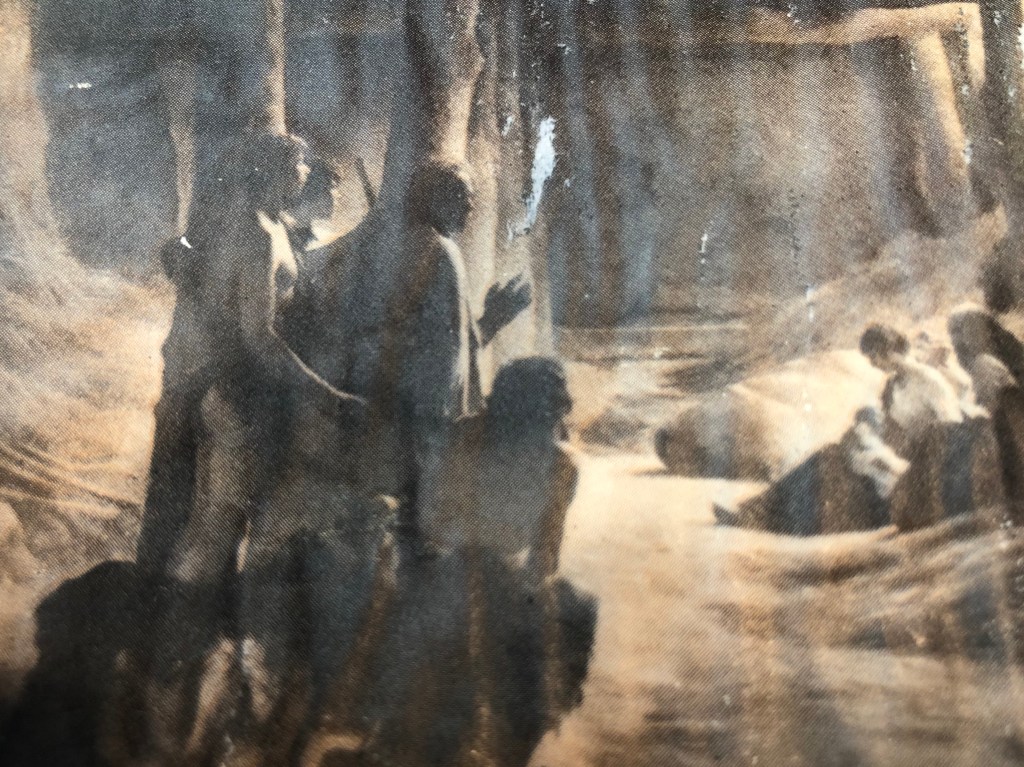
“The Arrival of the Shepherds” by Henri Li’rolle. The original probably had more color but I like the rawness that age and abuse have given the image.
I was able to find the original for this scene:
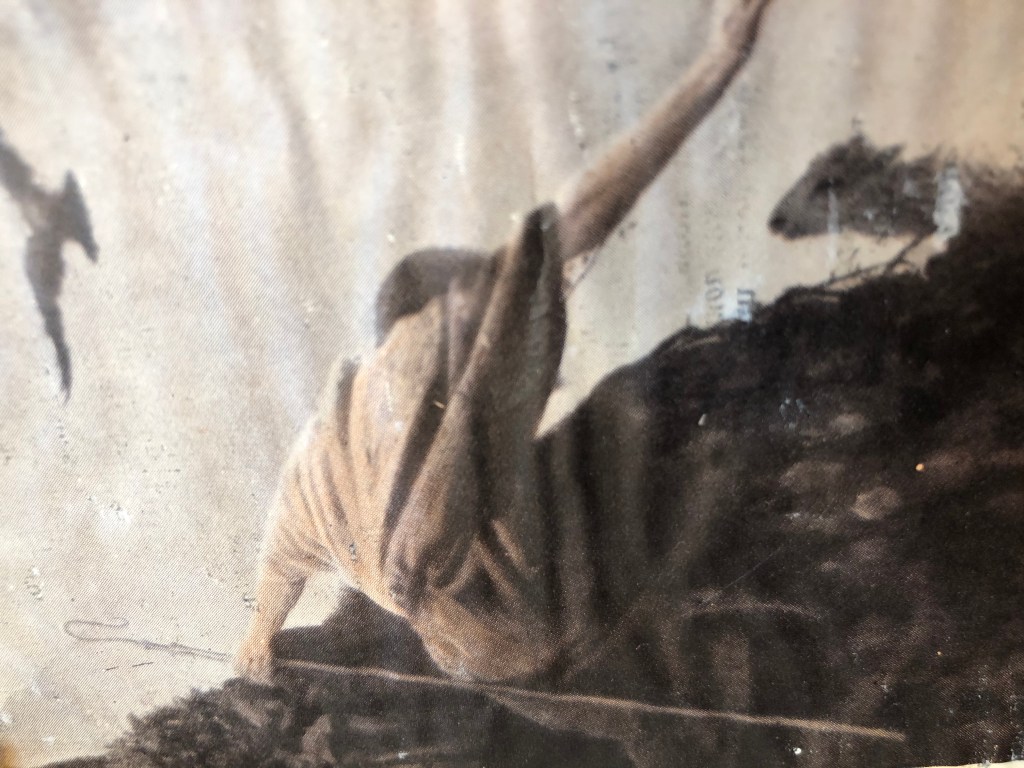
“The Lost Sheep” by Alf. U. Soard.
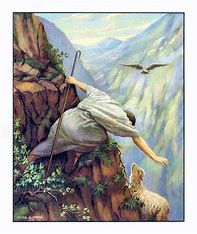
The illustration in Mother’s bible was probably a study for the completed work. I have to say, the study is more powerful.
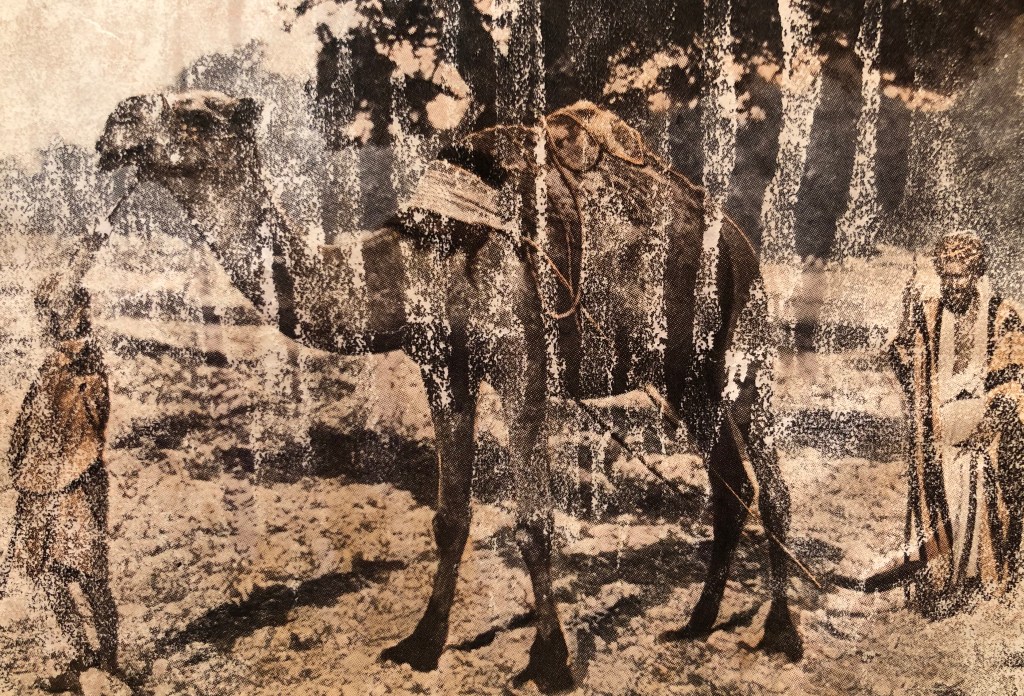
I will close with this image “Laborers in the Plain of Esdraelon.” Looks like an ominous place for the final battle between good and evil, doesn’t it? Half in this world and half in another.
 Saying nothing in particular
How very interesting!
Thanks!
Very interesting! People use special photo software these days to ‘make’ photos look like some of these!
I know. I don’t approve of people abusing books but it is interesting to see what was revealed by age and water.
Thanks, Jan. Fascinating stuff for sure. The Lost Sheep study may haunt my dreams tonight.
I think the study catches the danger of hanging off a cliff to rescue a sheep better than the pastoral scene that resulted.
I never thought about these pictures, really. This is all very intriguing. You got me thinking.
That particular bible had a lot of extras as well as copies of some famous works by well-known artists of the time. Someone put a lot of work into that edition. It’s always interesting to see the progression of a piece of art (at least to an amateur artist!)
I can see that.
Agreed. Thanks for sharing.
Good research, Jan
Thanks Geoff – it was fun (well a lot funner than figuring out what’s open and what’s not. What city will burn next. When the bug will go away. Etc.)
What technique/software did you use to reproduce the images from your copy of the Bible? I wouldn’t have a clue how to do something like that.
iPhone camera. I’m just a point and click kind of gal.
I wonder if a graphic novel style Bible would be popular amongst the Sheeple? Reading? Bah. Give me pictures.
It’s been done! I’m sure there are a lot of “Christians” whose belief system is based of some picture book.
Hi Jan,
This post reminds me of what happens to actual people over time. The way we wear at the edges, rot from the inside, falter, reach our hands out to others; the quiet talks at night with shadowy figures from our past; the process of getting old and decayed. Yes, weathered bible prints are a lot like the aging of a human. Everything eventually arriving at the hell of our own making. Thanks. Duke
That’s what I was thinking. The original Lost Lamb is a joyful scene. A beautiful day, the lamb grateful and adoring, the hawk, not at all menacing. But aged, Jesus looks like he’s in agony, the lamb looks like it might bite him and the hawk appears to have just attacked – all on a stormy night.
I love these illustrations Jan, and you make it so interesting 💜
Thank you Willow!
A pleasure 💜
What a cool way to think about/look at the illustrations found in Bibles. I like your assessment of what the art actually looks like versus what it is supposed to be telling us. It’s all in the interpretation isn’t it?
Yup. I don’t those pieces were commissioned for that edition of the Bible – I think the artwork was selected and then fit in where it seemed appropriate.
Nice blog ✨
Thank you Saania.
This is a wonderful study to calm the nerves of these trying times. All the art is beautiful, and your findings interesting, Jan. I especially like “Rebecca.”
I do too but I can’t determine who the artist was.
Lovely, interesting post!
…. but …. do you have ……anything ….. else? 😉
Rebecca is very fetching!
Thanks Resa. I have a hard time even handling that bible with it crumbling.
Interesting! I’ll look at such pictures with new eyes now.
Well done, Jan! Thanks so much for doing it and sharing this. I agree w/ Duke that the images are like us, wearing down and changing over time. I gut level favorite was “the animal study.” It struck me as so familiar, poignant… wild animals bowing to, or helping, someone? I looked it up and found out it’s Daniel in the Lion’s den. Of course!! My brain as faded as the paintings. My 2nd fave is Christ with Fisherman, and I love it for all the reasons you so perfectly describe.
Most of the illustrations in bibles are not very elemental or powerful – at least that I’ve seen. Yes the Daniel is great in both composition and feel. I would love to see what the completed piece ended up looking like but alas I can’t find it!
Intriguingly fascinating. There are no bounds to technology in the modern age. An excellent piece!
Thank you!
A wonderful collection, with apt inspiration. It is SO hard to write about pleasant things with all this YUCK