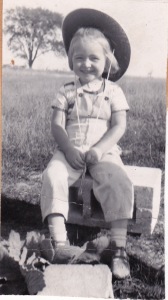
In honor of my mother’s birthday, a post from a few years back.
Mother and Sally exchanged Christmas Cards for over seventy-five years. For most of those seventy-five years, they lived four hours from each other and could have easily visited, but I didn’t meet Sally until Mother’s ninetieth birthday.
They grew up in the same small town in New England. They were the same age, went to the same schools and the same church. And … both moved far from that small town after high school graduation. But those are the only things they had in common. Teenage Mother liked to party but did well enough in school to earn a scholarship while Teenage Sally apparently never rocked the boat. While my mother was at college, Sally met a soldier returning from the war with only one hand, married him and left for the West Coast.
Sally’s husband worked for the Post Office until his death. They bought a house just south of San Francisco where they raised three children. After his death, the oldest daughter moved in down the street to take care of Sally. According to the daughter, Sally’s children all did well and produced equally successful children.
In December 2019, after baking Christmas cookies for her neighbors, Sally sat down at the kitchen table and died. I can’t imagine a more pleasant way to go.
Mother somehow graduated from college although to hear her reminisce about those days it’s hard to understand how. She started her career in Hartford Connecticut, about thirty miles from where she’d grown up, and soon got married. My father spent about seven years trying to survive in the corporate world … jumping from company to company all over the states. And Mother went along with him having children and attempting to be a housewife. After they settled in Reno Nevada, Mother gave up the charade. She divorced my father and went out and got the career she’d always wanted.
For some reason through all of the turmoil — and it was turmoil — Mother always looked forward to Sally’s Christmas Cards. I imagine they contained a synopsis of Sally’s year. Or perhaps they just contained holiday greetings. None survived the final move she took.
I finally met Sally during the year that Mother lived with us. Her daughter contacted me and we got the two ladies together, coincidentally on Mother’s 90th birthday. They sat together mostly in silence, affectionately touching and gazing into each other’s eyes and when the restaurant closed to prepare for the dinner rush, there were tears. On all our faces.
Christmas 2019 Mother called to tell me she had not received a card from Sally. She said something must have happened because Sally would never forget to send a Christmas card. Since both ladies were now approaching 94, I thought perhaps Sally’s mental state was slipping and so I contacted her daughter and heard about the Christmas cookies.
Telling Mother that Sally had died was one of the hardest things I’ve ever had to do.
Mother died in August 2020. I wish she’d exhausted herself making cookies and sat down to die, but it was during the pandemic. Residents of her assisted living facility were basically prisoners in the their rooms with only remote entertainment which I’m sure aided in the decline of many of them. I played her music from the 30s and 40s on my iPhone and read aloud from a book until finally in the morning her spirit escaped. She just didn’t want to go through another Christmas without getting a card from Sally. From what I know, the two ladies probably wouldn’t have enjoyed going on a cruise together but they anchored each other to this world. Some old friends are like that.
The period from April 29th to May 6th, according to Wikipedia, constitutes The Golden Week in Japan. I won’t go into the history of each holiday but basically there’s Constitution Day, Children’s Day and Greenery Day and probably numerous regional events. So it’s party time in Japan!
In the mountains, early spring is generally known as Mud Season. The ski resorts shut down and prepare for summer activities and so it’s a good time take advantage of sales – both at the stores and in the restaurants.
Aspens in …. of all places … Aspen Colorado
Photo by Carol Teltschick
That same year, snow at the Ruby Belles. Boy was it cold. I can’t believe how time has sucked in so many years. The above pictures were taken in 2015.
Either Aspen or Beaver Creek. Carving into an Aspen tree should be a crime.
Good Friday always reminds of the Seagrass family under whose wings I spent my high school years. They celebrated every holiday to the max, unlike my family. Easter we might get dressed up and go to church. Or we might not. One year we went to the Lutheran Church because my paternal grandparents were visiting and grandmother insisted that we not only go to church but that we look respectable.
My brother still hates wearing a suit! But my little sister has become quite the fashion plate. Don’t show her this picture. She’ll really pitch a fit!
The cheerful couple in the above picture, Myrtle and RB Senior, met in Fargo North Dakota and spent twenty-five years working on Indian reservations. I never really understood why until I recently discovered that RB Senior was a descendant of White Elk, aka Colonel Alexander McKee and Nonhelema, aka Grenadier Squaw. So living amongst the Native Americans was in his DNA. Unfortunately it was a life that hardened my grandmother to the point that she made RB Senior’s later years miserable. I only remember the quiet, taciturn man who died when I was twenty. But recently, via the miracle of the internet, I discovered he wasn’t always that way.
Oh Bruce, we never knew! Why didn’t you marry Katherine Ladd, whose “winning countenance never fails to influence the judges in forensic contests”? Or her twin sister, Rizpah, the laughing twin, who “plays gentleman friend to all the spinsters on the faculty.” A good laugh is indeed sunshine in a house. Or both sisters! You could have done it Bruce! Although, what was this Ford’s establishment on North Broadway you famously frequented?
Once again I have the ancestors in an uproar! But it is the holiday for forgiveness, right?
I was inspired by Bojana to attempt to write a bit of flash fiction. Here goes. Please let me know what you think … is it flash fiction?
We left Aragorn’s head with the Mennonites … At least that’s the last place I remember seeing it, resting on the driver’s seat of the Volvo, staring blankly at the neatly arranged tools hanging on the wall of the barn that served as the mechanic’s garage. The car had been bumped and bruised quite a bit in the rollover but its barely-held-together-by-rubber-bands (as we joked) engine was probably okay, saved by a sturdy bonnet, as the man said. And so “they” would take it in lieu of ambulance fees and I believe 500 dollars which would help us get home. But that was a matter between C’s parents and the Mennonites. I just grabbed what I could as they negotiated—my guitar for sure and some clothes (those not splashed by gasoline.) C grabbed her Martin and the shift knob, which had been carved of Swedish birch, and we said a tearful goodbye to Frodo. We hated to leave him, our trusty steed, but C was four months pregnant and so we had to return to Reno from the cornfields of Indiana. I’m sure she kept the shift knob with her in a sacred place which, after that trip, she never shared with me.
We’ve made it to the fourth month despite the current administration’s efforts to kill us all.
The only day highlighted as a national holiday on this Japanese Midori calendar is April 29th.
From Wikipedia: Showa Day (昭和の日, Shōwa no Hi) is a public holiday in Japan held on April 29. It honors the birthday of Emperor Shōwa (Hirohito), the reigning emperor from 1926 to 1989. Shō (昭) means “shining” or “bright”, and wa (和) means “peace”, signifying the “enlightened peace” that citizens receive.
Here in the US, Emperor Hirohito was not known as a particularly peaceful kind of dude but what do we know? There are many other holidays in Japan during this month but they are week long and regional festivities.
For years now I’ve been following Bojana Stojcic whose work has been published in a whole slew of online magazines. Recently she pulled together a collection of her short short and flash fiction pieces for DarkWinter Press, an independent publishing company located in Ontario Canada that wants “your weird, your traditional with a twist, your humour, your dark thoughts, or your elation. We’re open to anything—just make it interesting. Make us think.” They certainly hit the ball out of the park with Bojana. Her work does all of those things.
Imagine, if you will, Bojana and I are sitting at an outdoor cafe in Munich, which is her current home, discussing her book.
From Bing Images
Jan: Thank you for stopping by for tea to discuss your new book! I must say, you look divine. Not at all the frazzled writer! As I was reading your book I kept thinking: this writer is a chameleon who’s not going to let readers pigeon hole her work. At times, wise and witty (“today I am a future pile of dust like you.”) and at other times raw to the bone (“I need evidence that I’m alive.”) Is there a writer with whom you most identify?
Bojana: There are a lot of writers I look up to but, rather than identifying with any particular writer, what matters more to me is to identify as one. Writing doesn’t come easily to me. I know some people who write prolifically, whether it be essays or blog posts or poetry. I’m not one of them, although that doesn’t stop me from wondering what specific mindset allows someone to write that much. Then I find comfort in the thought that fiction requires a somewhat different approach. An author summed up writing fiction beautifully: the first draft is like getting lost in the woods, editing is your map and revision finding your way back out. And, to quote Robert Frost, “The woods are lovely, dark and deep.” It’s easy to get lost in them.
Writing means observing, listening, reflecting. It also means research and regularity. Most importantly, to be a writer, you have to read like one, which is precisely what I do. As someone who is more curious about how than wow, I analyze instead of getting lost in the story. I study characters thoroughly, reread interesting dialogues, monologues and descriptions, I pay attention to the sentence structure. Finally, I contemplate the word choice to better understand the motivations and conflicts. I need to think long and hard about every single detail, always keeping in mind the emotion I’d like to provoke. I need my readers to feel the horror, envy, anger. I want them to grieve with my protagonists, to ache with them, to be equally disgusted or brokenhearted or utterly apathetic and withdrawn. Like in real life. It’s easy to judge. What’s way harder is to understand someone’s reluctance to make any effort to change or improve things. To show compassion and a willingness to believe that choosing pain doesn’t always mean making the wrong choice.
Jan: Is there an example of what you mean in one of your stories?
Bojana: Yes. In Once You Have a Duvet, You’ll Be Fine
You begin to feel it at a young age; your body gives you signs so you damage it once, you damage it twice, too many times to remember. Because you don't know a better way to cope. Roll with it, they say, like a ship in a storm. I wish I could say, I tried but it didn't work. Truth is, I didn't. Like a letter thrown into the fire,I darkened and curled before bursting into flames.
Jan: You hear a lot about flash fiction these days, but how is it different from short stories and does the genre have anything to do with the title of your book? You know, knives cutting like editors editing?
Bojana: For the record, I came up with the recurring knives and blades symbolism after I’d written at least a dozen stories, when I realized I could be actually working on a book. The thing is, I needed a strong metaphor, some sort of a unifying idea which would put together seemingly dissimilar things and, since I’m a huge fan of everything chilling and eerie in storytelling, blades seemed like a good choice, as they only further stressed the emotional turmoil and expectations the protagonists had to cope with.
Back to flash fiction which is actually a shorter version of a short story, its length normally not exceeding 1,000 words. Plenty of editors/publishers are pretty specific about publishing one, but not necessarily the other, which is why I like to call Knives All Blade a collection of short stories and flash fiction. Let’s put it this way: flash fiction tries to tell big, rich, complex stories quickly and concisely, each word carefully chosen to convey emotion and atmosphere. For me, telling a story compressed into limited language, without wasting time or space, is what’s most challenging about it.
One of the keys to flash fiction is a sense of urgency. The point is to start in medias res, to throw readers right into the thick of it. This creates a sense of immediacy and helps build tension, as it raises questions that readers will be able to answer only if they go on reading. I enjoy writing intense, gripping stories, pulling readers by the heart without releasing tension from the beginning to that climax, every scene compelling them to hold their breath or stop breathing altogether. It’s a process. It takes time to learn the ropes. To learn how to build tension and when to slow things down, how to effectively use a mix of long and short sentences to communicate the protagonists’ thoughts and feelings, how to surprise the reader, write a story that inverts themes.
Jan: Can you give us an example of what you mean by sense of urgency and stories that invert themes?
Bojana: Here’s an example of urgency from Life to the Throat
A knife will always manage to surprise you, like your period," I told my little girl, giving her one as a gift when she started bleeding. "That blood running prepares you for pregnancy. Learn how to use it."
I wish I'd had one. I was so confused.
Regarding “inverts themes” that would be hard, if not impossible, to name an example here because the twist/resolution happens literally in the very end, so you’d have to know the whole story to understand. A good example would be Beyond the Ditches when you come to realize it’s not a story about the challenges of being a mother, but about childlessness. (It was all in her mind, making up the kid as either a copying mechanism or impact of trauma.) Or, say How to Skin a Dogfish when zio Luigi becomes a likely murderer and we see that K is actually a parrot, not a child. Or maybe Once You Have a Duvet … again.
Unknown to her, a letter arrived from court in late January, saying an eviction order had been placed on the house, that she had seven days to leave the property. Her husband stopped paying the mortgage, full of surprises as ever. All the while she waited for him under a tree, blossom-fringed branches bowing toward the ground, as if begging for forgiveness. Waited with bated breath to say I tried so hard to stop the situation getting this far, to see what he would say about her leaving him.
Flash fiction isn’t plot-heavy, thank god. It’s all about capturing moments, and sparking the imagination, which enabled me to put more emphasis on character development. That being said, each story required a different approach. And yes, some were definitely more difficult to tell than the others. It wasn’t always easy to translate all those images and ideas into actual words that carried a story along. That’s something I had to learn as well. To stop fretting about details or editing every little thing. The first draft is ugly for a reason.
There’s more to it, of course. If I didn’t know enough about a subject, for example, I would do research, go back to reading. Slowly and critically. This also included reading relevant books, news, articles, blogs, etc, as well as essays on human behavior to better understand personality development and create believable stories and layered characters that the reader can relate to. Writers need to understand people because we write for people, about people.
Jan: Yes indeed. Thanks for stopping by and spending some time with me. I hope that Knives All Blade will get the widespread attention it deserves.
Lovely Readers, I know many of you write flash fiction, do you have any questions for Bojana?
Okay. I did it. Finally launched the ebook version of Happy Hour and Other Sorrows. I attempted to also launch the paperback but Amazon claimed the ISBN was assigned to another book which was BS but try arguing with Amazon on a Sunday night after a bit of wine (for courage) might have been involved.
Yes, those of you on the side of color were absolutely right. The mostly black and white doesn’t work. So I’ll be changing the cover as soon as our weather turns cool and rainy again. Today temps are set to hit the eighties (80s) and so as soon as I finish this post, I’ll be outside in the garden! But there’s no need to rush. This book contains no sex, no real violence, no zombies and very little bad language. It’ll never go anywhere! I’m just happy to be done with it after soooo many years and iterations.
In other news. I’m really excited to announce an upcoming interview with Bojana Stojcic regarding a book of flash fiction she wrote entitled Knives All Blade. Here’s a teaser:
She’s a fascinating writer/poetess who seems to have a handle on the flash fiction genre. I keep asking her more questions about the subject because, as long time followers know, I’ve got a real thing for short stories in all their various forms.
But not today – it’s glorious outside for at least one more day!